I spent six years working the gate at O'Hare, which means I have watched a few hundred thousand bags go down a belt and come back up a carousel. That job teaches you something no product page will ever tell you: a bag is a rental. You pay for it once, and then the airline treats it like disposable property for the rest of its life. That is the lens I bring to every rolling duffel vs hardside luggage argument, including this one.
The four products here cover the two decisions that actually matter. The first is what carries your clothes: a soft 22-inch wheeled duffel or a 30-inch hardside checked case. The second is what keeps those clothes organized once you land: a basic five-piece cube set or a ten-piece compression set. Bags and cubes are different purchases with completely different failure points, and most buying guides mash them together until nobody can tell what they are choosing between.
The short answer: if you are checking a bag, the hardside case wins on your back and your wrist. If you are carrying on or loading a car trunk, the wheeled duffel wins on flexibility. And if you want to spend under $40 on something that changes every trip you take, buy compression cubes before you buy either bag.
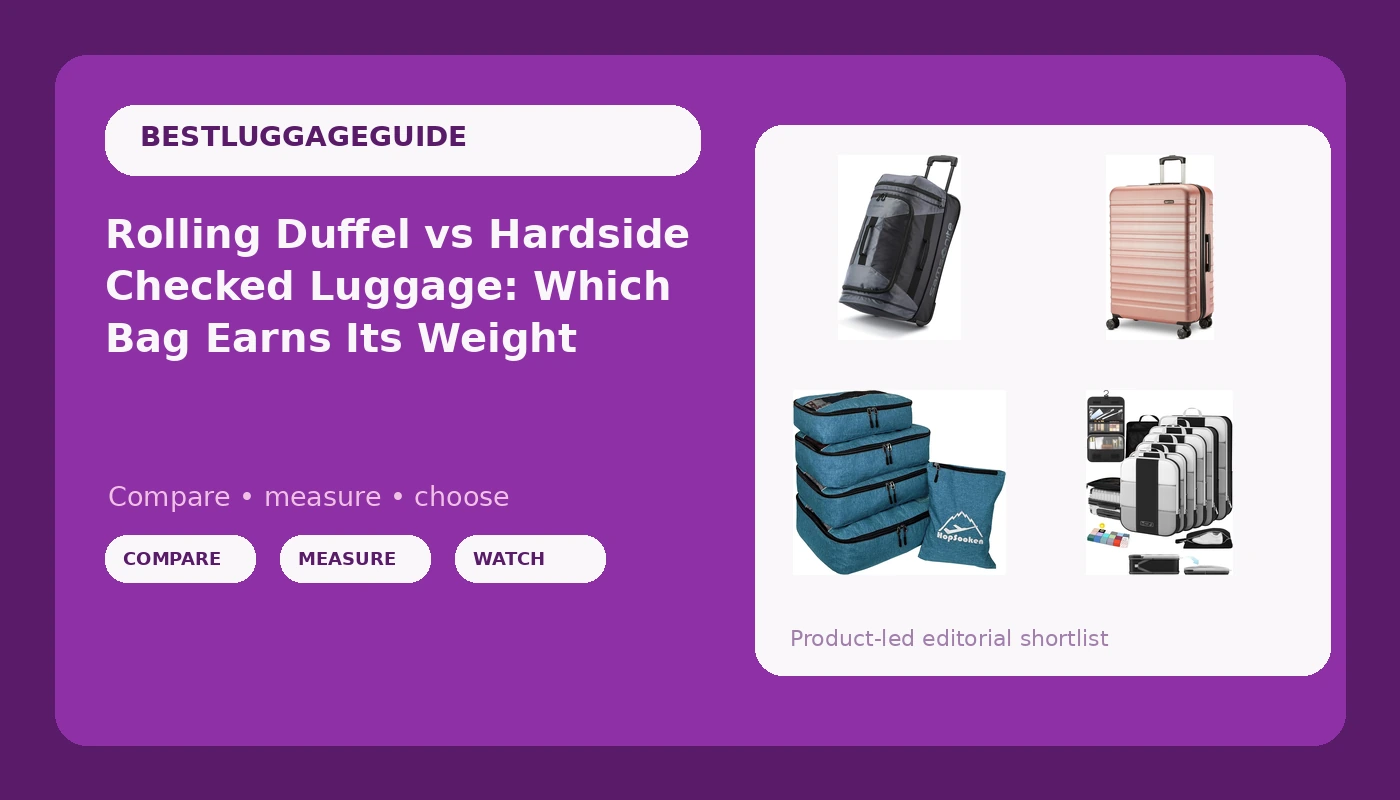
Samsonite Andante 2 Wheeled Duffel Bag, 22-Inch
Inline skate wheels, a push-button handle, and a soft body that swallows odd-shaped gear
Two wheels only, so you tilt and drag it, and nothing inside is protected from a bad drop
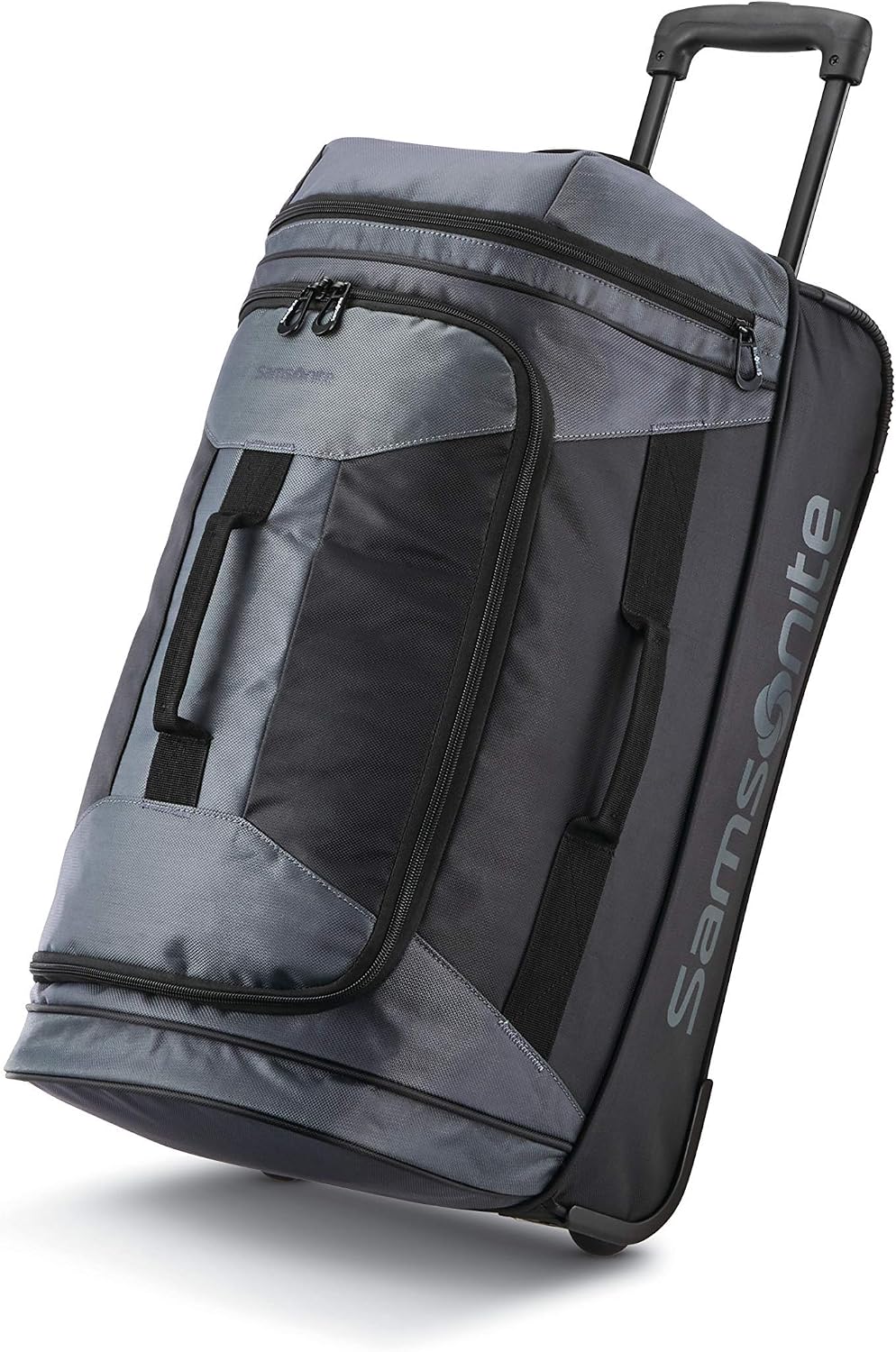
Amazon Basics 30" Hardside Large Checked Luggage
Four multi-directional wheels, a scratch-resistant shell, and expansion for up to 15% more space
It is a 30-inch checked bag in every sense, heavy when full, and the first size an airline wants to measure
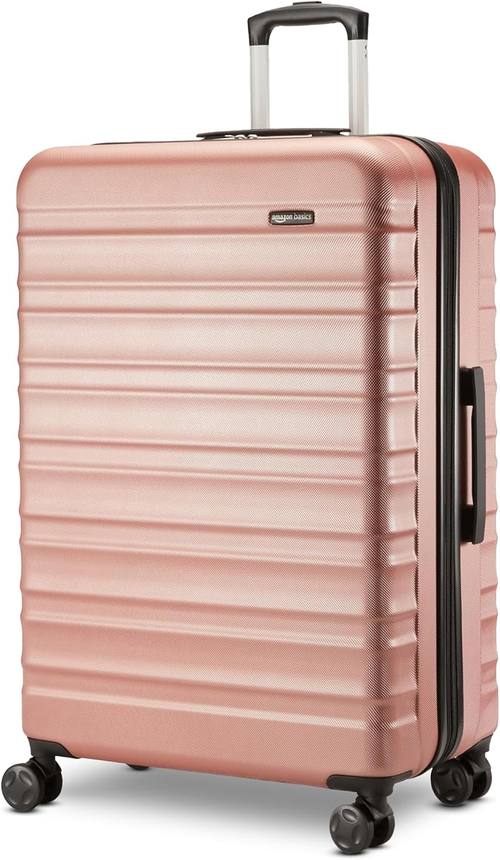
5 Set Packing Cubes for Travel
Four cubes plus a laundry pouch, cheap enough to buy on a whim, separates clean from dirty instantly
Plain zipper cubes organize volume, they do not reduce it, and the zippers are the whole mechanism
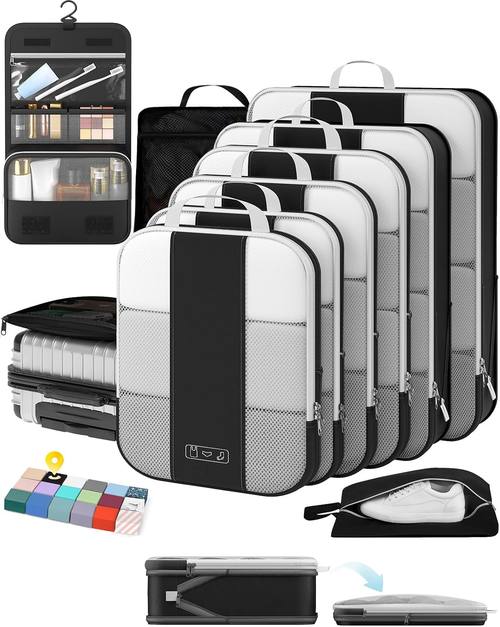
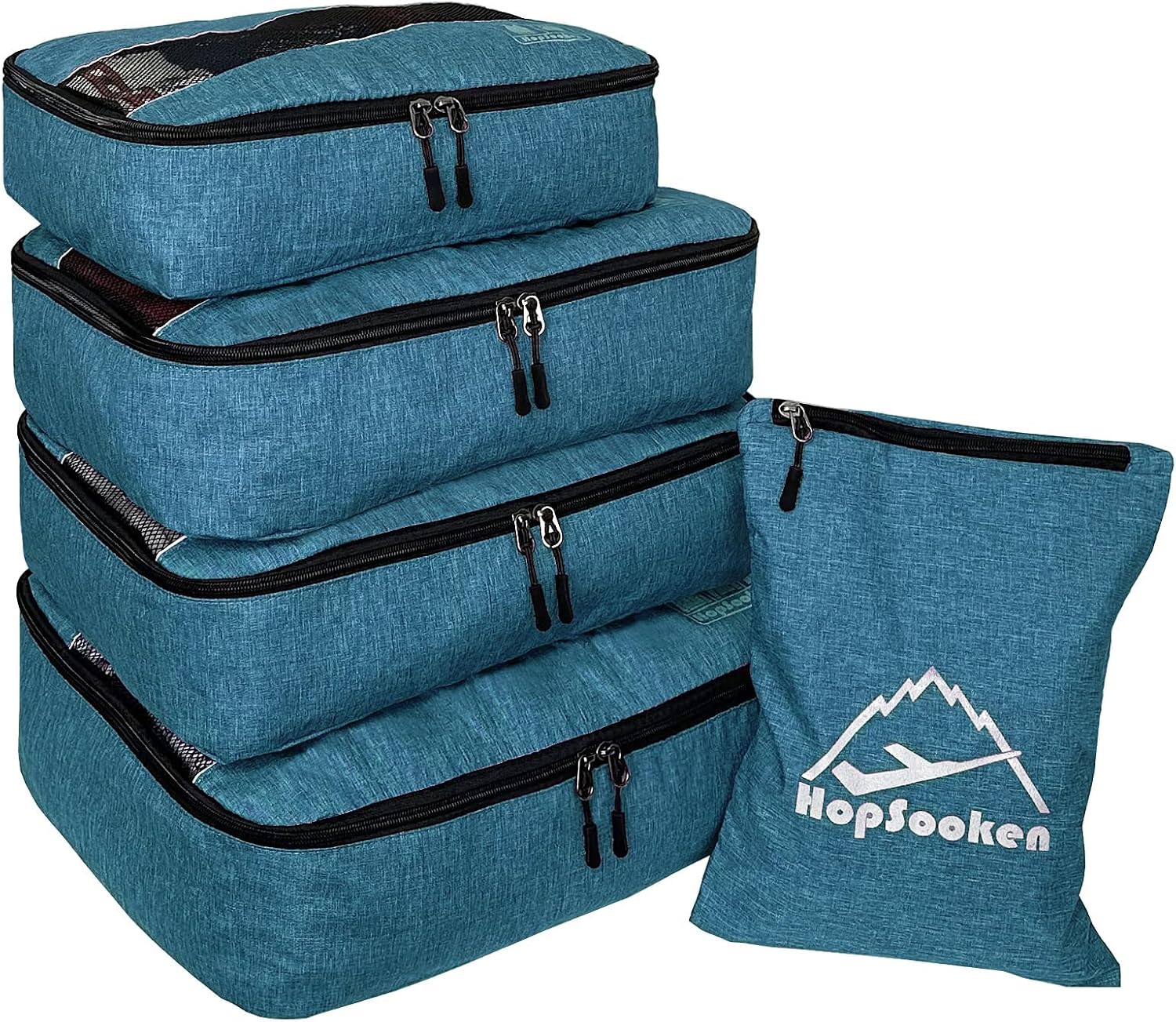
OlarHike 10 Set Compression Packing Cubes
Compression zippers and mesh panels across ten pieces, so soft goods shrink and you can still see what is inside
Compression only works on soft items, and every extra zipper is one more thing that can fail
Prices and availability were captured from Amazon Creators API and may change.
How I judge travel gear
Four things, in this order. Everything else is marketing.
Survival at the belt. The first thing to die on any bag is the zipper. The second is the handle. I have watched handles snap on bags that were two trips old and zippers split on bags that were packed past their limits. If a bag's zipper and handle survive twenty flights, the bag was worth the money, and no other feature on the listing matters.
Linear inches and bin fit. A bag that is advertised at 21 inches and measures 23 is a bag you will be arguing about at the gate. I do not trust the number on the page, and neither should you. Length plus width plus height is the number the airline uses, and it is the number that decides whether you board normally or get pulled aside.
Wheelbase. Two wheels or four is a philosophy, not a spec. Four multi-directional wheels let you push a loaded case upright with two fingers and no weight on your wrist. Two wheels force you to tilt and drag, which puts the load on one arm but rolls straighter and survives curb edges better. I test wheel noise on tile and on carpet, because a bag that sounds like a shopping cart is a bag you will resent by day three.
What the inside does. A bag is just a box. What you put inside it decides whether you unpack in four minutes or forty. That is where packing cubes earn their place, and why I treat them as travel gear rather than an accessory.
I am deliberately not quoting prices in this comparison, because they move weekly and a stale number is worse than no number. Every product in the table links to the current listing, and "Check current Amazon price" is not filler. It is the only honest way to present a price in a guide that will outlive this month.
Samsonite Andante 2 Wheeled Duffel Bag: the soft side argument
This is a 22-inch wheeled duffel with inline skate wheels, a push-button handle, and a soft body that opens wide. The wheels are the detail that matters. Inline skate wheels are taller and narrower than the small casters on most spinners, which means they roll straight on tile, cross the seam strips in a terminal floor without tripping, and do not dig into carpet the way a hard little caster does. A two-wheel bag also puts the load on the wheels once you tilt it back, so the handle is carrying almost nothing while you walk.
The trade-off is the tilt itself. You drag a two-wheel bag behind you at an angle, so one arm is always working and the bag is always leaning into something. Through a big hub on a tight connection, that gets old fast. From a parking garage to a hotel lobby, it does not matter at all.
The soft body is the other half of the argument. A duffel mouth swallows boots, a folded jacket, a camera insert, and the souvenir that does not fit a rectangle. It also squashes into a car trunk or an overhead bin in ways a hard shell cannot, because fabric deforms and plastic does not. What you give up is protection. Nothing in this bag is armored, and if the belt drops it wrong, your contents take the hit instead of the shell.
Amazon Basics 30" Hardside Large Checked Luggage: the case you check
This one is a 30-inch hardside with four multi-directional wheels, a scratch-resistant surface, and expansion that adds up to 15% more space. Four wheels change the way you move through an airport. You push the case upright beside you instead of dragging it behind, the wheelbase keeps it stable when you load a bag on top, and your wrist is not doing the work. That is the single biggest quality-of-life difference in this whole comparison.
The expansion zipper is the part I would think hard about. Extra space is genuinely useful on the return leg, but it also makes the bag easier to overpack and harder to fit into a rental car trunk, and an expanded case is a bigger case when someone finally measures it. Treat expansion as an emergency valve, not a packing strategy.
And be honest about the size. A 30-inch case is a checked bag, full stop. It is not fitting a bin, and it is the size most likely to get gate checked on a full flight. My rule has not changed since my ramp days: the best luggage is the size you actually need, not the size you are tempted to buy. If your trip fits in a carry-on, this case is a decision to check a bag on every single flight.
Packing cubes: the 5-piece set against the OlarHike 10-piece compression set
These two are not the same product at different prices. They solve different problems.
The 5 Set Packing Cubes is the classic setup: four cubes and a laundry pouch, sized for a large suitcase. It divides your bag into zones. Shirts in one cube, socks and underwear in another, the laundry pouch for whatever you wore on the plane. Nothing gets compressed. You are organizing volume, not reducing it, and for a lot of travelers that is entirely enough, because the real win is not arriving at a hotel at 3 a.m. and excavating a suitcase like an archaeologist. At this price, it is the cheapest way to make a mediocre bag behave like a good one.
The OlarHike 10 Set Compression Packing Cubes does something different. Compression cubes have a second zipper that squeezes the cube down after you fill it, and the mesh panels (this set uses a very open mesh across the pieces) let you see what is inside without unzipping everything and let the fabric breathe. If you pack soft goods, fleece, t-shirts, socks, that second zipper genuinely removes air, which is the only thing standing between you and a carry-on-only trip.
The cost is complexity. Every compression cube has two zippers instead of one, and each one is a point of failure. Over-compress a cube and you get a hard brick that does not fit the shape of your bag, which defeats the purpose. Compression is a tool, not a magic trick, and it only pays off on soft items. Try it on a pair of boots and you will just stress the zipper.
Where each one loses
- The wheeled duffel loses on protection and on one-arm duty. Soft sides do not shield anything fragile, and two wheels mean you are always dragging at an angle. It is a road trip bag and a gear bag more than a business travel bag.
- The 30-inch hardside loses on size and on expansion discipline. Hard shells crack at the corners when the belt drops them wrong, and I have seen it enough times to stop pretending it is rare. The bigger the case, the more likely it is to be the one that goes missing.
- The basic cube set loses on volume. It organizes, it does not compress, so it will not get you from a checked bag down to a carry-on.
- The compression set loses on zipper count. Ten pieces and two zippers per cube is a lot of hardware, and the second zipper is only worth it if you actually pack soft goods.
How I would spend the money
If you fly carry-on only, skip both bags and put the money into the compression cubes. They are the single best travel purchase under $50, and I will say that to anyone who asks. They do not save space so much as they save your sanity, which is worth more on a Tuesday morning.
If you check a bag for a week-long trip, the 30-inch hardside is the more comfortable choice. Four wheels and a shell that shrugs off scratches beat a duffel you have to tilt through three terminals.
If your travel is road trips, camping, or hauling gear, the wheeled duffel is the one that keeps earning its place. It folds down, it swallows awkward shapes, and you are never handing it to a stranger at a counter.
Do not buy both cube sets. Pick compression if you want to shrink soft goods, pick the basic set if you just want your bag organized. And before you decide anything based on checked bag fees, check your airline's current rules, because those change more often than the bags do.
What I am watching next
Two things. First, softside is due for a comeback. As airlines tighten carry-on enforcement, the bags that survive the new rules will be the ones that deform into whatever space they are given, and soft 22-inch duffels are built for that. Second, the brands that fix zipper reliability first will win the frequent flyers, because that is the failure everyone I know actually experiences. Wheels get the attention. Zippers end the relationship.
The bag does not care how it looks on the carousel. It cares what happens between the counter and the belt. Buy the one that survives that trip, and buy the cubes that keep you from unpacking it twice.