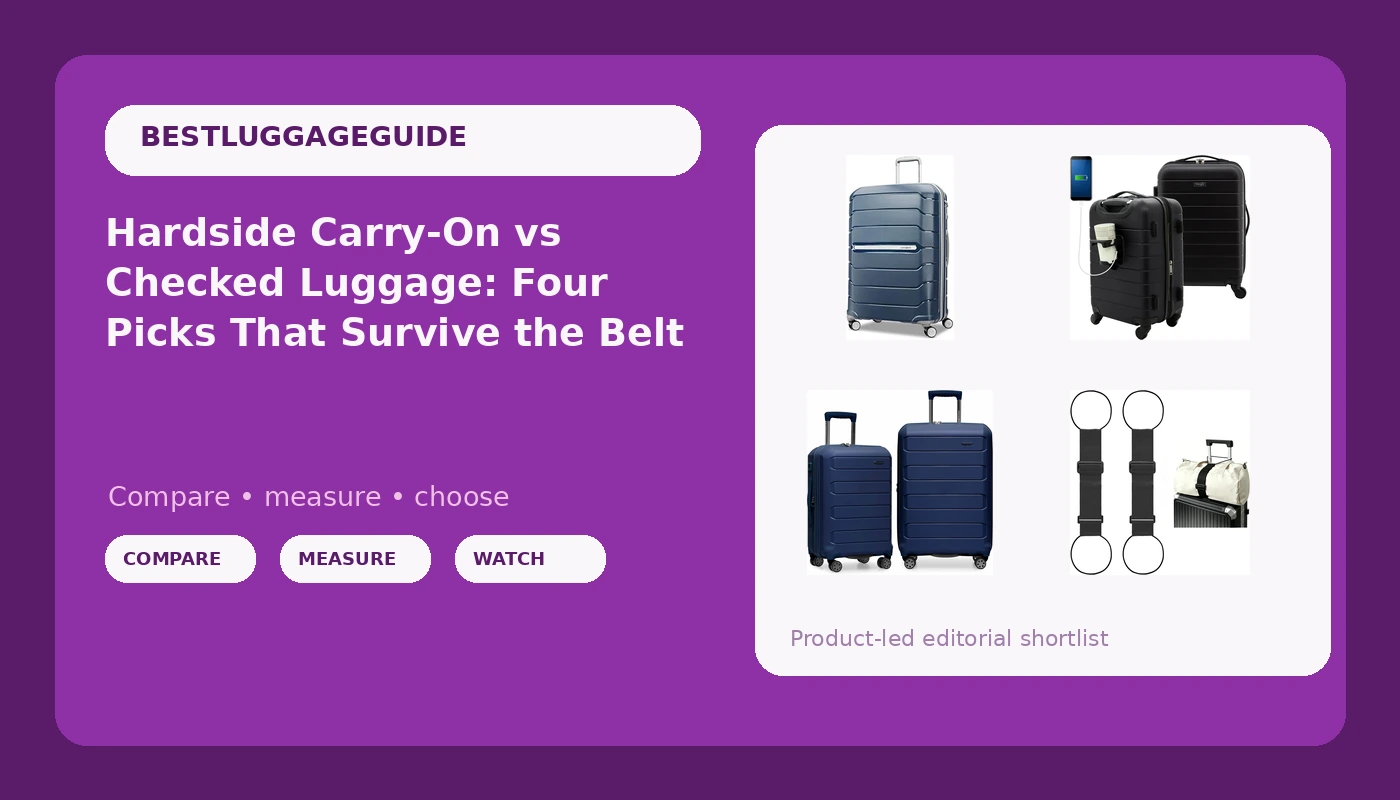
I spent six years as a gate agent at O'Hare, and the job rewired how I think about hardside carry-on and checked luggage. I have watched a few hundred thousand bags go down a belt, get stacked four high on a cart, and come back up looking like they lost a fight. You learn quickly which shells crack at the corners, which handles wobble before the first flight, and which zippers give up somewhere over the Atlantic. That is the lens I am using here. I am comparing four travel pieces that solve four different problems: a 22-inch carry-on, a 28-inch checked case, a two-piece option, and a connector strap that keeps two bags moving as one. I have not flown with these exact units, so I am judging them on what the listings promise, how the designs stack up against the failure points I saw every day, and who each one is genuinely for.
For most travelers, the smartest single purchase here is the 22-inch hardside carry-on, because bin fit is the fight you can actually win. The 28-inch case is the right answer for long trips and cold weather. The two-piece option only makes sense if you need both sizes right now. The connector straps are the cheapest way to stop juggling two handles in a jet bridge.
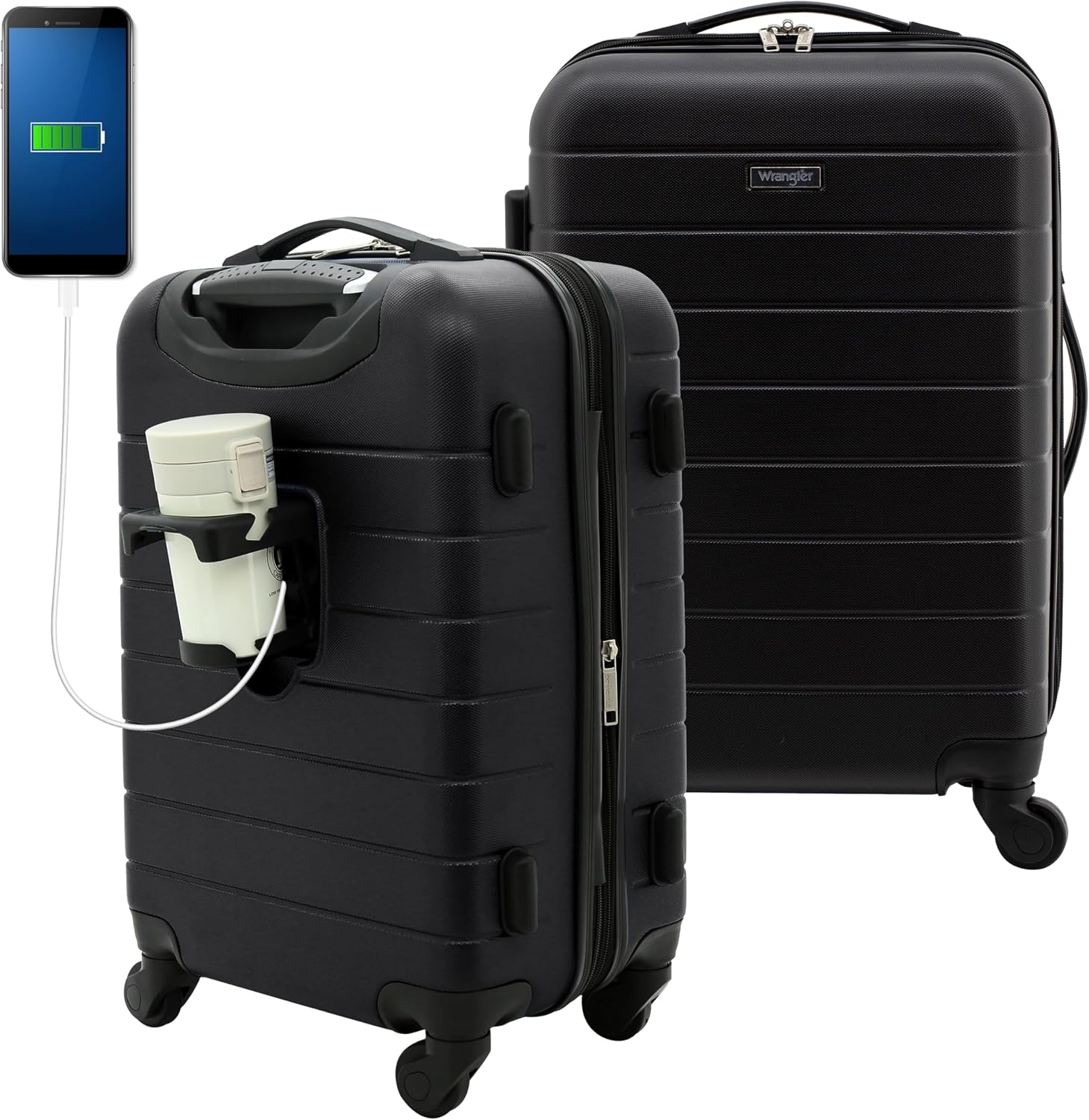
Wrangler Smart Spinner Hardside Luggage, 22-Inch Carry-On, Black
The right size for the bin, a hardside shell that handles rain and overhead abuse, and four spinner wheels for tile floors
A value build, so the telescoping handle and wheels are the first things to watch over years of weekly flying
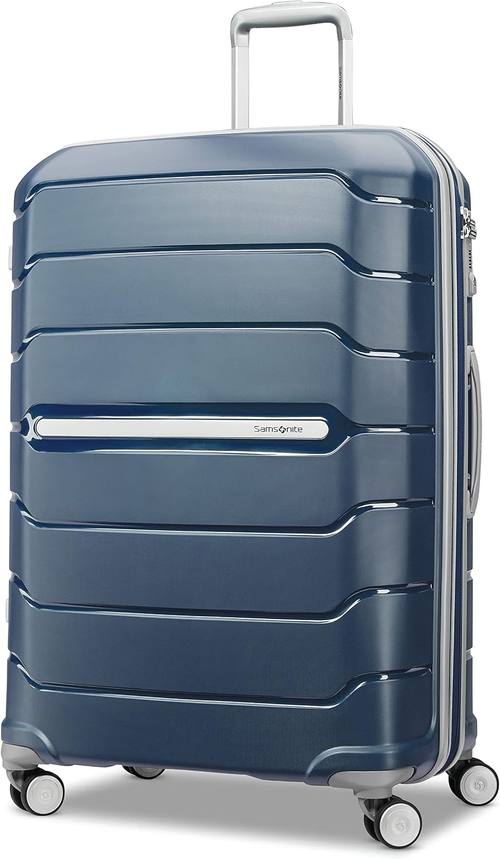
Samsonite Freeform 28-Inch Large Luggage with Dual 360° Spinner Wheels - Checked Suitcase - TSA Lock, Airline-Approved - Lightweight Durable Polypropylene Expandable Hardshell - Navy
A big checked case with dual 360 spinner wheels, a TSA lock, an expandable polypropylene shell, and a brand with a long service history
Large checked bags are the ones airlines lose, and expandable zippers are the first zippers to fail
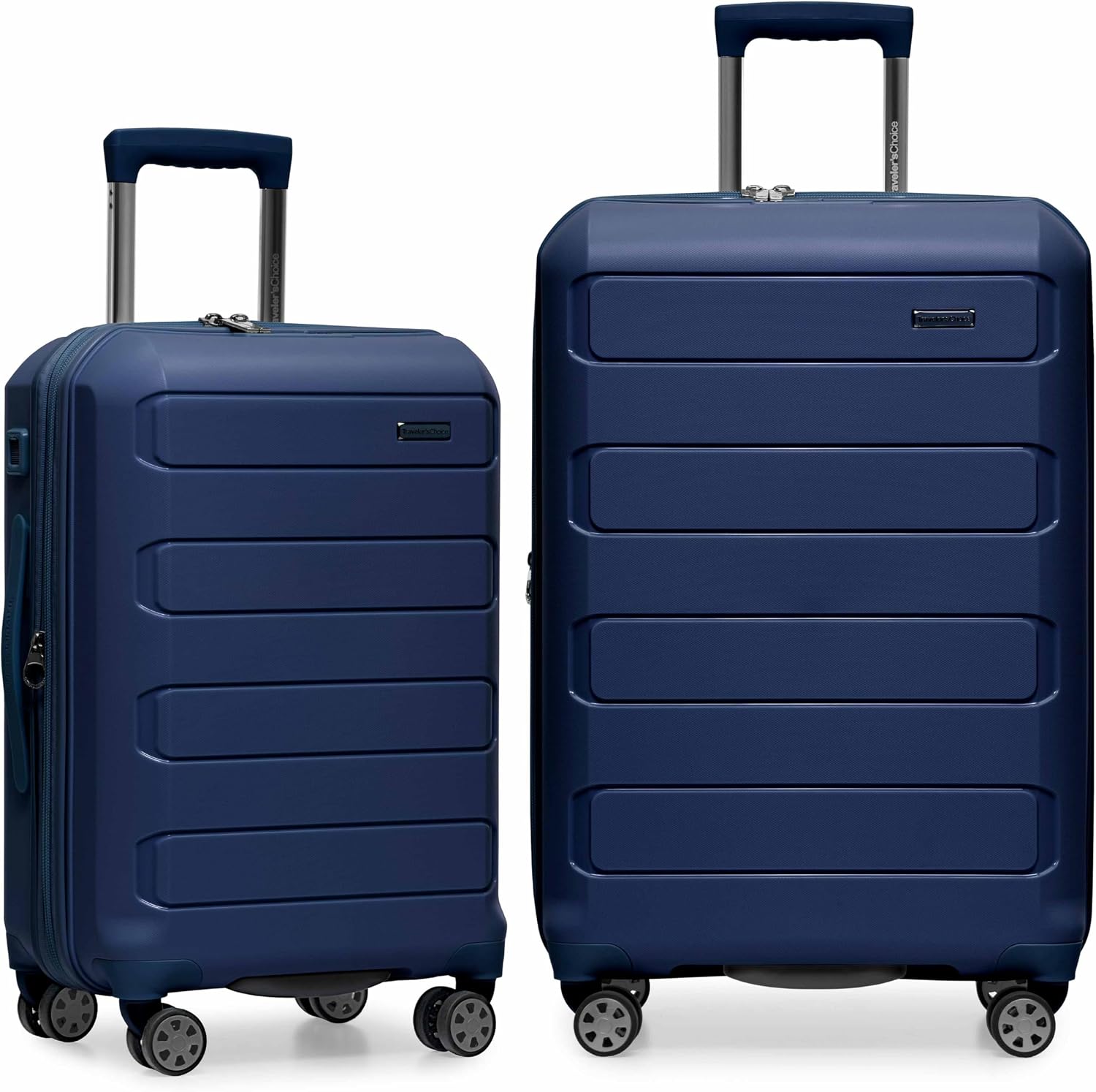
Traveler's Choice Pagosa Hardshell Expandable Luggage with Spinner Wheels, Navy, 2-Piece Set (22/27)
Two sizes in one purchase, expandable hardshell construction, and spinner wheels on both cases
A set can talk you into a second bag you did not need, and both cases still take up storage space
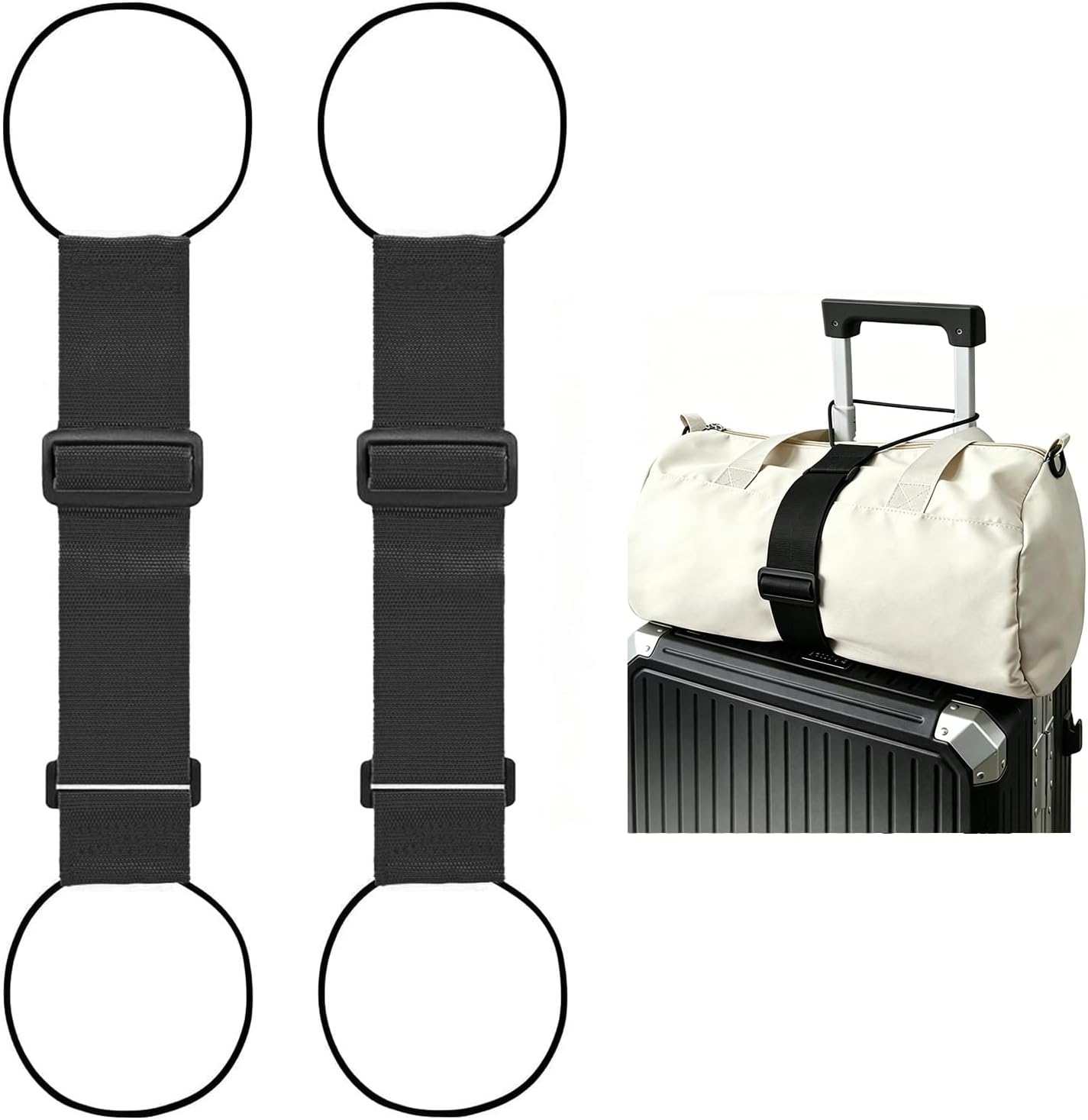
2 Pack Multi Use Strong Adjustable Luggage Connector Straps for Suitcases
Turns two rolling bags into one towable stack, adjustable for different handle heights, and it packs flat when you do not need it
It cannot fix a bad wheelbase, and a poorly balanced stack is worse than two separate bags
Prices and availability were captured from Amazon Creators API and may change.
How I judge a case at the gate
Three numbers decide almost everything: linear inches, weight, and wheelbase. Linear inches is length plus width plus height, and it is the number the airline actually measures at the gate. A case advertised at 21 inches can measure 23 once you count wheels and handles, which is how people end up paying a gate check fee for a bag they thought was legal. Weight matters because every ounce of case is an ounce you cannot pack. Wheelbase matters because a narrow wheelbase tips on carpet transitions, escalator lips, and the gap between the jet bridge and the aircraft door.
Then there is the stuff you only see after a few trips. Handle wobble shows up first, usually as a quarter inch of play that turns into a rattle. Zippers fail next, especially on expandable cases where the extra gusset puts more strain on the teeth. Hardside shells do not usually crack in the middle. They crack at the corners, right where the belt drops them. And spinner wheels are wonderful on tile and miserable on carpet, which is a trade-off no listing mentions.
One more thing I always check before recommending anything: the return policy. A case is a rental you buy. If the brand will not stand behind it after the first trip, you are the warranty.
The carry-on: Wrangler Smart Spinner Hardside, 22-inch
The Wrangler Smart Spinner Hardside Luggage is the practical pick for the traveler who wants a hardside carry-on without paying for a brand name. It is a 22-inch class case with a hard shell and spinner wheels, finished in black. That combination covers the two things that matter most in the cabin: a shell that shrugs off rain and overhead bin abuse, and four wheels that let you push rather than drag. On a long connection through a hub like O'Hare or Dallas, pushing a case with four wheels instead of dragging one on two is the difference between arriving at the next gate calm and arriving with a sore wrist.
The size is the real argument. A 22-inch class carry-on is the size that fits the sizer at the gate on most US carriers, which means you board with it, you keep it with you, and you never see it come down a belt. That is the whole game. The bag you carry on cannot be lost, cannot be delayed, and cannot be opened by someone else.
The trade-off is that this is a value play, not a buy-it-for-life case. Wrangler is not a luggage specialist, and the parts that fail first on any budget hardside are the wheels and the telescoping handle. If you fly twice a year and treat your bag like a bag, that is a fair bet. If you fly weekly, you are rolling dice on handle wobble, and I would rather you spend the money once than replace a case every 18 months.
The checked case: Samsonite Freeform 28-inch
The Samsonite Freeform 28-Inch Large Luggage is the case for the trips where the carry-on loses. It brings dual 360° spinner wheels, a TSA lock, an expandable hardshell, and a polypropylene shell in navy. Polypropylene is a sensible shell material because it flexes instead of shattering, which is the failure mode I saw most often on cheaper hardside cases. A shell that bends and springs back survives the belt. A shell that cracks at the corner is a trash bag full of clothes.
The dual spinner wheels matter more on a 28-inch case than on a carry-on. A big case gets heavy fast, and four wheels distribute that weight in a way that two inline wheels cannot. The TSA lock is convenience, not security. It keeps an opportunistic hand out of your bag at a hotel, and it lets a screener open the case without cutting the zipper. Do not treat it as a vault.
The trade-off is size and risk. A 28-inch case is a lot of bag. It gets heavy, heavy bags get checked, and checked bags are the ones that go missing. If you can pack for a week in a 22-inch carry-on, you should. The 28-inch is for cold weather trips, family travel, and the times you are moving more than you are flying. The expandable zipper is handy on the return leg, but remember that it is also the first zipper to fail, because expansion puts the teeth under load.
The two-piece option: Traveler's Choice Pagosa
The Traveler's Choice Pagosa Hardshell Expandable Luggage with Spinner Wheels is a two-piece set in navy, with a 22-inch and a 27-inch case. The appeal is obvious: one purchase, two sizes, expandable shells, spinner wheels on both. If you are starting from zero and you genuinely need a carry-on and a checked case, buying them together can be simpler than shopping twice.
Here is my problem with sets. They sell you a bag you did not plan to use. I have watched people buy a two-piece set because the pair looked like a deal, then store the larger case in a closet for three years and fly with the carry-on every time. That is not savings. That is a second bag you are paying to own and store. The set only makes sense if you already know both sizes will fly. If you are a carry-on-only traveler, buy one good carry-on and put the rest of the budget into packing cubes.
The other consideration is weight and bin fit. A 27-inch case is a checked bag, full stop. It will not fit a regional overhead bin, and on a small aircraft it will be gate checked even if you planned to keep it with you. If your itinerary includes regional jets, plan for that.
The accessory: adjustable luggage connector straps
The 2 Pack Multi Use Strong Adjustable Luggage Connector Straps for Suitcases solve a problem I saw every single day at the gate: one person, two rolling bags, two hands, one coffee. The idea is simple. You loop the strap through the handle of your second bag and around the handle of your main case, then tow the whole stack with one hand. The adjustable buckles let you set the length for different handle heights, and the straps pack flat in a pocket when you do not need them.
I have seen people try this with belts, carabiners, and once, memorably, a phone charging cable. It goes badly. A proper strap with a real buckle is better because it holds tension and releases when you need it to. The two-pack matters because one strap lives in your bag and the other lives in a drawer until you lose the first one.
The trade-off is that a strap cannot fix a bad wheelbase. If your main case tracks crooked, adding a second bag makes the whole stack worse. Balance the heavy bag closest to your hand, keep the lighter bag behind, and test the stack on carpet before you commit to it in a crowded terminal. Also check your airline's rules before you tow two bags through the cabin, because some crews will count the second bag at the gate.
What the trade-offs actually come down to
Weight is the first trade-off. Hardside cases are heavier than softside cases of the same size, and every ounce of case is stolen from your packing. That is the price you pay for a shell that does not absorb rain and does not snag on a belt.
Bin fit is the second. The 22-inch carry-on wins this category outright. The 27-inch and 28-inch cases lose it by definition. If your goal is never checking a bag, the larger cases in this comparison are not for you, no matter how good they are.
Risk is the third. A carry-on cannot be lost. A checked case can. That single fact should drive more of your decision than shell material, wheel count, or color.
Cost is the fourth, and I am not going to quote numbers here because they move. The pattern that matters is this: the gap between a budget hardside and a premium hardside is mostly in the wheels, the handle, and the warranty, not in the shell. If you fly often, those three parts are exactly where you want the money to go.
Who should buy what
The twice-a-year flyer should buy the 22-inch carry-on. It fits the bin, it survives the overhead, and it does not ask you to think about checked bag fees or lost bag claims.
The long-trip traveler should buy the 28-inch checked case, and pair it with a carry-on for the things you cannot afford to lose: medication, documents, a change of clothes, and chargers. Never check the stuff that ruins a trip when it goes missing.
The traveler starting from zero, who genuinely needs both sizes, can consider the two-piece option, but only if both cases will actually fly in the next year. Otherwise, buy one case and spend the difference on packing cubes.
The traveler who already owns a good carry-on and keeps adding a personal item should buy the connector straps. They are the smallest fix on this list for the most annoying problem on this list.
Should you buy a set?
Usually no, and here is the honest reason. Sets are priced and marketed as a package, which makes it hard to judge either bag on its own merits. You end up asking whether the pair is a good deal instead of whether each case is right for your trips. If you fly carry-on only, you are buying a checked case you will not use. If you fly checked only, you are buying a carry-on you will not use. The only traveler who wins with a set is the one who needs both sizes and knows it before the purchase, not after.
What I am watching next
Airlines are getting stricter about carry-on size at the gate, and I expect more sizers at more boarding doors. That pushes value back toward softside cases, which squeeze into a sizer in a way a rigid shell cannot. It also makes the 22-inch class more important, not less, because the penalty for a bag that measures 23 inches is now a checked bag fee and a trip to the belt.
The other thing I am watching is zipper reliability. Expandable cases put more stress on the teeth, and I have seen too many good shells ruined by a failed zipper. The brand that fixes that first wins the frequent flyer, not the brand with the best color palette.
The bottom line
Buy the 22-inch hardside carry-on if you want the simplest, lowest-risk setup. Buy the 28-inch checked case if your trips are long and your packing list is heavy. Treat the two-piece option as a real decision about whether you need both sizes, not as a bargain. And if you are the person towing two bags through Terminal 1 with one free hand, buy the connector straps and stop fighting it. The airline will treat your bag like it is disposable. Buy one that disagrees.