Carry-on only packing is a math problem, not a personality trait. You have a limit measured in linear inches, a weight limit that counts the bag itself, and an overhead bin that was designed long before anyone decided they needed four pairs of shoes. The bag is the only variable you actually control.
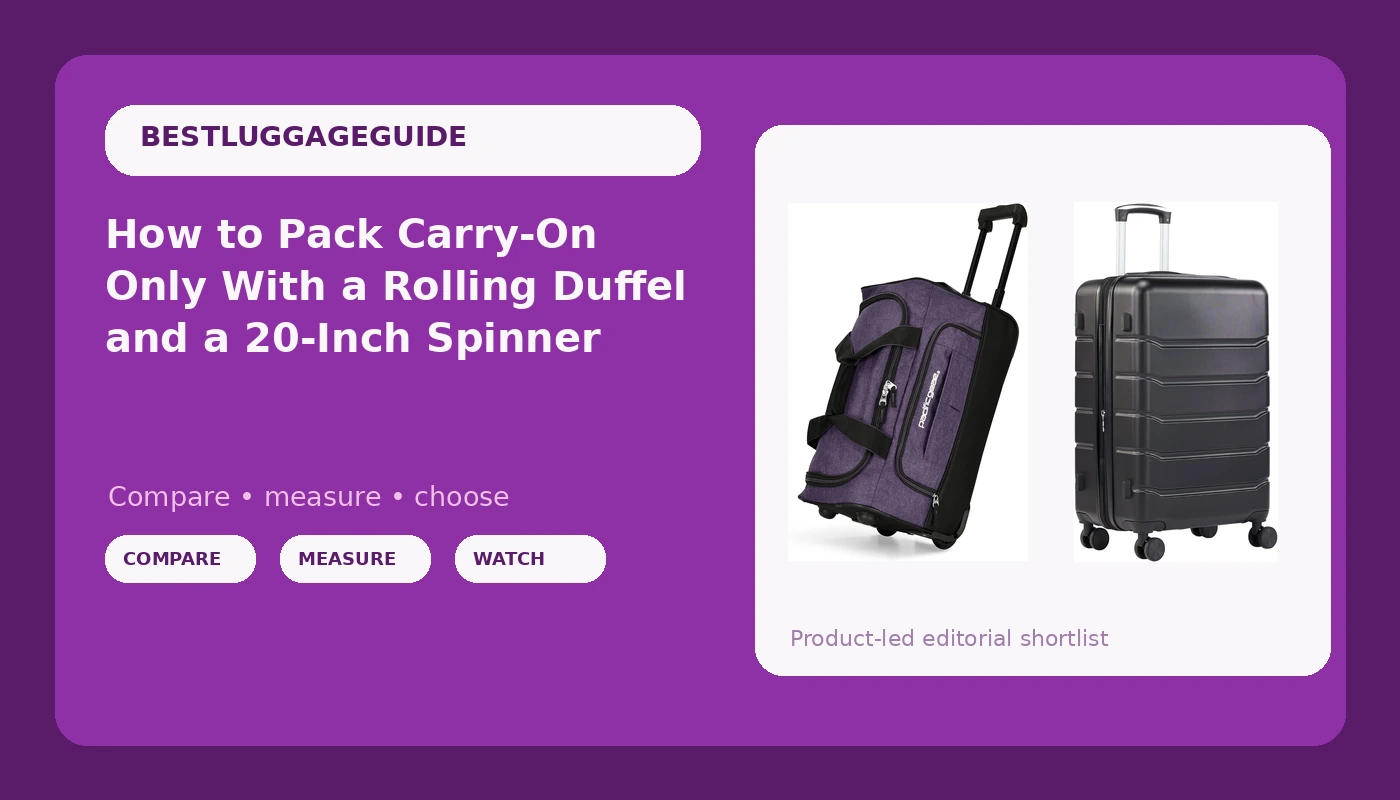
I spent six years as a gate agent at O'Hare, which means I spent six years watching what happens to a bag after you hand it to someone else. Now I fly more than 120 segments a year and keep 11 bags in active rotation. The setup I would build for a normal person on a normal week is two bags: a soft rolling duffel for the bulk of your clothes, and a 20-inch spinner for the bin. Different shapes, different jobs, and no gate check if you load them right.
That is the whole system. Here is how to run it.
Why you should trust me
Six years at the gate at O'Hare. I stacked, tagged, and occasionally chased bags across a tarmac. I have seen what the belt does to a corner, what a pile of forty bags does to a handle, and how quickly a zipper gives up when it is asked to close a bag that is one pair of boots past full.
Since then I have flown more than 120 segments a year for four straight years and reviewed carry-on gear full time. I judge a bag the way I judged it at the gate: what survives the belt, what fits the bin, and what the airline will not fight you about at the door. I test wheel noise on tile and on carpet, because a bag that rattles like a shopping cart on terminal tile is a bag you will resent by the second concourse. When something arrives as a press sample, I say so in the article.
How I picked these two
Five things decide it for me, and none of them are colorways.
The first is linear inches, which is length plus width plus depth. That single number is the one the sizer at the door is measuring against, and it is the number airlines actually publish. A bag can call itself anything it wants. The tape measure does not care.
The second is empty weight. The weight limit is a contract, and every ounce of bag weight is stolen directly from your packing. A heavy case is not a durable case. It is a case that made you leave a layer at home.
The third is wheelbase, which is how far apart the wheels sit. A narrow wheelbase tips when you pull it fast around a corner, and a tipped bag is a bag you are now carrying by the handle through a crowded B concourse.
The fourth is handle wobble. Grab the extended handle and shake it side to side. If it moves before the first flight, it will move a lot more after twenty.
The fifth is the zipper. It is the first thing to die on any bag, and the second is the handle. If both survive twenty flights, the bag was worth the money.
The two bags you'll need before you start
You do not need both for a weekend. You need both when the trip runs longer than four days, or when part of your load is gear that has to stay dry and protected while the rest of it can be squashed.
The duffel carries the soft goods and the volume. The spinner carries the structure and the bin fit. Together they cover a week without a checked bag, and separately each one is a perfectly good weekend bag.
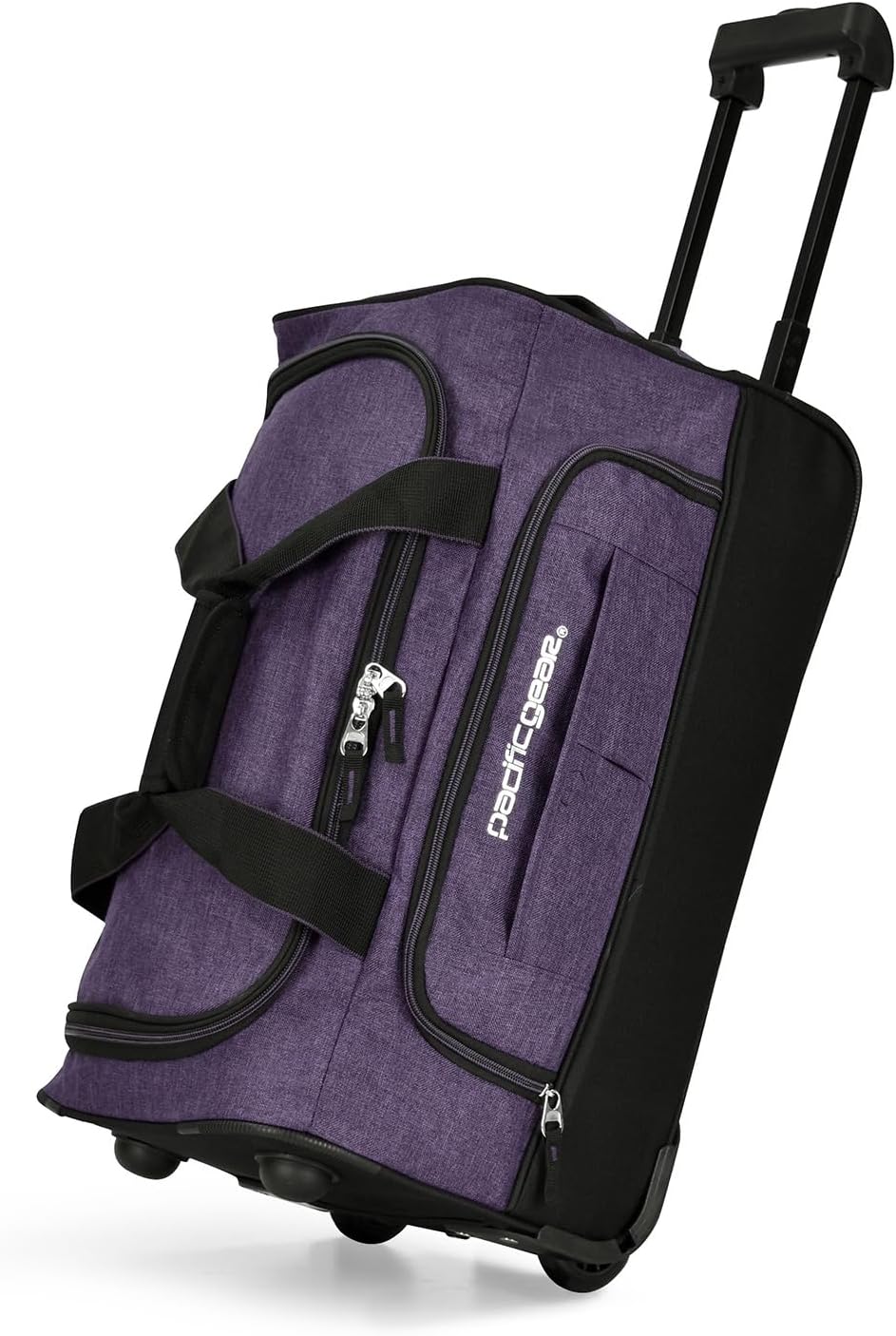
Budget pick: Pacific Gear Duffel Bag with Rolling Wheels
 Visit on Amazon →
A rolling duffel solves one problem a rigid case cannot: soft-sided volume. You can overfill a duffel by one shirt and still compress it into the bin. You can wedge it into a corner of an overhead that a hard shell will never enter, because a soft bag deforms and a hard one does not. It is the bag I would hand someone whose trip includes a jacket, a pair of boots, or laundry they plan to do halfway through.
The trade is protection. Soft sides do not protect anything breakable, and a duffel has no frame to keep its shape when it is sitting at the bottom of a stack. It also has a narrow wheelbase, which means it tips when you pull it fast around a corner. Load the heavy items at the wheel end so it tracks instead of wandering, and resist the urge to pack it to the zipper stop. A duffel stuffed completely full loses the one advantage it has, which is that it can change shape. Packed solid, it becomes a rigid bag that fits nowhere.
Flaws but not dealbreakers: No crush protection, and the soft shell will show every scuff from a baggage cart if it ever gets gate checked. Keep anything fragile in the other bag.
Anyone packing clothes, shoes, and gear for a week who wants maximum volume for minimum fuss will get the most out of this one.
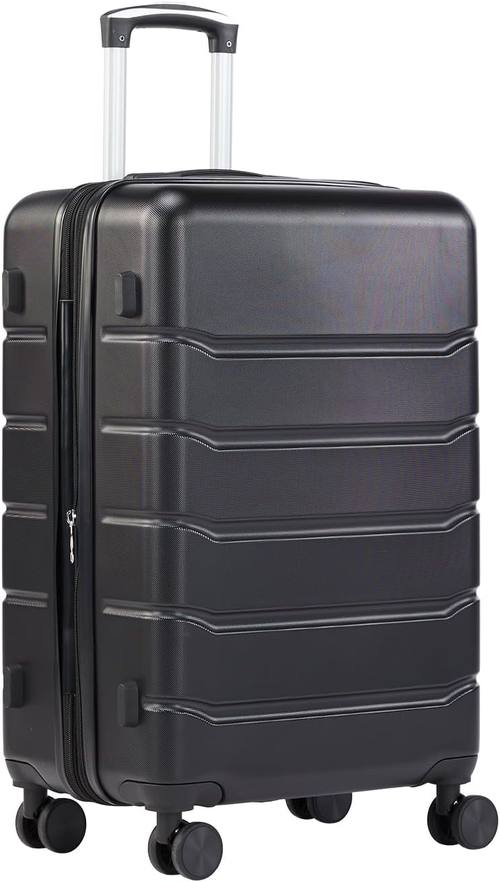
Our pick: Sweetcrispy 20 Inch Carry On Luggage, Suitcase with Spinner Wheels
 Visit on Amazon →
This is the bag that holds your trip together. The 20-inch class is the size that actually fits the sizer, and four spinner wheels mean you roll it upright beside you instead of dragging it behind at an angle, which takes most of the load off your wrist and shoulder.
This is the bag for structure: shoes, toiletries, anything you do not want squashed, plus a layer of clothes packed flat against the back panel. It is also the bag you can keep packed and visible, because a spinner stands up on its own in a hotel room instead of collapsing into a pile.
The caveats are real. Spinner wheels are the first component to die, and they are at their worst on carpet edges, grout lines, and cobblestone. Check handle wobble the day it arrives, not the day you fly. And treat the size as fixed. The 20-inch class is small on purpose, so if your airline's current carry-on limit is tighter than the bag's listed dimensions, that is on you to check before the trip, not on the gate agent to fix at the door.
Flaws but not dealbreakers: The wheels are the weak point on any spinner at this price, and the shell will scuff. Neither affects whether it fits the bin.
Anyone who wants one bag that does the structured half of the job and looks tidy doing it should start here.
The packing workflow, step by step
Step one: check the limit, not the label. Go to your airline's site and read the current carry-on dimensions before you pack anything. Enforcement changes, and so do the numbers. Add length, width, and depth to get linear inches. If your bag's total is over the number on the page, you are checking it, and no amount of confidence at the counter changes that.
Step two: weigh the empty bag. A kitchen scale works fine. Write the number down. That number comes out of your allowance before you pack a single sock, which is why an empty bag that weighs a lot is a design flaw, not a feature.
Step three: decide which bag carries the heavy items. For the spinner, weight goes over the wheel end so it rolls upright without you fighting it. For the duffel, heavy items go at the wheel end for exactly the same reason. This one habit fixes most of the tipping and wandering people blame on cheap wheels.
Step four: roll the soft goods into the duffel. Rolling beats folding for anything knit, and it beats folding for anything you want to pull out and wear without ironing. The duffel gets the clothes, the jacket, and the shoes you are not wearing on the plane.
Step five: cube the case. Packing cubes do not save space. They save your sanity at 3am in a hotel room when you are digging for a charger in the dark. The spinner takes two medium cubes and a shoe bag, and that is the whole interior.
Step six: weigh it again, packed. If you are over, the fix is not a smaller bag. The fix is fewer shoes, fewer books, and one fewer "just in case" layer. Nobody has ever needed the fourth pair.
Step seven: test the bin fit at home. Measure your bag against the airline's published number, and know it cold before you leave the house. The trick is knowing before the gate agent does. That is the difference between boarding in group four and standing at the door while someone tags your bag.
Step eight: have a gate check plan. On a full flight, the sizer at the door is the final word, and it does not negotiate. Put a tag with your name and phone number on both bags. Keep medication, keys, and one change of clothes in the personal item that never leaves your hands. Nothing in either bag should be something you cannot live without for 24 hours.
Where this goes wrong
The duffel packed to the zipper stop. Once it stops deforming, it stops fitting.
The expander zipper. Leave it closed. Expanded bags are the ones that get measured, and they are the ones that get tagged.
The listed size. Measure it yourself. A bag advertised as 21 inches that measures 23 will cost you a checked bag fee on the flight where it matters.
Spinner wheels on the wrong surfaces. Tile and terminal carpet are fine. Cobblestone, gravel, and the metal lip of a jet bridge are where wheels die.
Handle wobble you ignored in month one. Report it while the bag is still new, not after the third trip.
Policy drift. Airline limits and enforcement change, sometimes within a year. Check the current rules for the airline you are actually flying, not the ones you remember from last summer.
What I left off this list
Hard shells. They win the visual argument, and I have watched polycarbonate crack at the corners when the belt drops them wrong. Softside wins the practical argument for most people, and it is why both picks here are soft or semi-soft.
Premium brands. You are paying for the aesthetic and the story. The bag still rides the same belt.
Bundles. A bundle forces you to buy a bag you do not need so you can get the one you do. Buy the two bags that fit your trip and skip the third.
Oversized cases. Anything past the carry-on class gets checked, and checked bags get lost. That is not a risk I would build a packing system around.
Each of those deserves its own guide. This one is about two bags and a week.
What this costs
Both of these are budget-tier picks, so check the current price on each listing before you decide.
The real math is not the bag. It is the checked bag fee, the lost bag claim, and the hour at the carousel on a trip where you had no time to spare. Check your airline's current fee page for those numbers, because they move more often than the bags do.
Two bags at the low end of the market cost less than one mid-tier case, and the difference buys the packing cubes and the luggage scale that make the whole system work. Over a year of flying, that is the number I would look at, not the sticker on the shelf.
The bottom line
Carry-on only travel is not about willpower. It is about two bags with two jobs, a scale, and a tape measure. The duffel holds the volume, the spinner holds the shape, and both of them fit the bin because you checked the numbers before you left the house instead of arguing about it at the door.
I have watched thousands of bags go down that belt. The ones that came back in one piece were not the expensive ones. They were the ones that were the right size for the trip they were packed for.
Pack the trip you are actually taking. Leave the fourth pair of shoes at home.