Most carry-on packing advice is about folding technique. Folding is not where trips go wrong. Carry-on packing fails because a softside case and a 22-inch overhead bin are locked in a permanent argument about shape, and the way you load the bag decides who wins.
I spent six years working the gate at O'Hare, which means I watched carry-ons get measured, squeezed, sat on, and gate-checked more times than I can count. The bags that made it into the cabin were never the fanciest ones. They were the ones packed to a shape that matched the bin.
This is not a buying guide about which case is best. It is the workflow: how to load a softside spinner and a set of compression cubes so the bag closes without a knee on the lid, rolls straight, and clears the sizer. Two pieces of gear do the heavy lifting. Everything else is sequence.
Why you should trust me
Six years on the ramp side of the counter at O'Hare, then four more flying 120-plus segments a year and reviewing bags full time. I have watched thousands of carry-ons go through the same gauntlet, and I judge every case the way I judged them at the belt: what survives the bin, what the airline will not fight you about, and what gets pulled out of line for a gate check.
I do not care how a bag looks on a product page. I care about linear inches, wheelbase, handle wobble, and whether the zipper is still pulling clean on flight twenty. A suitcase is a rental you buy. The airline treats it like it is disposable, so buy and pack for the treatment.
How I judge a carry-on before it goes in this workflow
These are the numbers and traits that decide whether a bag can work in a bin, and they are the same things I check before I recommend any case.
Linear inches. Most US mainline carriers publish a carry-on limit around 22 x 14 x 9 inches, which is 45 linear inches. Measure the actual bag, not the marketing copy. A case advertised at 21 inches that measures 23 is a gate check waiting to happen, and the height figure on a spec sheet often does not include the wheels.
Case weight. The weight limit is a contract. Every pound the empty case weighs is a pound stolen from what you get to carry. This is the single number people ignore and then get mad about at the counter.
Bin fit. Spinner wheels add height. Handles add depth. A bag that measures 45 linear inches on paper can still be awkward in a bin because of how the wheels sit. Softside helps here, because the shell gives when you push it in.
Shell type. Hardside wins the visual argument. Polycarbonate shells crack at the corners when the belt drops them wrong, and I have seen it enough times to be careful about recommending them to people who check bags. Softside wins the practical argument, which is the one this guide is about.
Zippers and handle. These are the first two things to die on any case. If both survive twenty flights, the bag was worth the money. Handle wobble on day one is a bad sign, not a break-in period.
The expansion zipper. It is for the return leg. Not the outbound. More on that below.
The two pieces that do the work
You need a case that flexes and a packing system that compresses. That is the whole kit.
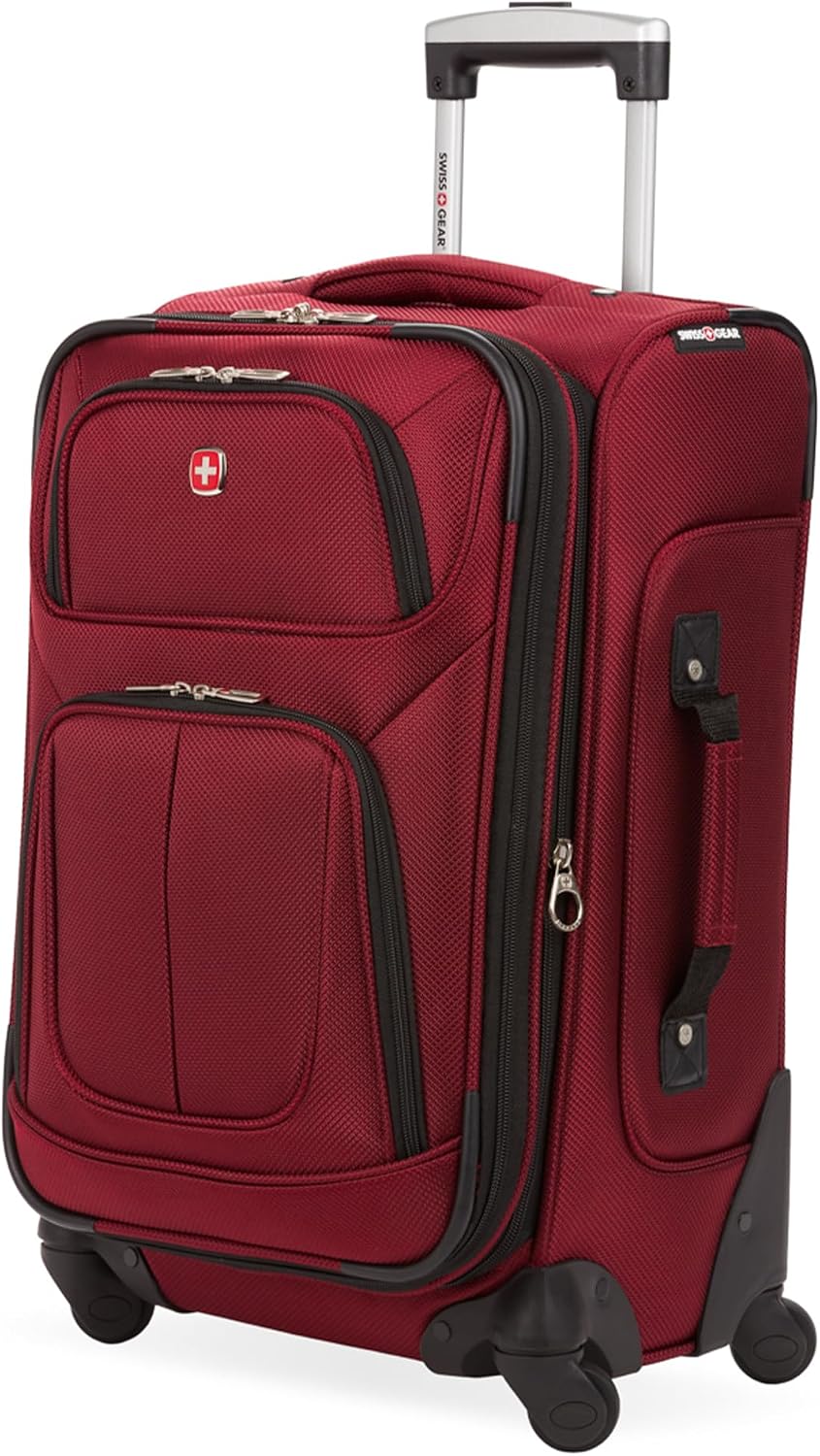
The case: SwissGear Sion Carry-On Spinner Luggage, Softside Expandable, Lightweight Suitcase, Burgundy, 22.75-Inch
 Visit on Amazon →
This is the softside spinner that anchors the workflow. The name tells you the important specs: softside shell, expandable, spinner wheels, 22.75 inches of case height. Check current Amazon price.
The 22.75-inch figure is the case height, and that is exactly the number you need to reconcile against your airline's published limit before you fly, because the wheel height and the handle hardware add to the total. Do that math once, on the carrier's own current page, before you pack anything. Rules change, and I do not quote policy from memory.
Why softside for this job: the fabric shell gives. When a bin is tight and the person next to you has already jammed their roller in sideways, a softside case can be pushed into the remaining space in a way a rigid shell cannot. It also means you can load it to a shape instead of loading it to a box. The expandable zipper is a genuine second act for the trip home, when you have souvenirs and a hotel laundry bag you did not plan for.
Flaws but not dealbreakers: Softside fabric shows scuffs and stains, and a fabric frame can be flexed out of square if you sit on it to close it. That is a loading problem, not a bag problem, and the workflow below exists to keep you from creating it. A softside shell also does not protect fragile contents the way a hard shell does, so do not pack glass in it.
Anyone flying mainline routes with standard overhead bins, who wants a case that will take a little abuse and still close, is the right owner for this one.
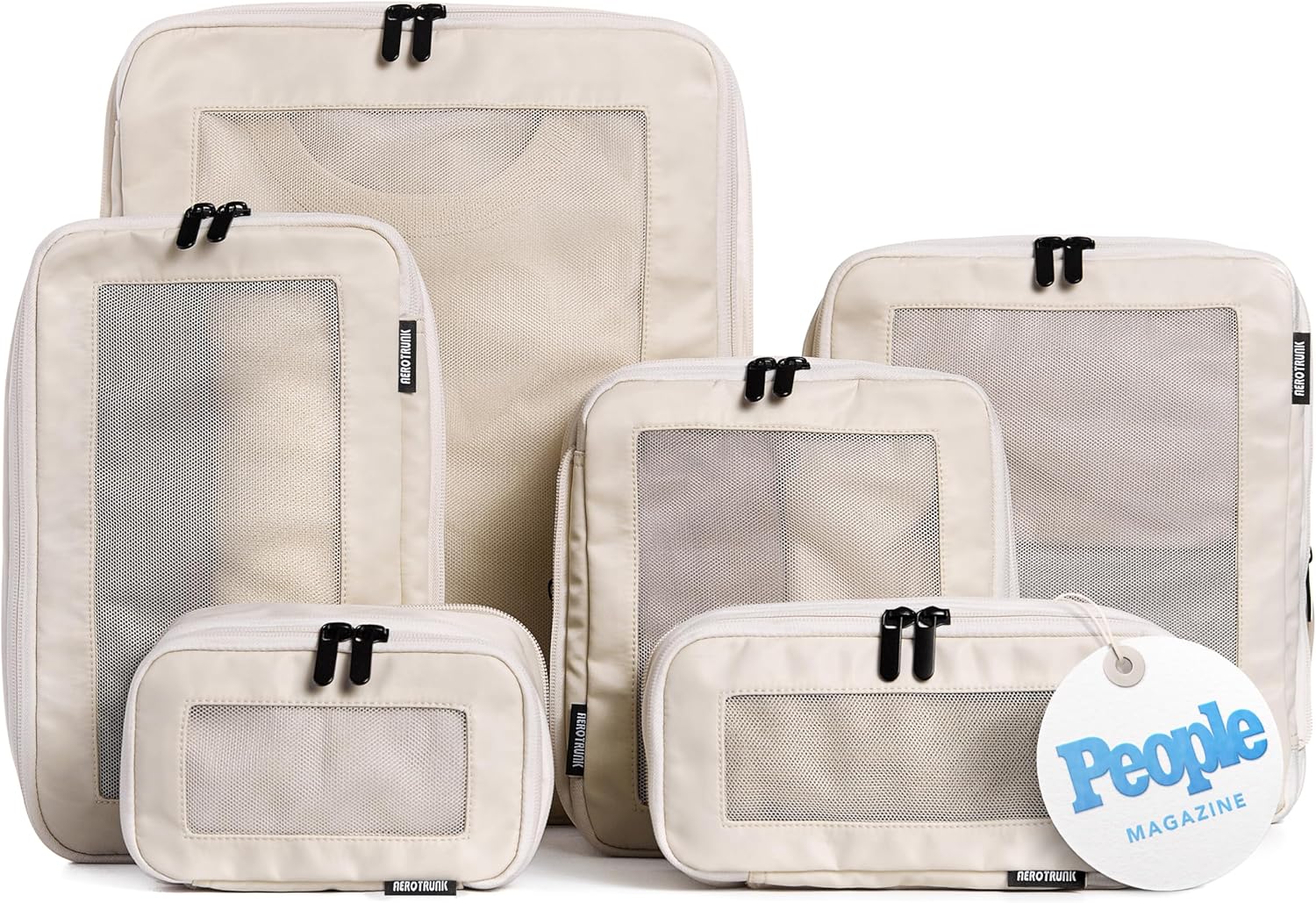
The packing system: Aerotrunk Compression Packing Cubes for Travel, 6-Pack, Beige
 Visit on Amazon →
Six cubes, compression style, beige. Check current Amazon price.
Here is the honest version of what packing cubes do. They do not save space. They save your sanity at 3am in a hotel room when you are digging for a clean shirt in the dark and do not want to unpack the entire bag onto the floor. What compression cubes add on top of that is shape control: you pull the second zipper and a soft pile of clothes becomes a flat brick. Flat bricks stack. Soft piles do not.
A six-pack gives you enough sizes to separate tops, bottoms, layers, and smalls without buying anything else. Beige is a light color, which means it reads clearly under bad hotel lighting and shows dirt sooner than a dark color would. That is a tradeoff, not a defect.
Flaws but not dealbreakers: The compression zipper is the weak point on any cube in this category. If a cube will not close without force, you have too much in it. Take something out. Do not pull harder, because a blown compression zip turns a cube into a loose sack. Also remember that compressing soft clothes hard is what creates wrinkles, so keep anything you want to wear to dinner out of the squeeze.
Anyone who has ever repacked a whole carry-on on a hotel bed to find one item should own a set of these.
The actual packing workflow
This works with any softside spinner. The sequence matters more than the gear.
Step one: Check your airline's current limit. Go to the carrier's own page. Do not trust a blog, a forum post, or a spec sheet. Limits vary by carrier, and the ones that matter for you are the ones on your ticket.
Step two: Measure the case, loaded dimensions included. Height with wheels, width with handles, depth with the expansion zipper closed. Add them up. That is your linear inches number, and it is the only one the sizer cares about.
Step three: Weigh the empty case. Bathroom scale, bag empty, nothing in the pockets. Write the number down. Subtract it from your allowance. What is left is your real packing budget, and it is almost always smaller than people assume.
Step four: Build your pile by category, not by day. Tops, bottoms, layers, smalls, toiletries, tech. Packing day by day creates duplicate items and dead weight, because you pack for the worst day six times instead of packing for six days once.
Step five: Cube and compress the soft goods. Shirts and pants into cubes, compress them into bricks, then stack the bricks flat in the case. This is the step that turns a softside bag from a sack into a system.
Step six: Load heavy items toward the wheelbase. The strongest part of any case is down by the wheels, and that is also where weight rolls best. Handle wobble gets worse when the load sits high in the frame, so keep the dense stuff low and centered.
Step seven: Fill the dead space last. Socks, chargers, belts, and cables go into the gaps between bricks. Soft items get pushed into the corners. This is where the last two inches of usable space live.
Step eight: Zip the case while it is flat. Lay the bag down to close it. Zipping a softside case while it stands up is how the liner gets caught in the teeth, and a liner that has been chewed once will catch every time after that.
Step nine: Weigh it again, packed. If you are over, the answer is subtraction, not the expansion zipper. Leave the expansion closed on the outbound leg. Expand it on the way home when you have no choice.
Step ten: Do the bin test before you leave the house. Set the packed case next to your airline's published dimensions and compare. The sizer at the gate is the final word, and it does not negotiate.
Where softside packing goes wrong
Over-expanding. The expansion zipper is a gift for the return trip. Use it on the outbound and you have built a bag that no longer fits the bin it was designed for.
Over-compressing. Squeeze soft clothes into rocks and you get a bag that closes easily and a wardrobe that looks like it was stored in a vacuum bag. Leave the dinner shirt out of the compression cube.
Treating cubes as a space saver. They are not. If a bag is full, cubes will not make it less full. They make it organized and predictable, which is a different benefit and a better one.
Assuming every bin is the same. Regional jets are the exception, and the rules vary by carrier and aircraft. A standard 22-inch spinner that sails into a mainline overhead may still get gate-checked on a smaller regional aircraft. Check the aircraft type on your booking and read the carrier's current carry-on page before you decide what to bring.
Buying a set you do not need. If you fly carry-on only, you do not need a matching three-piece set. You need one case you have measured and one packing system you trust.
What this all costs
I am not going to quote prices here, because they move and a stale number helps nobody. Check current Amazon price on both the SwissGear case and the Aerotrunk cubes, then do the math that actually matters: cost per trip.
The cubes are the cheap half of this setup and they outlast most bags. The case is the real spend. Divide what you paid for the case by the number of trips you will take in the next three years, and you get a per-trip number that is usually smaller than one checked bag fee on a round trip. That is the argument for buying one good carry-on instead of paying the airline to lose your clothes.
The packing workflow itself costs nothing. It is twenty minutes of measuring and a little discipline about what goes in the compression cubes.
The bottom line
Bin fit is not about the bag. It is about the shape you build inside the bag. Measure the case, weigh it empty, keep the expansion zipper closed until the trip home, compress your soft goods into bricks, and load the weight down by the wheels.
Do that, and a softside spinner stops being a gamble at the gate. The sizer gets one look and waves you through, and the only thing left to worry about is whether the person in 14C reclines before you sit down.