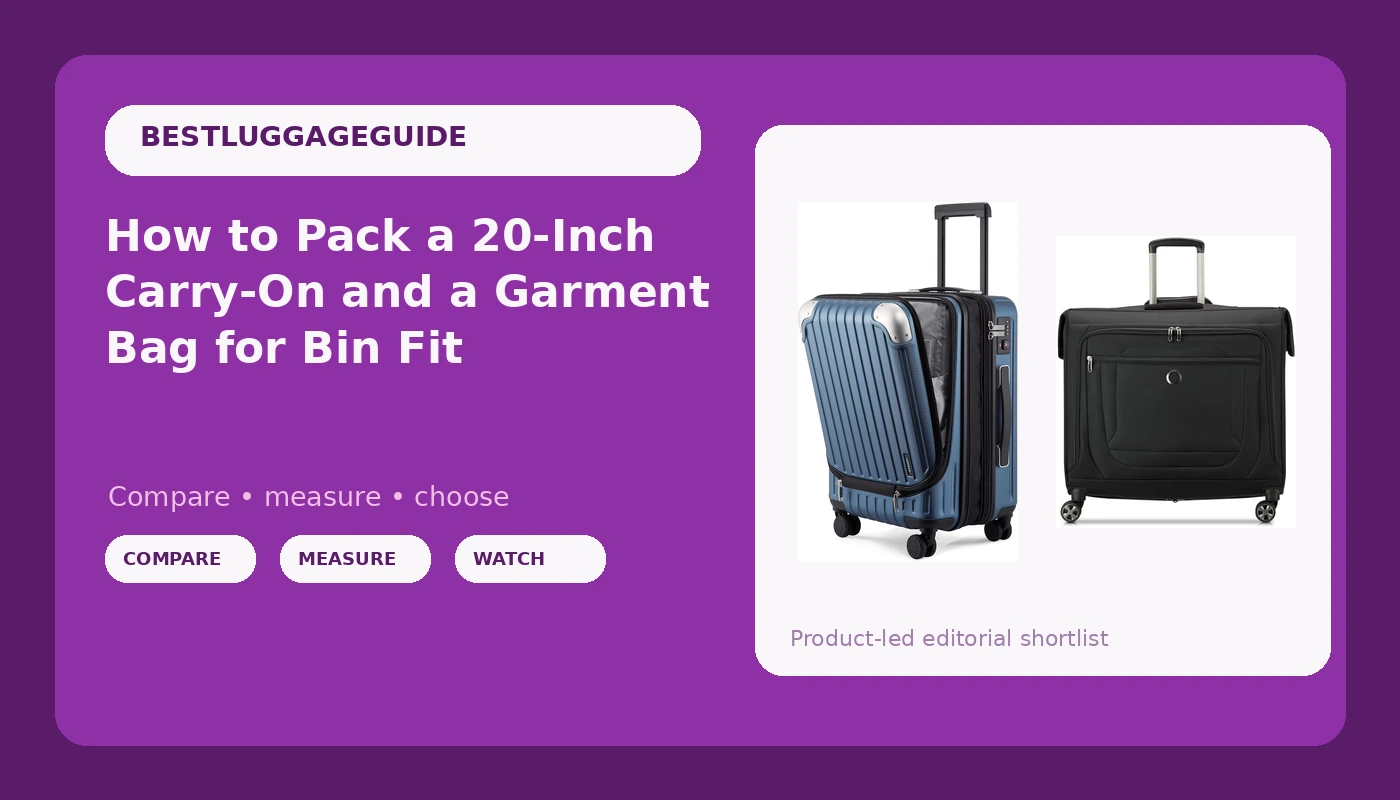
Most carry-on failures do not happen at security. They happen at the gate, in the moment the agent looks at your bag, looks at the sizer, and asks you to give it a try. I spent six years on that side of the counter at O'Hare, and the bag almost always loses. Carry-on bin fit is not luck and it is not brand loyalty. It comes down to the exterior size of the case, the way you packed it, and whether the bag was ever the right shape for the trip you booked.
This is a how-to, not a shopping list. You need two pieces: a 20-inch expandable carry-on for the bulk of your clothes, and a rolling garment bag for everything that cannot show up wrinkled at a client meeting or a wedding. The carry-on rides in the overhead bin. The garment bag rides with you and hangs up when you get there.
Below is the exact process I use, plus the two bags that fill those two roles.
Why you should trust me
I worked the gate at O'Hare for six years before I started reviewing bags full time. That means I have watched thousands of carry-ons get weighed, sized, gate checked, thrown down a belt, and occasionally lost. I fly more than 120 segments a year now and I keep 11 bags in rotation, which sounds excessive until you realize each one answers a different question.
Two rules I hold to. I do not recommend a case I have not flown with at least five times, and I check the airline's current published rules before I say a single word about what fits. Bag policies change, aircraft change, and the person at the gate is working from whatever the screen in front of them says that day. Nothing here is a promise about what your airline will allow. It is a method for getting yourself ready for the conversation.
I also disclose press samples when I have them. Nobody paid for a spot in this piece.
How I picked and how I tested
This is not a roundup of every carry-on on the market. The goal is a two-bag system that covers a week, so I limited it to the two roles that matter: one bag that has to fit the bin, one bag that has to keep clothes flat.
When I evaluate a case for bin fit, I look at four things. The exterior measurement with the wheels and the handle included, because that is how the sizer measures it. The expansion zip, because a bag that grows two inches is a different bag once it is open. The wheelbase, because a narrow base tips when you drag it through a jet bridge. And the handle, because handle wobble is the first sign a case is going to fail on you.
For the garment bag role the questions are different. How does it fold, how much does the fold compress, does it roll on its own or ride on top of the carry-on, and does the hanger loop hold up after a week in a hotel closet.
For both, I check wheel noise on tile and on carpet. Tile tells you if the wheels are hard and loud. Carpet tells you if they are soft and draggy. Good wheels are quiet on tile and still roll on carpet.
The two bags that fill the roles
These two cover the system. One is the bin bag, one is the wrinkle bag. Both are the kind of shapes that survive a belt, which is the standard that matters.
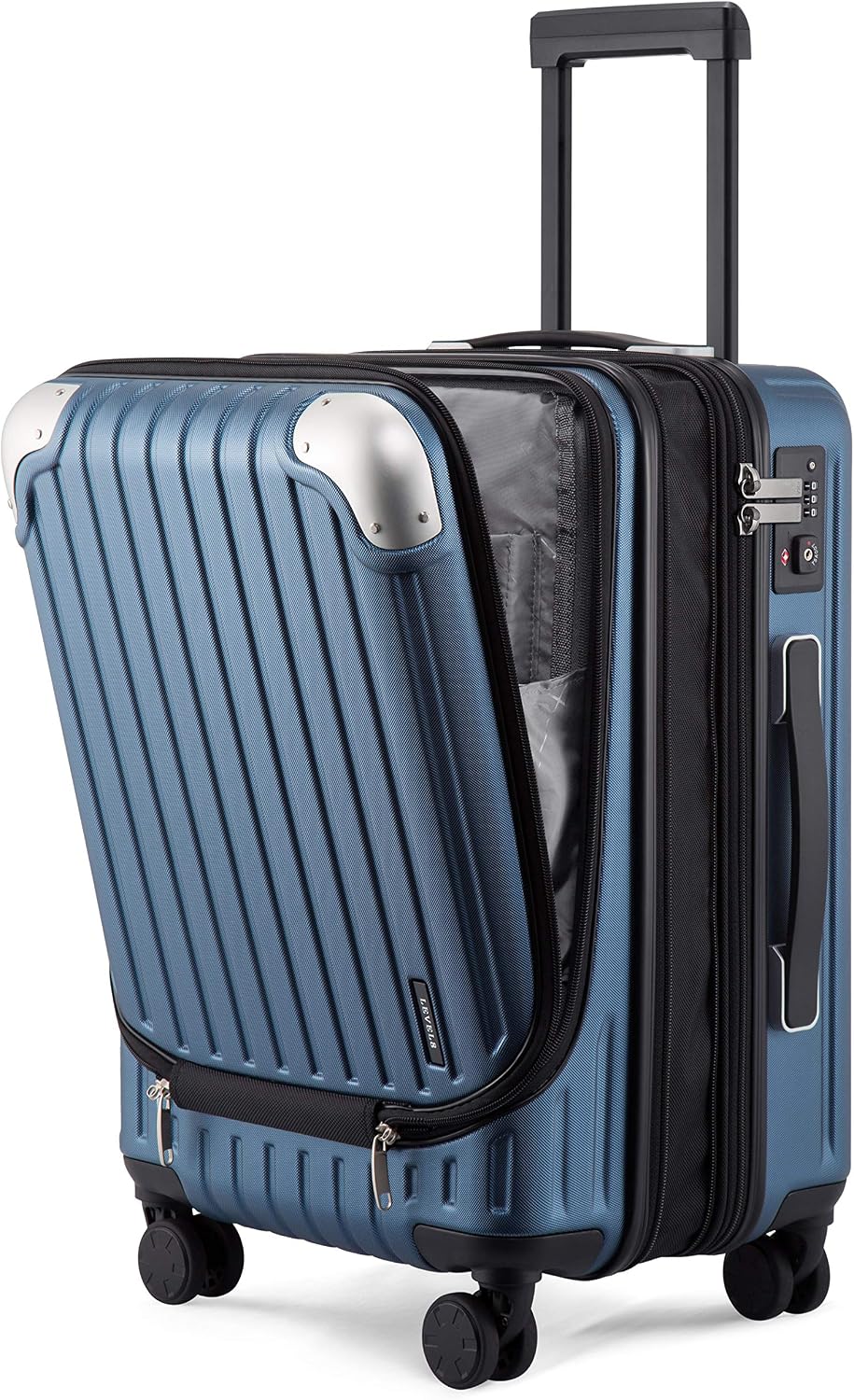
The bin bag: LEVEL8 Carry on Luggage Airline Approved, 20“ Expandable Carry on Suitcase
 Visit on Amazon →
This is the case for the overhead bin. The name gives you the two specs that matter most: it is a 20-inch exterior, which is the size class that still fits the majority of domestic overheads, and it expands, which buys you room for the return trip.
Two things to do before you fly with it. First, measure the exterior yourself with a tape, wheels and handle included. Do not trust the number on the listing, do not trust mine, and do not trust the number you remember from the last case you owned. Second, pack it with the expansion zip closed. Zip it open at the hotel, not at the airport. An expanded case is taller than the sizer, and the gate is not the place to find that out.
The wheelbase on a 20-inch case is the whole game. A wide base with four dual wheels rolls straight down a jet bridge and does not tip when you stop. If a case wobbles when you push it with one finger, it will wobble worse with 20 pounds in it.
Flaws but not dealbreakers: A 20-inch expandable case is a compromise. It is not the biggest bag you can carry and it is not the lightest. It is the one that clears the sizer in most domestic cabins, and that is worth more than the extra packing room you would get from a 22.
This is for the traveler who wants one bag and wants it to walk onto the plane without an argument.
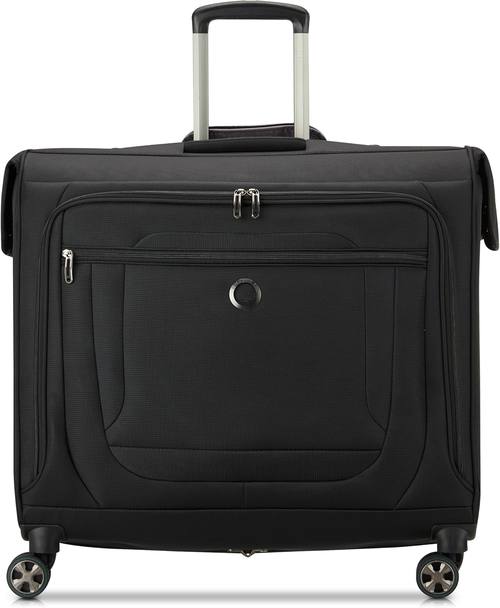
The wrinkle bag: DELSEY PARIS Helium DLX, Rolling Garment Bag with Wheels, Black
 Visit on Amazon →
A garment bag solves a problem a carry-on cannot. Suits, dresses, and anything with a structured shoulder need to hang, not fold into a cube.
This one rolls, which matters more than it sounds. A garment bag without wheels turns into dead weight on your shoulder by the second terminal, and you end up carrying it folded over your arm, which is exactly how clothes get creased. Wheels keep it upright and keep your hands free for coffee and a boarding pass.
Three things to know before you buy into this role. First, whether an airline treats a garment bag as a carry-on or a personal item varies, and the answer changes with the fare you bought. Check the current rules for your specific airline before you assume anything. Second, a garment bag folds better when it is not full. Leave a couple of inches of slack at the fold so the fabric has somewhere to go. Third, hang it the minute you get to the room. A garment bag that stays folded for two days hands you back the wrinkles you paid to avoid.
Flaws but not dealbreakers: A rolling garment bag is a second piece of cabin baggage. If your fare only allows one bag in the cabin, this is the piece that gets gate checked, so treat it as the bag you can live without for a few hours, not the bag with your medication in it.
This is for the traveler with a dress code at the other end.
The actual workflow
This is the process. It works with any 20-inch carry-on and any rolling garment bag, but it is built around the two above.
Step one: measure your bag and your airline's limit. Tape measure, exterior, wheels and handle included. Then pull up your airline's current published carry-on size for the route you booked. Write both numbers down. If the exterior is bigger than the limit, the bag is a checked bag, and you should plan for that instead of arguing about it.
Step two: weigh the empty case. The weight limit is a contract. Every pound the case weighs is a pound you cannot pack. A light 20-inch case gives you back more of your allowance than any packing trick on the internet.
Step three: pack the carry-on bottom-heavy. Heavy items at the wheel end, which is the bottom when the case stands upright. Shoes, toiletry bag, laptop, charger bricks. Light items up top near the handle. A top-heavy case tips on the jet bridge and rolls like a shopping cart.
Step four: use packing cubes for the soft stuff. Cubes do not save space. They save your sanity at 3am in a hotel room when you are hunting for one shirt in a bag that has been repacked four times. One cube for tops, one for bottoms, one for the small things that always end up at the bottom.
Step five: keep the expansion zip closed until you land. Expansion is a return-trip feature. Open it at the hotel and you get room for souvenirs and laundry. Open it at the airport and you have a bag that no longer matches the size you measured.
Step six: load the garment bag last and fold it loose. Garments on hangers first, then anything flat and soft on top of the fold. Leave slack at the crease. Do not cram the outside pockets, because that is what presses a line into the shoulders.
Step seven: test the roll before you leave the house. Tile floor and carpet, both. Push it, do not pull it, and listen. Rattle means the wheels are loose in the housing. Wobble at the handle means the telescoping tubes have play in them. Both get worse, not better, and both are easier to deal with at home than in a terminal.
Step eight: plan the gate check before it happens. Put a card with your name and phone number inside the bag, not just on the tag. Take the straps and loose accessories off before you hand it over. If it goes under the plane, you want it to come back with the wheels attached.
Step nine: know what you will say if you get stopped. Be polite, be brief, and be ready to consolidate. The agent is not making the rules and does not enjoy the conversation either. If your bag does not fit the sizer, ask what your options are and take the cheapest one. Arguing has never once made a bag smaller.
What this guide leaves out
Some things I am deliberately not covering. Bundled sets, because they force you to buy a bag you do not need, and the extra bag is always the one that ends up checked. Oversized carry-ons in the 22 and 23 inch class, because bin fit varies by aircraft and the only way to be sure is to measure your bag against your airline's current limit, which is step one above. Checked-bag strategy, because that is a different guide with a different set of rules.
What this guide is about is the two-bag cabin setup. One bag that fits the bin, one bag that keeps clothes flat.
What this all costs
I am not going to quote bag fees, because they change with the airline, the route, and the fare class, and the only number that matters is the one on your airline's page today. Look it up before you book, not at the gate.
The math on the two-bag system is simple. You are buying one case that fits the bin and one bag that keeps your clothes presentable. If the garment bag saves you a single hotel pressing charge on a work trip, it has paid for part of itself. If the carry-on keeps you out of a checked bag fee on the way home, it has done its job.
Check current Amazon price on both before you decide.
The real cost of the wrong bag is not the money. It is the twenty minutes at the gate, the case that gets gate checked and comes back scuffed, and the shirt that needs pressing before a meeting. Buy the two bags that fit the roles and you stop paying that tax.