Related: Carry-On Size Guide: What Actually Fits the Overhead Bin
Six years as a gate agent at O'Hare will change how you think about budget carry-on luggage. I watched thousands of cases ride the belt into the same metal can, and the pattern never changed. The bag that failed was rarely the cheapest one in the pile. It was the one with a handle that wobbled before the first flight, or a zipper that caught the liner every time it closed.
That is the lens I use now. Not how a case looks under studio lighting, but what happens at the gate. Does it sit flat in the sizer. Does it roll straight when it is packed to the max. What is the first part to give out.
This guide covers four low-cost carry-ons: three cases in the 20 inch class and one that measures a half inch taller. I have not flown with every one of these specific listings, so I am judging them the way I judged bags on the ramp, on stated size, wheelbase, handle design, and the parts that break first. Where a listing leaves a question open, I say so instead of guessing.
What I check before I buy a carry-on
Bin fit and linear inches. Most US carriers publish a carry-on limit of 22 x 14 x 9 inches. That is 45 linear inches, and it is the number the sizer at the gate enforces. A 20 inch case leaves you margin. A 21.5 inch case may still fit, but it depends on the shell and on how the gate agent is feeling about the flight's load.
Wheelbase. Four spinner wheels set wide apart roll straight when the case is loaded. Narrow wheelbases tip when you push them one-handed through a jet bridge. If you have ever watched someone drag a leaning case down the aisle while apologizing to every row, you know the difference.
Handle wobble. Extend the handle and rock it side to side before you buy. If it moves at the base when the case is empty, it will move more at 20 pounds. The handle is the second thing to die on a cheap case, right after the zipper.
Zipper quality. Zippers are the first failure point on any bag. A zipper that catches the liner is not a small annoyance, it is a countdown. Pull the track open and closed a few times in the store or watch it in the product video.
Case weight. The weight limit is a contract. A heavy case eats into your allowance before you pack a single shirt. Lighter is better, always, and it is the one spec where budget cases often beat premium ones.
Shell material. ABS is heavier and cracks at the corners. Polycarbonate flexes and comes back. Neither is indestructible, and I have seen plenty of expensive shells dented at the belt.
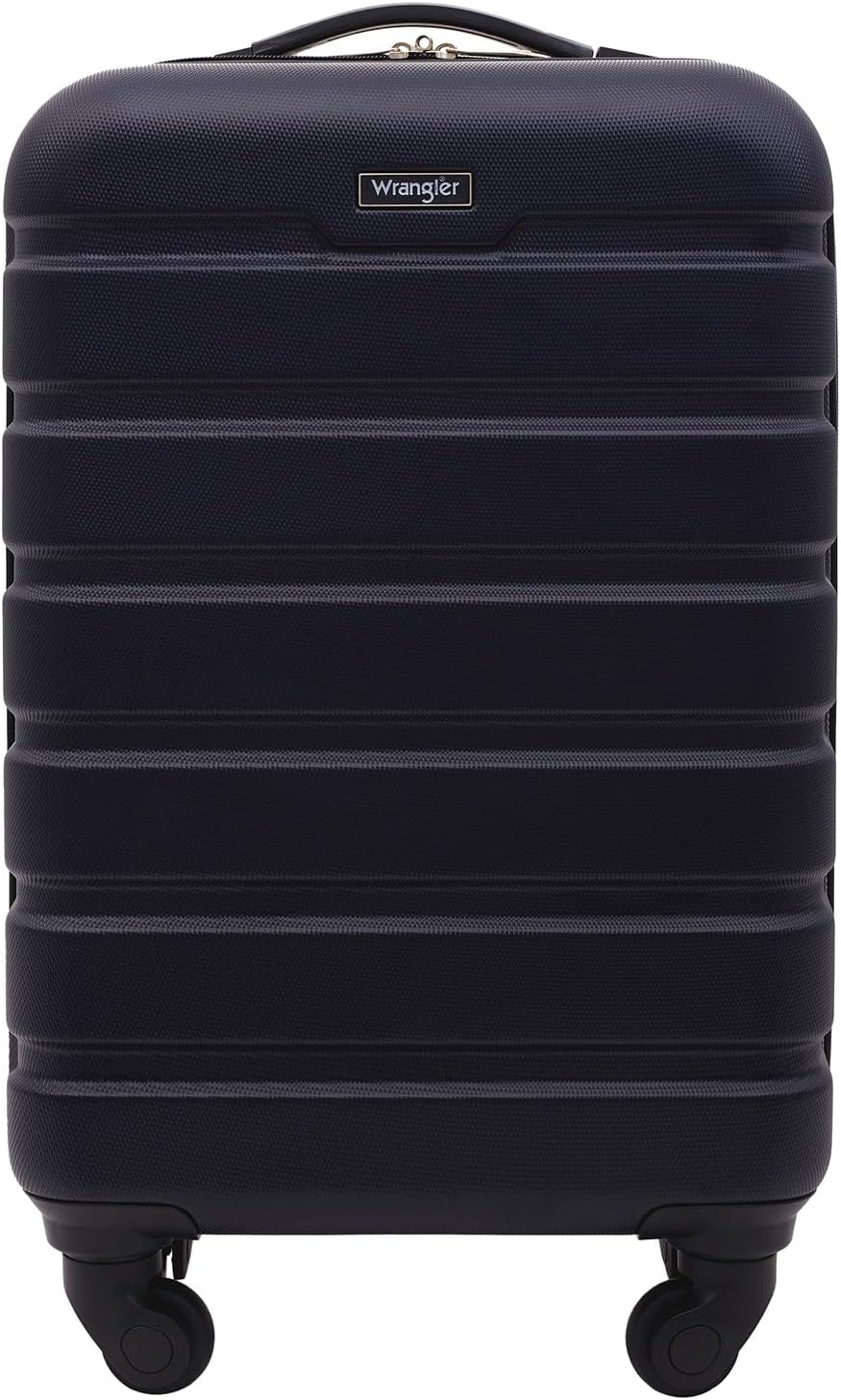
Wrangler 21.5" Spinner Carry-On Luggage, Navy Blue
Wrangler is a name most travelers know from denim, not from the overhead bin, and that tells you something about who this case is for. It is the roomiest option in this group at 21.5 inches, which is a half inch past the 20 inch class that most budget spinners sit in. That half inch is not nothing. It is the difference between fitting a pair of boots and leaving them home.
It is also the difference between clearing the sizer and getting asked to gate check. Whether it clears depends on how much give the case has, and the listing does not tell you that. So this is the one I would measure at home with a tape before I trust it as my only bag.
What I like about the position it occupies: it is the cheapest entry in this guide, it comes from a brand with a real licensing operation behind it, and it gives you the most volume for the money. What I would check first is the handle and the zipper track. On any case in this price band, those are the two parts that decide whether you are still using it in two years.
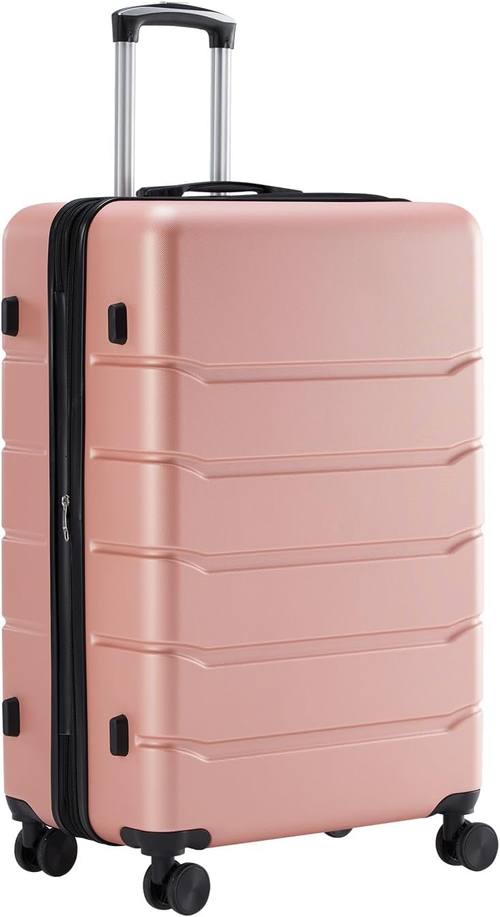
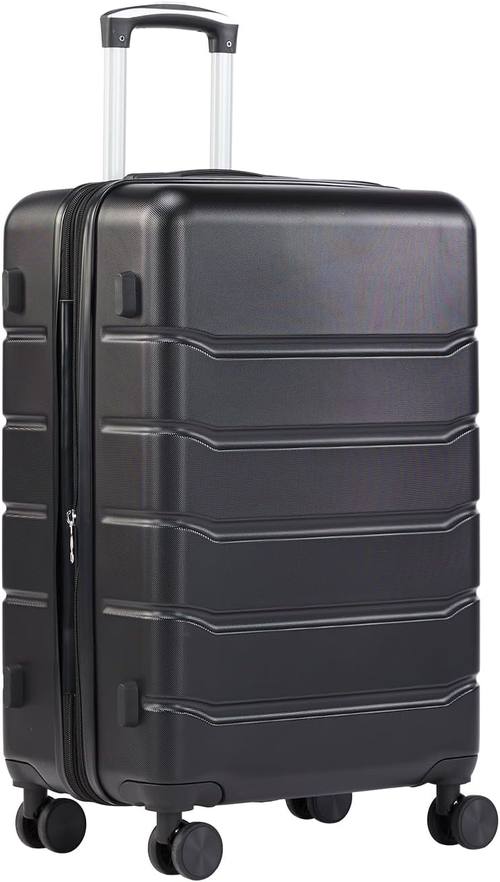
Sweetcrispy 20 Inch Carry On Luggage, Suitcase with Spinner Wheels
This is the middle of the group, and it is the one I would hand to a first-time carry-on traveler. Twenty inches is the size that fits the bin on essentially every US carrier, and it leaves you margin in the sizer, which is worth more than an extra inch of packing space when you are boarding in group five.
Two things to know before you buy. First, there are two separate listings here with the same product name. That usually means different variants or different stock batches, and they are not the same link, so open both and compare before you click. Second, a 20 inch spinner at this price is a value play, not a buy-it-for-life purchase. Treat it that way.
What I would check first: the wheel noise on tile, the shell corners, and whether the zipper runs clean without catching the liner. If you can push it through an airport once before your real trip, do that. A case that rattles like a shopping cart on day one does not get quieter.
LIGHT FLIGHT 20 Inch Carry On Luggage 22x14x9 Airline Approved, Royal Blue
This is the one I would pick if bin fit is your whole personality, and at the gate it usually should be. The name states 22 x 14 x 9 inches, which is the exact limit most US carriers publish for a carry-on. That is not a certification, and no airline endorses the phrase airline approved, but the number itself is the useful part. A case that advertises its real dimensions is easier to trust than one that advertises a vague size class.
Twenty inches of case that measures 22 x 14 x 9 outside is a well-proportioned shape for the overhead bin. It is also the most expensive of the four, and you are paying for that dimension statement plus the brand's own build, not for a premium shell.
What I would check first: measure it yourself with a tape when it arrives. If the outside dimensions come in over the stated numbers, return it, because the sizer does not care what the listing said. After that, the usual order of failure applies: zipper, then handle, then wheels. Watch all three in the first month and you will know what you bought.
The reference table
Same four cases, side by side, in the order I would look at them.
| Case | Size as listed | Stated feature | What I would check first | Best for |
|---|---|---|---|---|
 Visit on Amazon → Wrangler 21.5" Spinner Carry-On, Navy Blue |
21.5 in | Spinner wheels | Handle wobble, zipper track | The most room for the least money |
 Visit on Amazon → Sweetcrispy 20 Inch Carry On, listing one |
20 in | Spinner wheels | Wheel noise, shell corners | A safe bin fit at a low cost |
 Visit on Amazon → Sweetcrispy 20 Inch Carry On, listing two |
20 in | Spinner wheels | Same as above, compare the link | The same bag, a second listing to compare |
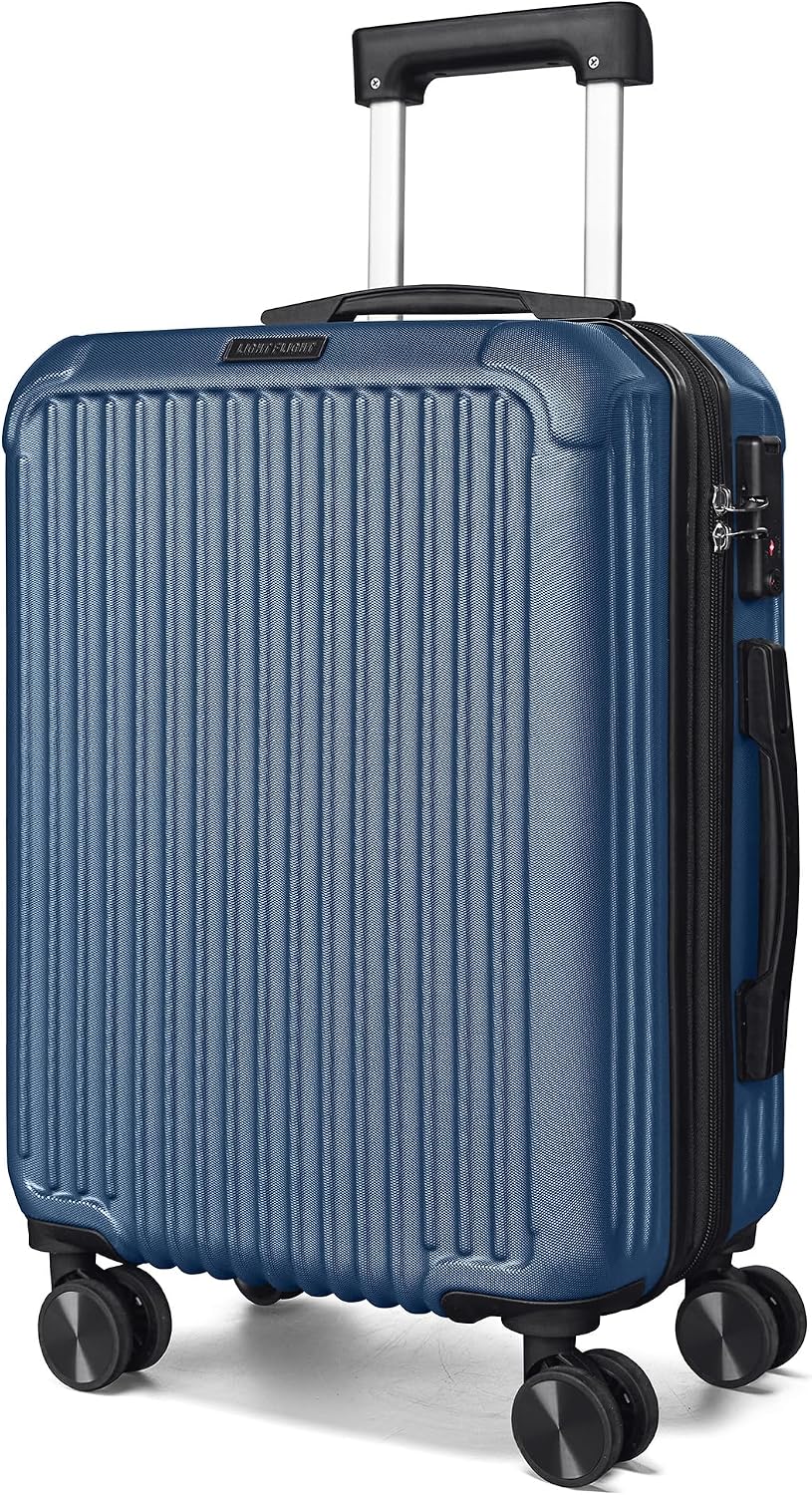 Visit on Amazon → LIGHT FLIGHT 20 Inch Carry On, Royal Blue |
20 in | 22 x 14 x 9 in, airline approved | Actual dimensions with a tape | Travelers who want the numbers in writing |
Analysis: where cheap cases actually fail
None of these four is going to be the bag you hand to your kid in fifteen years. That is not the point of this price band. The point is to get a case that survives long enough to be worth the money, and the failure order is predictable.
The zipper goes first. On a cheap case the track catches the liner, you force it, and the pull eventually separates from the slider. That is the moment the bag is done, because replacing a zipper costs more than the case. Look for a track that runs clean and a slider with some weight to it.
The handle goes second. Handle wobble is the tell. If the tubes move in the housing when the case is empty, the plastic bushing inside is already loose, and it will not tighten up with use. Rock the handle side to side the first day. If it clacks, return it while the return window is open.
The wheels go third, and they usually announce themselves early. Roll the case on tile, then on carpet. Tile shows you whether the wheels track straight. Carpet shows you whether they drag. A spinner that pulls to one side on tile will pull harder when it is loaded, and you will spend the whole trip correcting it.
Shells matter less than people think at this price. ABS cracks at the corners when the belt drops the case wrong. Polycarbonate flexes and mostly comes back. I have seen expensive shells dented at the belt too, so do not buy a premium case expecting armor. Buy the size you need, keep the weight down, and accept that the airline treats your case like a rental.
The one spec that separates these four is size. The Wrangler gives you a half inch more case and a bigger question at the sizer. The two Sweetcrispy listings and the LIGHT FLIGHT sit in the 20 inch class, which is the safest bet on a US carrier. If you are flying a carrier that weighs carry-ons, remember that the case weight counts against you before you pack anything.
Should you buy the Wrangler 21.5-inch spinner?
If you want the most interior room for the least money, yes. It is the biggest case here and the cheapest way into a branded spinner. The catch is the size. A 21.5 inch case is a half inch past the class most carriers are used to seeing, so it can clear the sizer on one flight and get flagged on another. That is not a reason to skip it. It is a reason to measure it at home and know your answer before you get to the gate.
Check the handle and the zipper first. Those are the two parts that decide whether this case lasts.
Should you buy a Sweetcrispy 20 inch?
Yes, if you want the safest bin fit at the lowest cost. Twenty inches fits the overhead on essentially every US carrier, and it leaves margin in the sizer. Open both listings before you buy, because they are two different links with the same name, and the one you click is the one you get.
This is a value case, not a lifetime case. Watch the wheels on tile in the first week and check that the zipper runs clean. If both pass, you got your money's worth.
Should you buy the LIGHT FLIGHT 20 inch?
Yes, if having the dimensions in the listing matters to you, and at the gate it should. The stated 22 x 14 x 9 inches matches the carry-on limit most US carriers publish, which means the case is designed for the sizer rather than around a marketing size class. It is the most expensive of the four, and it is still a budget case, so the same rules apply: measure it, check the zipper, check the handle, and listen to the wheels.
Buy the size you actually need. An oversized case gets checked, and checked bags get lost.