Most carry-on arguments are not about packing. They are about bin fit. I spent six years as a gate agent at O'Hare, and the same scene played out on every full flight: a traveler at row 14 holding a 23-inch case over their head, trying to force it into a bin built for 22 inches, while the line behind them backed up into the jet bridge. The case was fine. The dimensions were wrong. Carry-on bin fit is the most useful thing to understand before you spend a dollar, and it is why I judge a 20-inch spinner with a tape measure instead of the photo on the box.
This is not a brand argument. It is a process. Measure the case, weigh it empty, know the number your airline publishes, pack the way you actually travel, and measure again. Do that and you will never be the person at row 14.
Why you should trust me
Six years on the gate at O'Hare means I watched thousands of cases get thrown, stacked, crushed, and occasionally lost. I have flown more than 120 segments a year for the last four years, and I keep 11 bags in active rotation because no single case answers every trip. I judge a carry-on the way I judged it at the gate: what survives the belt, what fits the bin, and what the airline will not fight you about.
I also keep boundaries. I do not recommend a case I have not flown at least five times without saying so up front. I test wheel noise on tile and on carpet, because a case that sounds fine in a hotel lobby can rattle like a shopping cart on a jet bridge. I disclose press samples. And I do not repeat airline policy from memory, because the published rules change more often than most travel writing admits.
How I judge a carry-on before it earns a spot
Four numbers and two hands. That is the whole test.
The first number is linear inches: length plus width plus height. Every US carrier publishes a carry-on limit, and most of them land near 22 by 14 by 9 inches, which is 45 linear inches. The second number is weight, and it is the one people ignore. A 9-pound case eats 9 pounds of your allowance before you pack a single sock. Every ounce of case weight is stolen from your packing.
The third number is the measurement you take yourself, with a tape, wheels and handles included, because published specs are inconsistent about whether wheels count. I have measured cases advertised at 21 inches that came in at 23 on my tape. The fourth number is the depth once you open the expansion zipper, and I will come back to that.
Then the hands. One hand on the extended handle, one hand on the shell, and you wiggle. A handle that wobbles before the first flight will wobble worse after twenty, and the handle is the second thing to die after the zipper. Push the case across tile and then across carpet and listen. Wheels that rattle on tile will announce you in every quiet hotel hallway.
The two cases worth a look
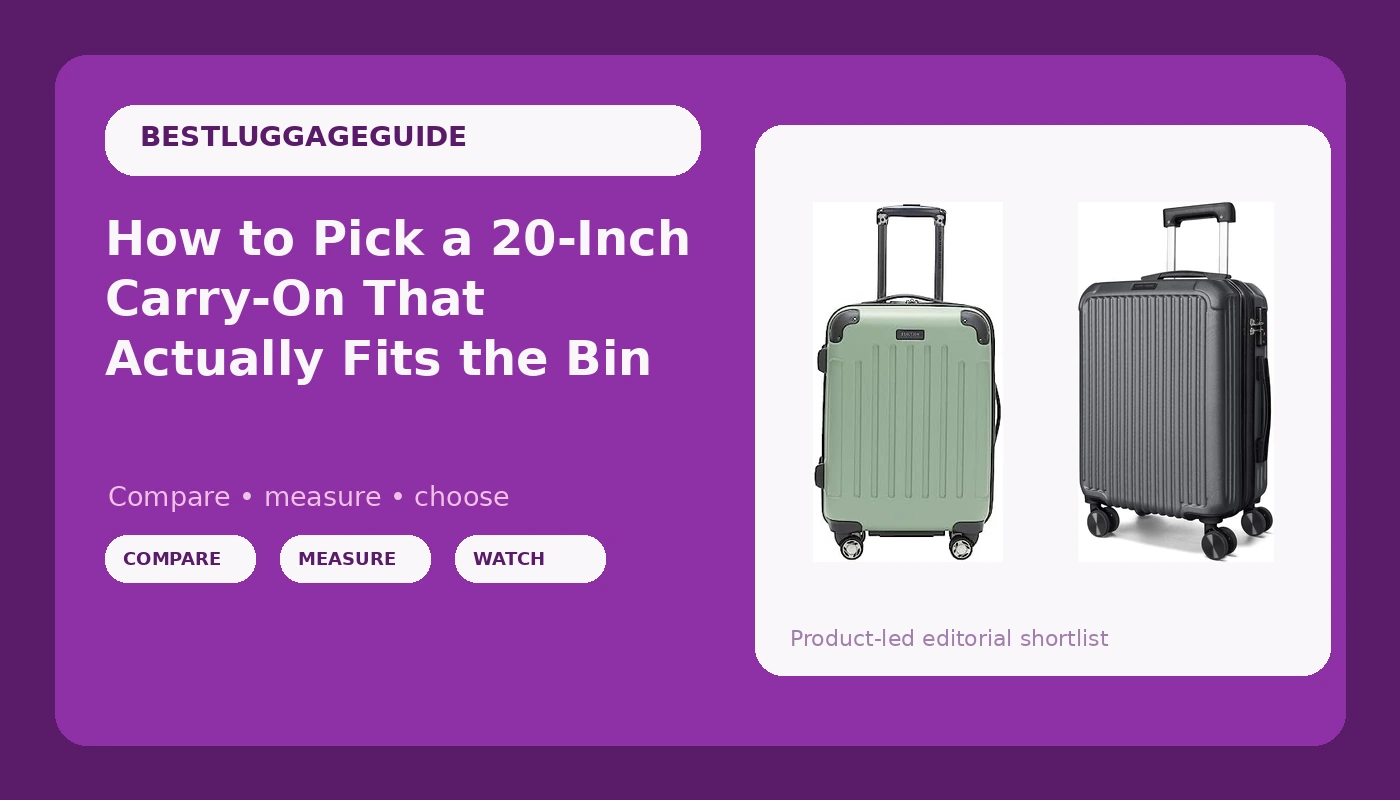
Both cases below are 20-inch spinners in the carry-on class, and they answer two different questions. One is built to the strict published dimension. The other gives you depth on demand. Neither is a set, and neither forces you to buy a second bag you do not need.
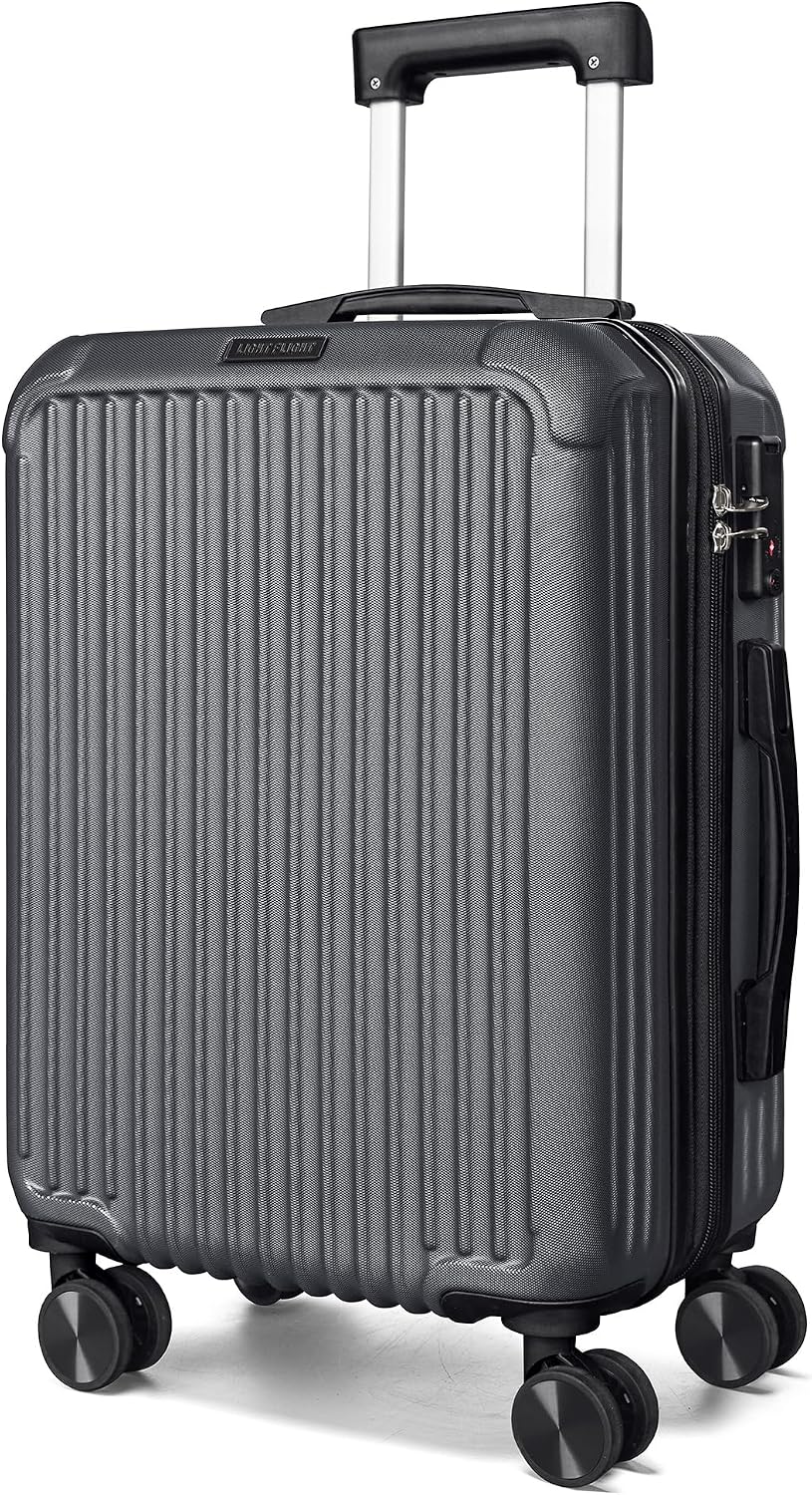
The strict-dimension pick: LIGHT FLIGHT 20 Inch Carry On Luggage 22x14x9 Airline Approved,Glacier Gray
 Visit on Amazon →
The name on this one is doing the work: 22 by 14 by 9 inches, which is the size most US carriers publish as the carry-on maximum. That matters more than any feature list, because a case that measures to the published spec is a case you can walk past the sizer without a conversation. The Glacier Gray finish is the kind of neutral that does not scream for attention on a baggage carousel, which is a small thing until you are the last person standing at the belt.
What I would verify before you commit: put your own tape on it, wheels and handle included, and confirm it comes in at the published numbers. Weigh it empty on a kitchen scale, because that number decides whether you are packing 40 pounds of clothes or 45. Roll it on tile and then on carpet and listen to the wheels. Extend the handle and wiggle it.
Check current Amazon price on the product page, since this tier moves around.
Flaws but not dealbreakers: A 20-inch case in this class trades capacity for compliance. If you pack heavy or travel with bulky layers, you will run out of room before you run out of weight allowance. Packing cubes help, and they are the best travel purchase under $50 for a reason.
This is the case for the traveler who flies the strictest carriers and wants zero argument at the gate.
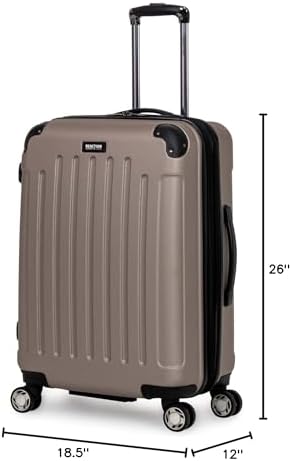
The expandable pick: Kenneth Cole REACTION Renegade Luggage Expandable 8-Wheel Spinner Lightweight Hardside Suitcase, Seafoam, 20-Inch
 Visit on Amazon →
Eight wheels instead of four changes how a case behaves in an airport. A spinner with eight wheels rolls upright in any orientation, which means you are not dragging it behind you at an angle through a crowded concourse. The hardside shell protects what is inside from the crush of a full bin, and Seafoam is a color you will spot on a carousel from thirty feet away, which is the actual benefit of a loud case.
The expandable zipper is the feature I would think hardest about. Expansion is real capacity, usually an inch or two of depth, and it is also the fastest way to turn a compliant carry-on into a gate-checked bag. Measure the case expanded before you fly it expanded. If the expanded depth pushes you past your carrier's published limit, plan to check it or plan to pack less.
Check current Amazon price on the product page.
Flaws but not dealbreakers: Hardside shells crack at the corners when the belt drops them wrong. I have seen it on expensive cases and cheap ones, and a polycarbonate shell is a tradeoff, not a guarantee. The corners are also where the scuffs live, so a light color will show airport wear faster than a dark one.
This is the case for the traveler who wants protection for fragile contents and a case that rolls the way a spinner should, not the way a shopping cart does.
The actual bin-fit workflow
This works with any carry-on you already own. If your case fails step one, none of the rest matters.
Step one: Measure it yourself. Tape measure, flat surface, wheels and handle included. Write the three numbers down. Length plus width plus height is your linear inches, and that is the number the gate agent is looking at when they pull out the sizer.
Step two: Look up your airline's current published limit. Do not trust a blog post from three years ago, including mine. Carriers publish carry-on dimensions and weight limits, and they update them. Check the rule for the specific airline on your specific ticket, because regional partners and basic economy fares can differ from the mainline policy.
Step three: Weigh the case empty. Kitchen scale, no clothes. If the empty case is heavy, you are already losing the weight fight. A lighter case gives you back pounds for actual gear, and that is the only reason to care about the word lightweight on a product page.
Step four: Pack the way you actually travel, then measure again. Most people measure an empty case and then overstuff it. Pack it, close it, and put the tape on it a second time. If you use the expansion zipper, measure expanded. That is the configuration the gate sees.
Step five: Test the wheelbase. Set the case on tile and push it with two fingers. Then push it on carpet. A stable wheelbase tracks straight and does not fight you. A narrow one wobbles and tips when you take a corner too fast, which is exactly what you do when your connection is 35 minutes.
Step six: Check the handle for wobble. Extend it fully, hold the shell with one hand, and move the handle side to side. Some movement is normal in a telescoping handle. Rattling is not. The handle is the part that fails second, after the zipper, and it fails at the worst possible moment, which is while you are walking.
Step seven: Inspect the zipper. On a hardside case, the zipper is the closure that holds the whole thing together. Run it around the full perimeter and feel for spots where it catches the liner. Check that the pulls are metal, not plastic, and that there is a TSA lock or a lockable pull, since a bag that cannot be locked gets opened the hard way.
Step eight: Have a gate-check plan. On a regional jet or a completely full flight, your case is going in the hold no matter how compliant it is. That is not a failure, it is arithmetic. Before you board, pull the batteries, the medication, the passport, and anything you cannot replace into a personal item. A gate-checked case gets treated exactly like a checked case, so pack the fragile and the valuable out of it before you hand it over.
What I left out and why
Softside cases are still the practical choice for some travelers, and I am not going to pretend otherwise. If you routinely come home with things that do not fit the way you left, a softside with an exterior pocket gives you give that a hard shell does not. The reason both picks above are hard shells is simple: a bin is a fixed volume and a shell is a fixed shape, and that combination is predictable.
Sets are out. A set forces you to buy a bag you do not need and to pay for storage space you do not have. Buy the one case that matches your trips.
Premium brands are out of this conversation too. The brand that made luggage an accessory builds good cases, but you are paying for the aesthetic, and a warranty is only worth what the company decides it is worth on the day you file. Same story with the beautiful European shell brands. Every airline employee I know has a story about one getting dented. Buy that for the flex, not the durability.
What this all costs
There is a value tier and there is an upgrade tier, and the honest answer is that both of these cases sit in the range where you are paying for a shell, a handle, and a set of wheels rather than a logo. Check current Amazon price on each one before you decide, because this is a category that moves with sales.
The math that matters is not the sticker. It is cost per flight and cost per avoided bag fee. Divide what you pay by the number of trips you take in a year. A case you fly 20 times a year costs you a fraction per flight of the checked bag fee you would otherwise hand over on every one of those trips. That is the whole argument for buying one good carry-on instead of checking a cheap one forever.
Do the measuring once. Write the numbers on a note in your phone. Then you can walk onto any flight, put your case in the bin, and sit down while the line behind you is still arguing with row 14.