The fastest way to waste money on hardside carry-on luggage is to buy the case that looks best in the listing photo. I have watched that mistake end at the boarding door more times than I can count: a traveler holding a brand new hard shell, a full overhead bin, and a gate agent with a sizer in hand.
A carry-on is not a fashion purchase. It is a contract with the airline, written in linear inches, pounds, and bin space. Get those numbers right and the case disappears into your trip. Get them wrong and you are checking the bag you bought specifically to avoid checking.
What follows is the process I would run before spending a dollar, and the two hardside carry-ons I would start with at each end of the price range.
Why you should trust me
I spent six years as a gate agent at O'Hare, which means I spent six years watching what happens to bags after the passenger walks away. They come down the belt at speed. They get stacked four high in a cart, rained on during a tarmac transfer, and dropped into the side of a cargo hold by someone working against a 20-minute turn. I saw which cases came back out of that system intact and which ones came out with a cracked corner and a missing wheel.
I review luggage full time now, fly more than 120 segments a year, and keep 11 bags in active rotation. I judge a case the way I did at the gate: what survives the belt, what fits the bin, and what the airline will not argue with. Brand names do not move me. A wheelbase that tracks straight down an aisle and a zipper that closes on the first pull do.
The four numbers that decide whether a case works
Before you look at a single photo, know what you are shopping for.
Linear inches. Almost every airline sizes a carry-on by linear inches, which is length plus width plus depth, measured with the wheels and the handle included. The frequently cited domestic ceiling is 45 linear inches, but the number that matters is the one your airline publishes today, so check the current rule before you buy. An inch of oversize is what turns a carry-on into a checked bag at the gate.
Empty weight. The limit is a contract, and your case eats into it before you pack a single sock. A case that weighs 9 pounds empty has stolen 9 pounds from your allowance. On a 22-pound international carry-on limit, that is 40% of your bag gone before you start. Weigh the shell first, then weigh the load.
Wheelbase. Four spinner wheels set wide apart roll straight and take the strain off your wrist. A narrow wheelbase wobbles, and wobble is what makes a traveler drag a case sideways through a crowded aisle. Spin it on your kitchen tile and watch whether it tracks or shimmies.
Shell and closure. A hardside shell spreads an impact across the whole panel instead of tearing a seam the way fabric can. That is the argument for hard shells, and it is a good one. But the shell is only as strong as the closure holding it shut and the handle you drag it by. Zippers are the first thing to die on any case. The handle is the second.
Two hardside carry-ons that get the basics right
These two cover both ends of what a normal traveler should spend. One is the case for the person who flies a few times a year. The other is the case for someone who lives out of it.
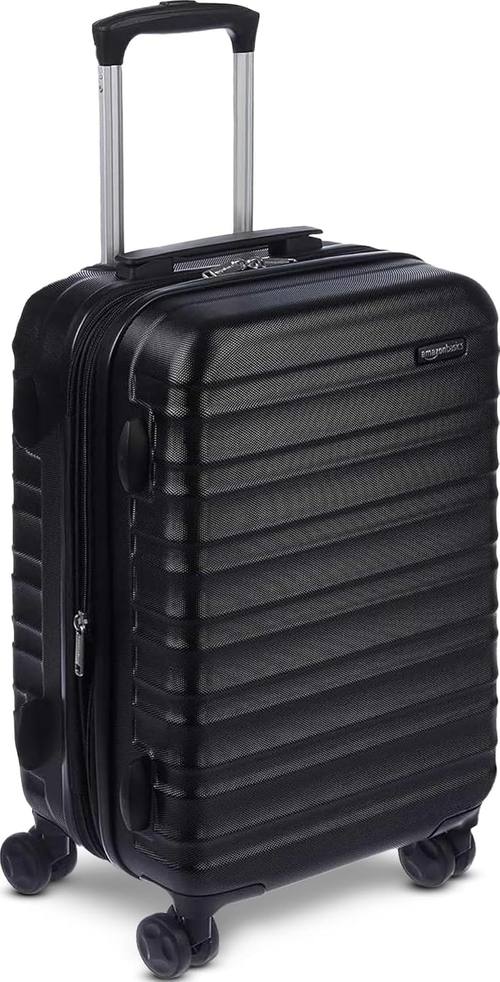
Budget pick: Amazon Basics 21" Hardside Carry-On Luggage with Spinner Wheels, Expandable for Up to 25% More Space, Scratch-Resistant Hard Shell, Telescoping Handle, Black
 Visit on Amazon →
Check current Amazon price. This is the case I point people toward when they fly two or three trips a year, want a hard shell, and do not want to think about the purchase again. You get spinner wheels, a telescoping handle, and a scratch-resistant shell, which is the short list of features that actually change how a case behaves in an airport.
The expandable section is the feature worth understanding. According to the manufacturer it opens up to 25% more space, and that extra room is genuinely useful on the trip home. The catch is that expansion is a second zipper running around the whole case, which means two things. Use it at the hotel, not at the gate, because an expanded case is a taller case and a taller case can stop fitting the sizer. And check that second zipper before every trip, because it is one more closure that can catch a liner or give out.
Flaws but not dealbreakers: The listing does not advertise a built-in TSA lock, so if you plan to check it, add a TSA-approved padlock to the budget. The shell will scuff. Scratch-resistant means it resists scratches, not that it refuses them.
Anyone who wants a hard shell for occasional trips and would rather spend the difference on the trip itself will be happy here.
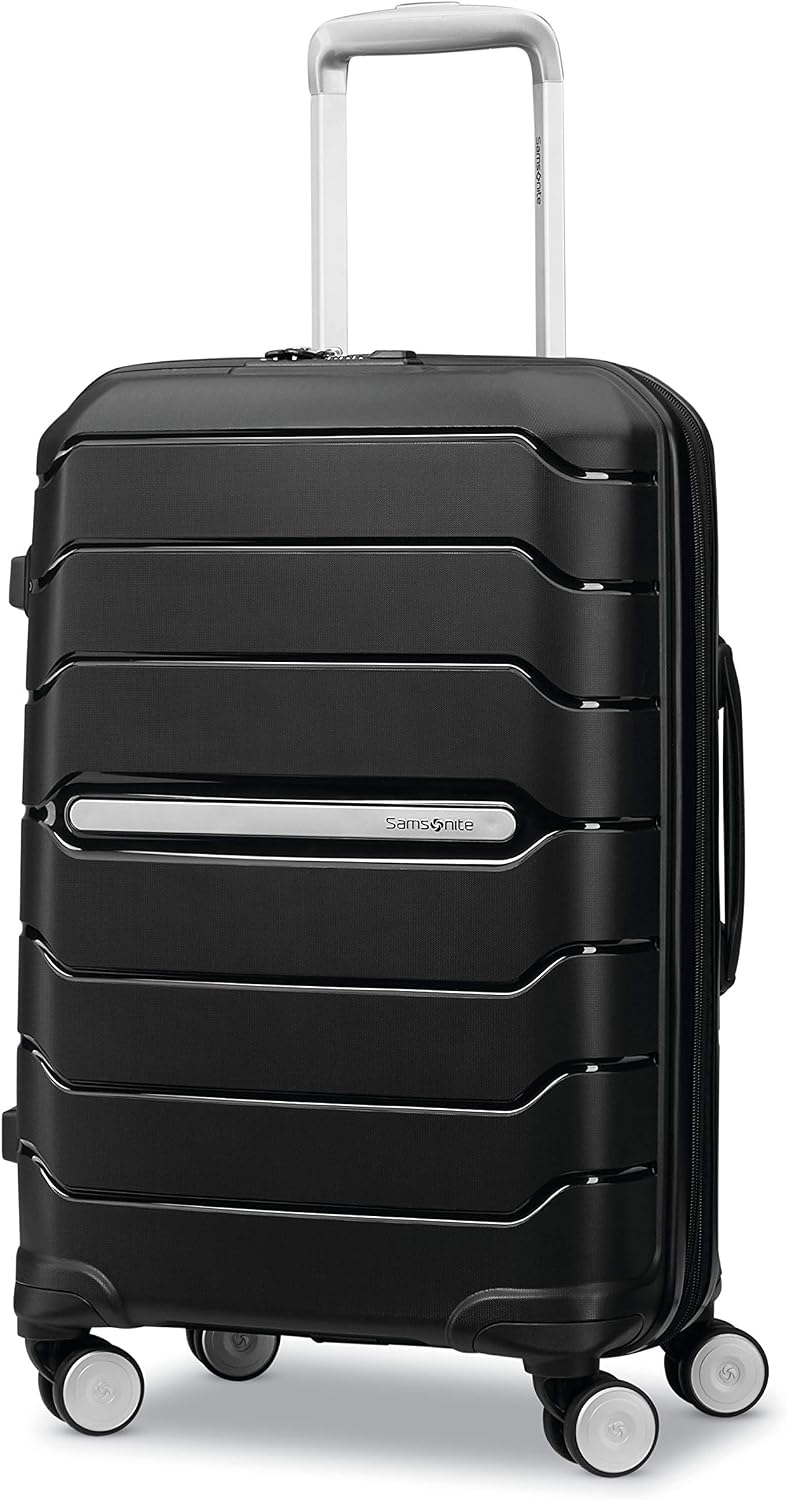
Step-up pick: Samsonite Freeform Hardside Carry-On Luggage with Spinner Wheels - Hardshell Suitcase - TSA, Airline-Approved - Expandable Hard Shell, Smooth Rolling Wheels for Lightweight Travel, Black
 Visit on Amazon →
Check current Amazon price. This is the step up, and the reasons are the ones that hold up over years rather than trips: TSA and airline-approved per the manufacturer, an expandable hard shell, and smooth rolling spinner wheels on a build that stays light for its class.
Light matters more than people think. Every pound the case weighs empty is a pound you cannot pack, so a carry-on that stays light while still feeling solid under the hand is doing the real work. The TSA element is the other practical win: a lock the TSA can open without cutting anything means you can check the bag on a regional flight or a full-bin day without moving your electronics into a plastic tray.
Flaws but not dealbreakers: No hard shell is dent-proof or crack-proof. The corner is still the corner, and a hard drop onto a belt is still a hard drop. Buy this for the years of service and the lock, not for invincibility.
Anyone who flies often enough that the case lives in the car between trips, or who wants a lock built in rather than carried separately, should start here.
What the hardside argument gets wrong
Hard shells and soft shells fail in different places, and the marketing rarely admits it.
A hardside wins on structure. It holds its shape when it is half empty, it shrugs off rain, and it protects anything rigid you pack inside it. A hardside loses when the belt drops it on a corner with the full weight of a stack behind it, and it loses when you need one more pocket for a jacket you shed at the gate.
A softside wins on flexibility and external pockets. It loses when a zipper or a seam gives out under a load.
The honest answer is that your packing decides this, not the photo. If you pack structured items, electronics, and slim clothing into cubes, a hard shell is the better tool. If you pack bulky layers you want to stuff into an outside pocket at the last second, a hardside will fight you every trip. Neither is wrong. They are different jobs.
Step one: measure the case the way the airline does
Do this before the first trip, with a tape measure and no optimism.
Measure from the floor to the top of the retracted handle, wheels included. Measure the width at the widest point. Measure the depth at the deepest point, which is usually across the wheels or across the expansion zip. Write the three numbers down and add them.
Two rules I would print on every luggage listing. First, wheels and handles count, so a case advertised at 21 inches can measure 23 inches once you include them. Second, an expanded case measures bigger than a closed one. Measure it both ways so you know exactly what you are carrying to the door.
Step two: weigh the shell empty, then weigh the load
Put the empty case on a luggage scale and note the number. Then pack it and weigh it again the night before you fly. That second number is the one that gets you at the check-in desk, and it is almost always the one people skip.
If you come in over the limit, the fix is rarely a new case. Move the heavy items into your personal item, wear the bulkiest layer, and put the dense stuff at the wheel end of the case so it stays balanced when you pull it. A top-heavy case tips on turns and clips seat backs the whole way down the aisle.
Step three: pack so the case still fits
Packing cubes do not save much space; they save your sanity. They also keep a hardside from becoming a pile of loose clothing that shifts every time you open it in a hotel room at 3am. Roll soft items, fold structured ones, and leave the top inch of the case empty so the zipper closes without force. A zipper that closes under tension is a zipper you are killing slowly.
Do not expand the case until you are unpacking at your destination. An expanded carry-on is a checked bag waiting for a sizer.
Step four: check the bin before you board
If you are at an airport with a bin gauge near the gate, put the case in it. If you are not, watch the board. On a full flight with a tight turnaround, being realistic about bin space beats being right. If your case will not fit, gate checking is usually handled at the door, but the rules and the fees change, so check your airline's current policy before you travel rather than trusting a forum post from three years ago.
Board with your group, put the case in wheels-first, and keep your personal item under the seat in front of you.
What to skip
Skip the matched set. You need one case you can carry, not three cases that force you to check two of them. Skip the 24-inch case advertised as a carry-on that only fits on the widest-body aircraft. Skip paying extra for a shell color that shows scuffs worse than black. And skip any case with handle wobble out of the box, because that will not improve with use.
The bottom line
Hardside carry-on luggage is a solved problem if you shop the numbers instead of the photos. Measure linear inches with the wheels and handle included. Weigh the shell empty. Check the wheelbase on tile. Confirm the zipper and the handle before you commit. Then pick the tier that matches how often you fly, pack it under the limit, and keep it closed until you land.
That is the whole job. Do it once and the gate stops being a negotiation.