I spent six years as a gate agent at O'Hare, and the job rewired how I look at bags. I have watched softside cases get stacked four deep on a belt loader, watched spinners roll off the end of a carousel at 1 a.m., and watched a passenger argue with a gate agent over a case that measured two inches past the limit. This softside carry-on luggage comparison comes out of that experience. It is the conversation I would have with a friend standing at the counter: here is what each bag is, here is who it is for, and here is exactly where it will let you down.
Related: Carry-On Size Limits by Airline: What Actually Fits
The short answer: the SwissGear Sion softside spinner is the bag I would hand to most travelers, and the 45L duffel is the one I would hand to anyone flying a personal-item-only fare. The Rockland two-piece is the lowest-commitment way into a matched pair, and it is also the one I would talk you out of unless you genuinely have a use for both sizes.
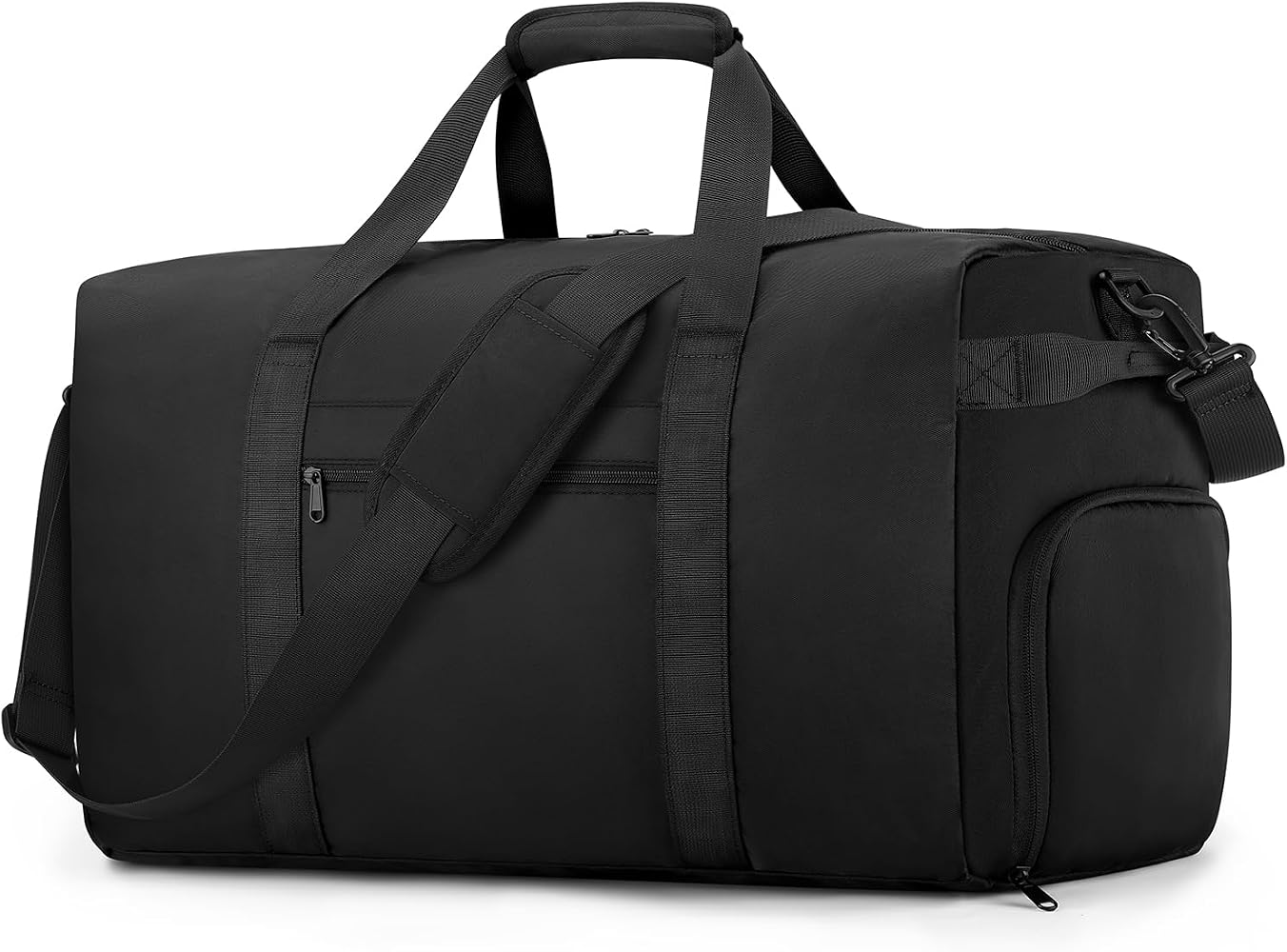
Carry On Luggage 22x14x9 Airline Approved, 45L Gym Duffle Bag for Travel
Sized to the 22 x 14 x 9 carry-on envelope, 45L of soft capacity, nothing mechanical to break
No wheels, no frame, and it slumps into a puddle when it is half full
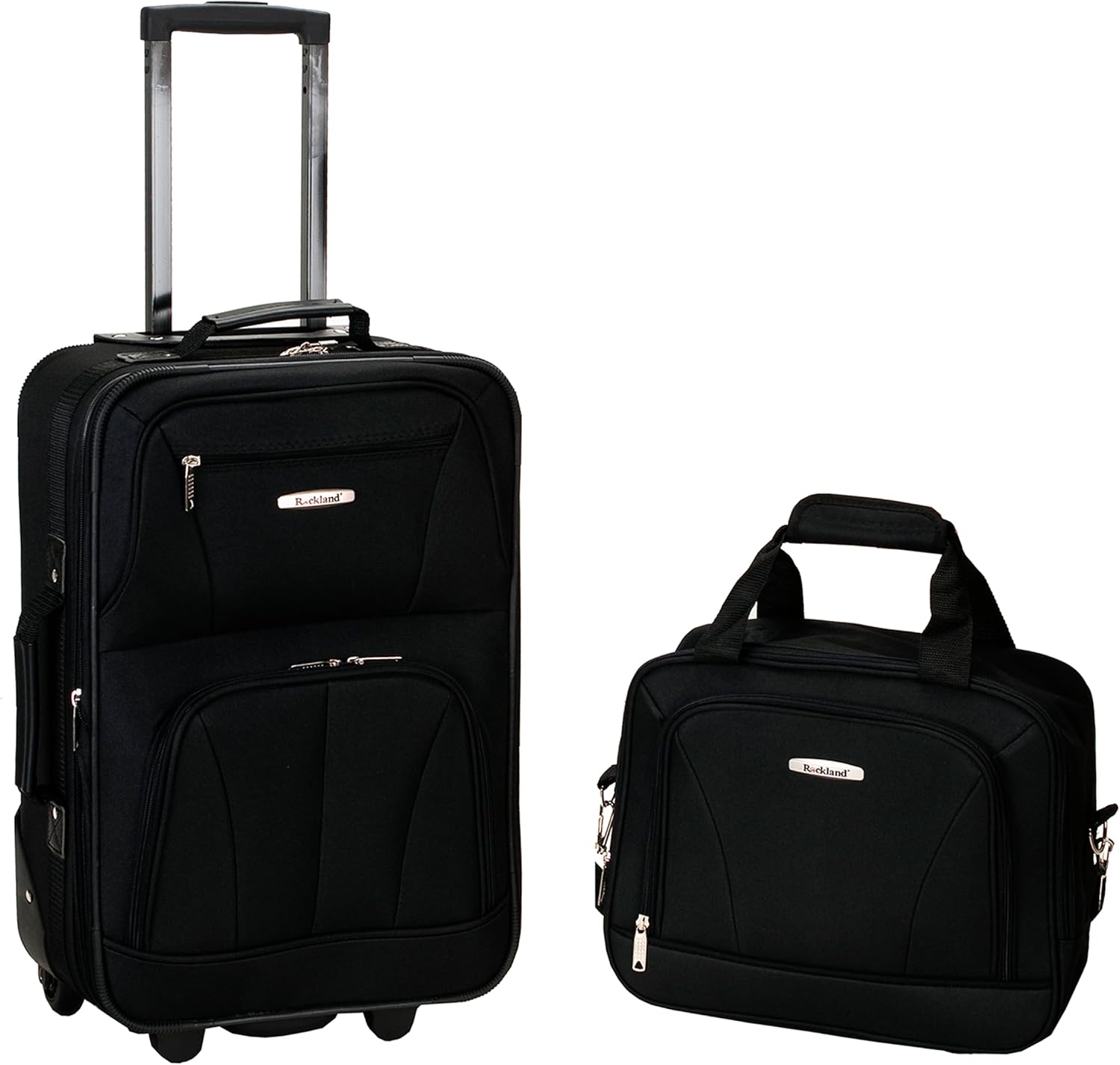
Rockland Fashion Softside Upright Luggage Set, Expandable, Black, 2-Piece (14/19)
Lowest-commitment entry here, and the 19-inch clears the bin gauge on regional aircraft
You pay for two bags whether you need two bags, and two-wheel uprights tip when you stop
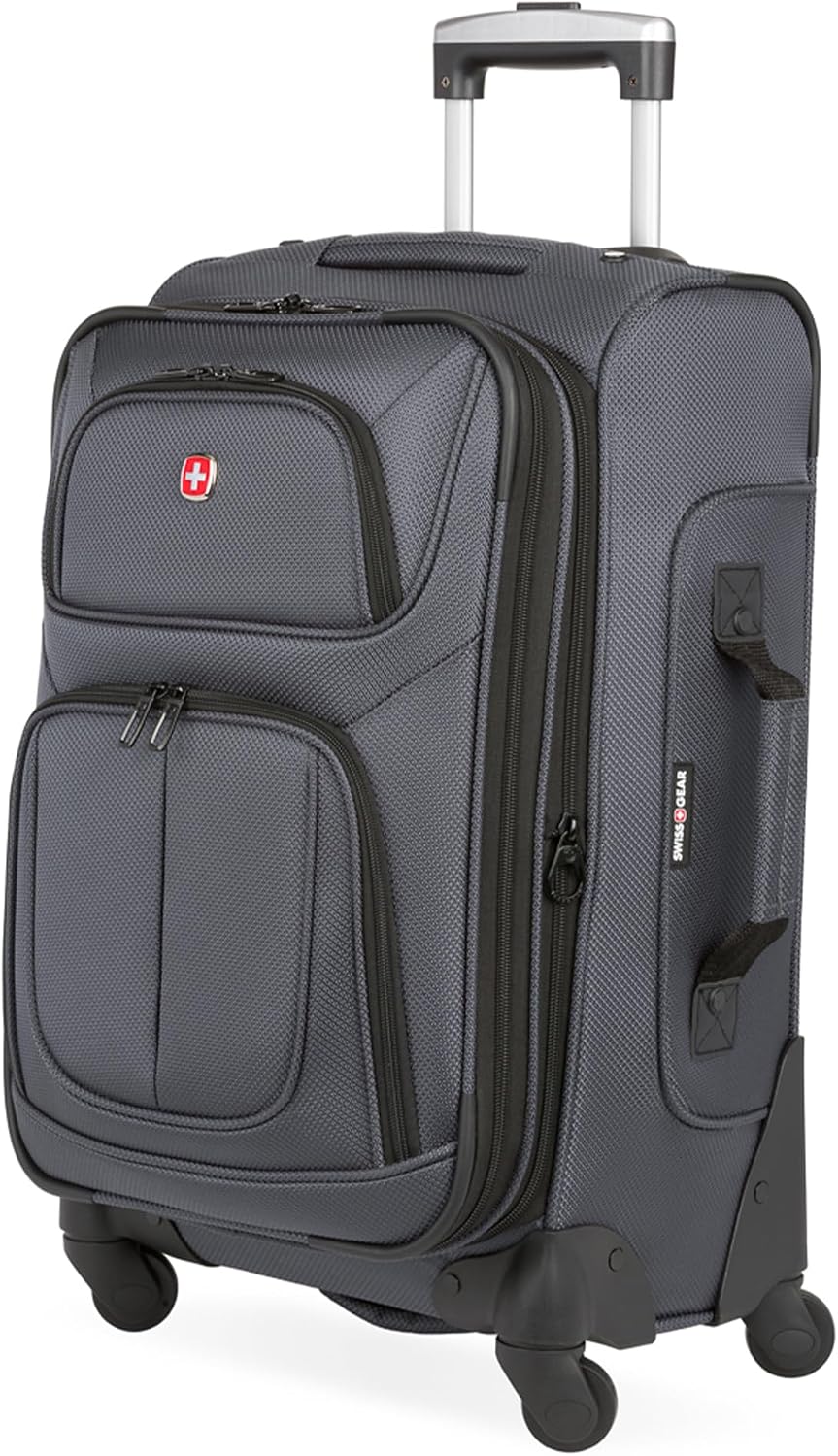
SwissGear Sion Carry-On Spinner Luggage, Softside Expandable, Lightweight Suitcase, Dark Grey, 22.75-Inch
Four-wheel spinner, expandable softside, and a grey that hides belt scuffs
22.75 inches sits above the 22-inch ceiling most US carriers publish
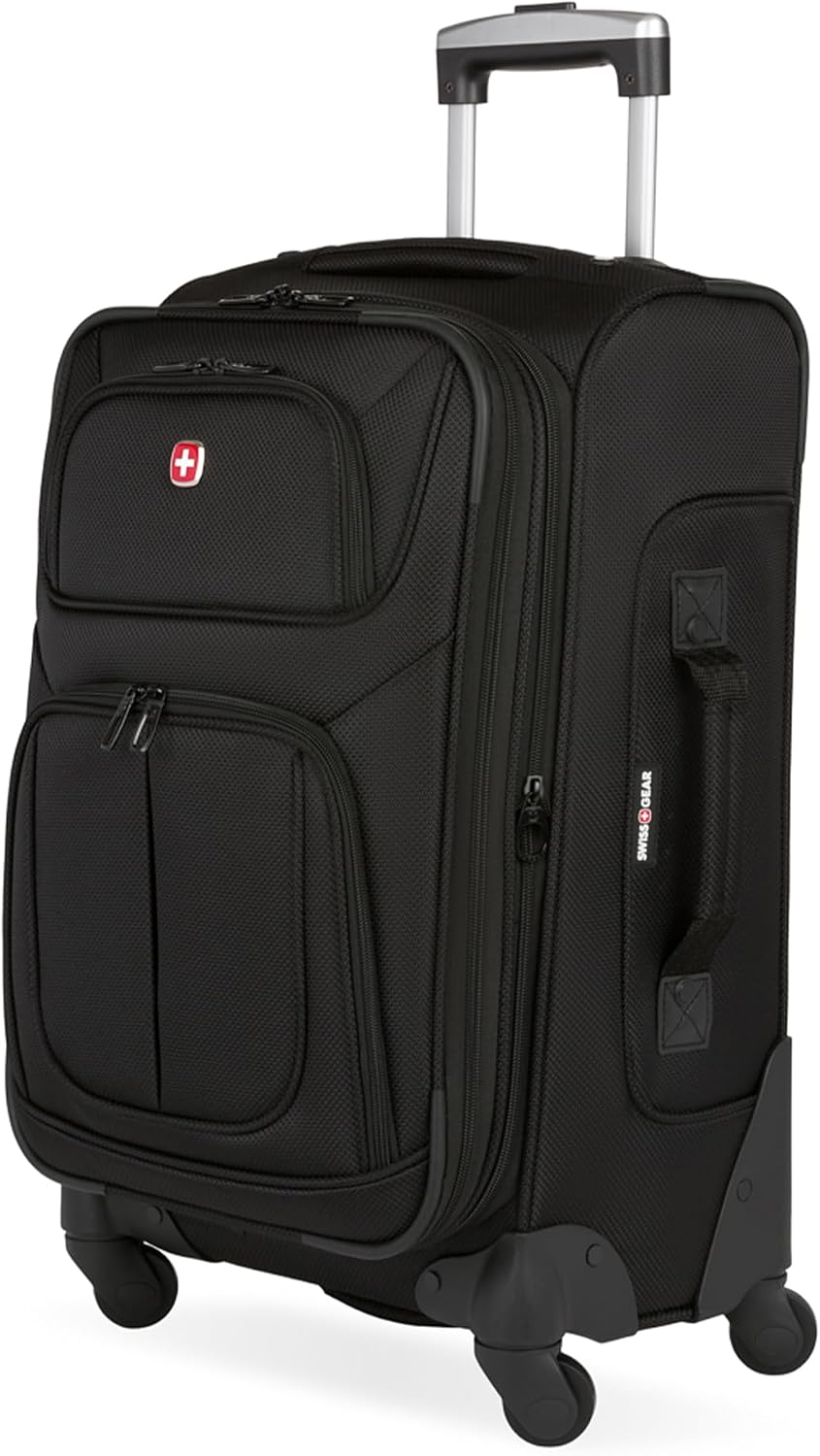
SwissGear Sion Carry-On Spinner Luggage, Softside Expandable, Lightweight Suitcase, Black, 22.75-Inch
The same case as the grey, in the color most people actually want
Listed separately, so the two colorways do not always move together
Prices and availability were captured from Amazon Creators API and may change.
How I judge a softside carry-on
Four things decide whether a bag survives its first year: bin fit, wheelbase, handle wobble, and zipper behavior. Everything else is marketing.
Bin fit is linear inches, and it is not negotiable. Most US carriers publish a carry-on limit around 22 x 14 x 9 inches, and the overhead bins on a regional jet are meaningfully smaller than the bins on a 737. A case that measures 22.75 inches is not automatically rejected, but it is the kind of bag that gets a second look on a full flight, and gate agents are the ones doing the looking. Check your airline's current published limits before you buy, because those numbers change and my memory of them is not a policy document.
Wheelbase is how the bag tracks when you are running for a connection. Four spinner wheels roll sideways and handle a crowded aisle better. Two inline wheels on a fixed upright are more stable on carpet and less likely to shear off on a curb, but the bag tips forward the moment you stop pulling it.
Handle wobble is the tell. A telescoping handle that already has play in the store will have more play after twenty flights, and once the tube bends the bag becomes a two-hand carry. I have watched more trips ruined by a bent handle tube than by a broken shell.
Zippers are the first thing to die. On a softside case, the zipper is also the structure. When the coil separates or the slider loses tension, the bag stops holding its shape and starts eating your clothes. This is why I care more about zipper quality on a softside bag than about the fabric.
I have not logged five flights on every unit in this comparison, so where I am reading from the spec sheet rather than from my own rotation, I will say so. That is the honest version.
The 45L duffel: the personal-item play
The Carry On Luggage 22x14x9 Airline Approved, 45L Gym Duffle Bag for Travel is the odd one out in this group, and it is also the one I would point a friend toward for a three-day trip on a budget carrier.
The pitch is simple. It is a soft duffel with 45 liters of capacity, and the name sizes it to the 22 x 14 x 9 envelope that most airlines publish for a carry-on. "Airline approved" is a claim worth verifying against your specific carrier rather than taking on faith, because approval is per airline and per fare, not a universal stamp.
What it gets right is that there is nothing to break. No wheels, no telescoping handle, no frame. That is a genuine advantage when the alternative is a spinner whose caster gets sheared off by a curb. A soft bag also compresses, which means a lightly packed duffel will squeeze into spaces a rigid case cannot, and it will absorb a shove into a full bin instead of fighting the bin for space. For gym-to-airport trips and one-bag weekends, this is the shape that makes sense.
What it gets wrong is everything that comes with carrying 45 liters on your shoulder. There is no wheelbase, so you are the wheelbase. There is no frame, so the bag slumps when it is half full and your clothes wrinkle along the fold lines. There is no shell, so anything fragile inside is on its own. And a soft bag that gets gate-checked comes back looking like it was dragged, because it was.
Who it is for: the traveler whose fare does not include a carry-on, the traveler who goes straight from the gym to the airport, and anyone who wants a bag that will never need a repair. If you have back problems or you pack heavy, this is not your bag.
The Rockland two-piece: the budget entry, and the set problem
The Rockland Fashion Softside Upright Luggage Set, Expandable, Black, 2-Piece (14/19) is the lowest-commitment way into this group. Two softside uprights, expandable, in black, at 14 and 19 inches.
The 19-inch case is the interesting one. It sits under the 22-inch carry-on ceiling that most carriers publish, which means it clears the bin gauge on a regional jet where a 22-inch spinner is a coin flip. If you fly a lot of small-airport routes on small aircraft, that single fact matters more than anything else in this article. The 14-inch piece is a personal item, and it is the size most likely to fit under the seat in front of you on a mainline aircraft, which is where the cheap fares live now.
The problem is the set itself. You are buying two bags whether or not you need two bags, and the second one takes up closet space until the day you decide to sell it. That is the pet peeve I keep coming back to: bundles sell you volume, not fit.
The other trade-off is the wheel setup. These are two-wheel uprights, not spinners. On carpet and over a curb, that is fine, arguably better, because inline wheels roll over obstacles that a caster will catch on. In a crowded jet bridge, when you are trying to walk sideways past a stroller, it is worse, because the bag only goes where you pull it.
And an expandable zipper is a second zipper to fail. Expanding a softside case is a one-way decision on most trips: once you unzip it, the bag no longer fits the gauge you bought it for, and you have traded bin fit for three extra shirts.
Who it is for: a household that needs a small bag and a smaller bag, and travelers who fly regional aircraft more than widebodies. If you need exactly one carry-on and nothing else, buy one bag instead.
The SwissGear Sion, in both colorways
The SwissGear Sion in dark grey and the SwissGear Sion in black are the same case. Softside, expandable, four-wheel spinner, 22.75 inches, and the listing calls it lightweight. The only real difference is the color, and the two listings do not always move together, so it is worth checking both before you commit.
This is the bag I would recommend to most people in this comparison, with one warning attached.
What it gets right: four spinner wheels, which is the single biggest quality-of-life upgrade in carry-on travel. A spinner rolls beside you instead of behind you, it handles a narrow aisle, and it does not tip over when you stop to read a sign. Softside construction means the bag gives when it is stuffed into a full bin, and it means the shell is not going to crack at the corner when the belt drops it wrong. That crack is the failure mode I saw most often on polycarbonate at O'Hare, and it is the reason I still reach for softside on any trip where the bag might end up checked. Expandability gives you a pressure valve for the return leg, though the same warning applies: once you use it, your bin fit is gone.
The warning: 22.75 inches is above the 22-inch ceiling that most US carriers publish for a carry-on. A softside case measures a little smaller when it is not packed out, and gate agents do not carry calipers, so most of the time this is a non-issue. On a full flight with a strict crew, it is exactly the bag that gets tagged at the door. If you fly a carrier that measures and weighs at the gate, measure this one before you buy it, and know your airline's current number.
The other thing to know is that a spinner's wheels are the part that fails. Four wheels means four chances to lose a caster on a curb, and a spinner with one broken wheel is worse than a two-wheel upright with a broken wheel, because it will not track at all. That is a maintenance reality, not a knock on this specific case.
Who it is for: the traveler who wants one bag, wants it to roll, and will accept a slightly oversized footprint in exchange for a softside that will not crack. Between the two colors, pick the one you can spot on a carousel. Black is invisible at baggage claim, which is either a problem or a personality trait.
Spinner wheels versus two-wheel uprights
This decision matters more than brand. A spinner is a four-wheel bag that rolls upright beside you. A two-wheel upright is a two-wheel bag that you drag behind you at an angle.
Spinners win in airports. They win in jet bridges, they win in security lines, they win when you are holding a coffee and a boarding pass in one hand. The trade-off is that four casters are four failure points, and a spinner on thick carpet is a spinner you are pushing rather than pulling.
Two-wheel uprights win on rough ground. Sidewalks, gravel, cobblestone, snow, and the curb outside arrivals. They are also structurally simpler, which is why the cheap bags in this comparison use them. If your trips are mostly car to hotel to airport, an upright is fine. If your trips are airport to airport to airport, buy the spinner.
Softside versus hardside, one more time
I have said this before and I will keep saying it: hardside wins the visual argument, softside wins the practical one.
A polycarbonate shell looks better in the ad and survives the bin better than it survives the belt. When a loader drops a rigid case on a corner, the shell either dents or cracks, and a crack is the end of the bag. A softside case absorbs that same drop in the fabric and the frame, and it keeps working. Softside also gives you an outside pocket for the things you actually need at the gate, and it compresses into a tight bin instead of demanding space.
What hardside gives you is protection for the contents and a shell that shrugs off rain. If you carry camera gear or anything breakable, that matters. If you carry clothes, softside is the better bet, and every bag in this comparison is softside for that reason.
What the spec sheet will not tell you
Three things I check that no listing covers.
Color photos lie. The grey Sion reads as a medium charcoal in person on most listings, and black reads as black. Neither photo will tell you how the fabric looks after a winter of salt and de-icer, which is scuffed and slightly chalky. That is normal, not a defect.
Handle wobble is not in the specs. A telescoping handle either has play or it does not, and you find out when you pick the bag up. This is the single best reason to buy from a retailer with a real return window, because a wobbly handle on day one is a wobbly handle on day 300.
Listed size is not measured size. Manufacturers measure the case body, airlines measure the whole thing including wheels and handles, and those two numbers are not the same. A bag advertised at 22 inches can measure 23 with the casters included. That gap is the most common reason a bag gets gate-checked, and it is the reason I tell people to measure their own case with a tape before a big trip.
Who should buy which
Buy the SwissGear Sion if you want one bag that rolls, expands, and survives being thrown. It is the best all-around pick in this group, and the 22.75-inch footprint is the only real compromise. Check both colorways before you buy.
Buy the 45L duffel if you fly basic economy, go to the gym before you fly, or want a bag with zero moving parts. It is the lightest commitment here in every sense.
Buy the Rockland two-piece if you need a small bag and a smaller bag, or if you fly regional aircraft often enough that a 19-inch case is worth more to you than a spinner.
Skip all three if you fly more than thirty segments a year. At that volume, you want a bag with a warranty you have actually tested and a handle you have replaced at least once.
What I am testing next
I have a 22-inch class comparison running against the published bin dimensions of the US fleet, and the early read is that the 22-inch ceiling is softer than the marketing suggests and harder than passengers expect. I am also tracking zipper reliability across the budget tier, because that is where bags fail first and where nobody publishes a number. Full report when the log is long enough to mean something.