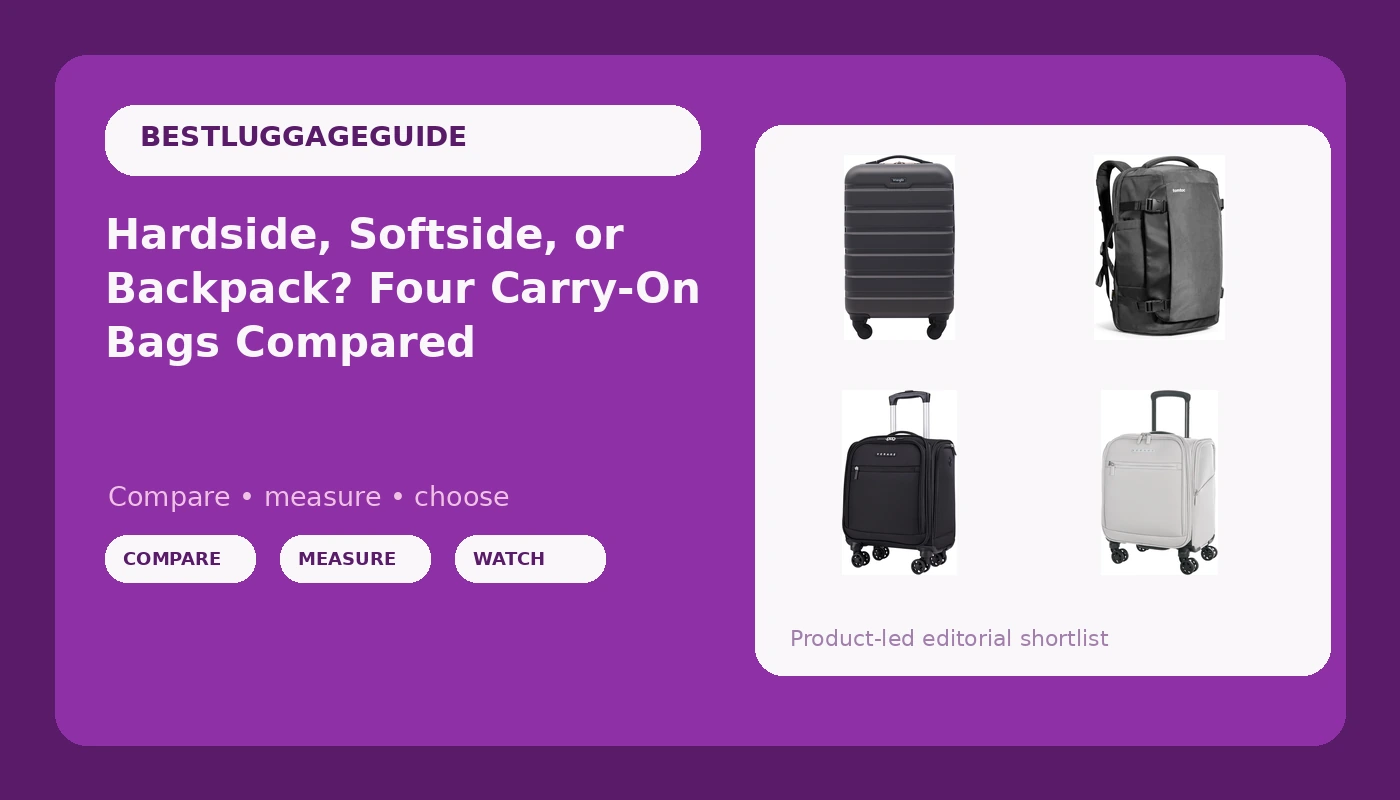
Most carry-on luggage comparison posts are written by people who have never watched a bag get loaded. I spent six years as a gate agent at O'Hare, which means I have stacked, gate-checked, and handed back thousands of bags, and I remember exactly which ones came off the belt still square. I review bags full time now. This carry-on luggage comparison covers four options at three price levels, and it answers the question that fills my inbox: do you buy a hard case, a soft underseat bag, or a backpack and skip wheels entirely? There is a right answer for each of those, and it depends entirely on what you pack.
The short answer: the Wrangler 22" Hardside Spinner is the best value if you want a true overhead-bin carry-on, the two Verage 14.5-inch underseat bags are for the personal-item slot, and the tomtoc 40L backpack is the pick for anyone who refuses to gate check. The longer answer is about bin fit, wheelbase, and why the least expensive bag in a group is not automatically the worst one.
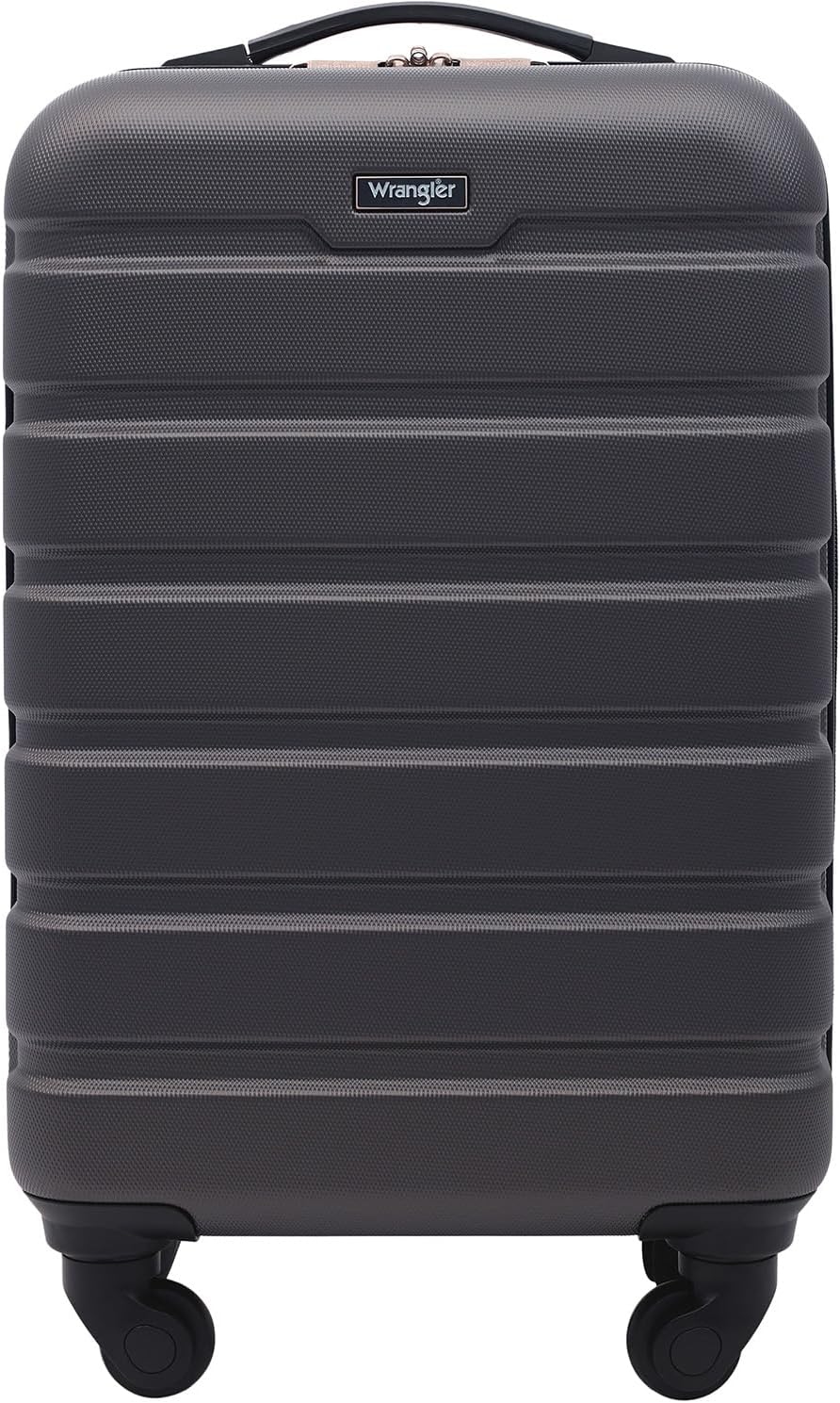
Wrangler 22" Hardside Spinner Carry-On Luggage, Charcoal
Built for the actual overhead bin class, four-wheel spinner layout, hard shell shrugs off rain and belt grime
Clamshell shell takes impact straight on the corners, no exterior pocket for seat-side items
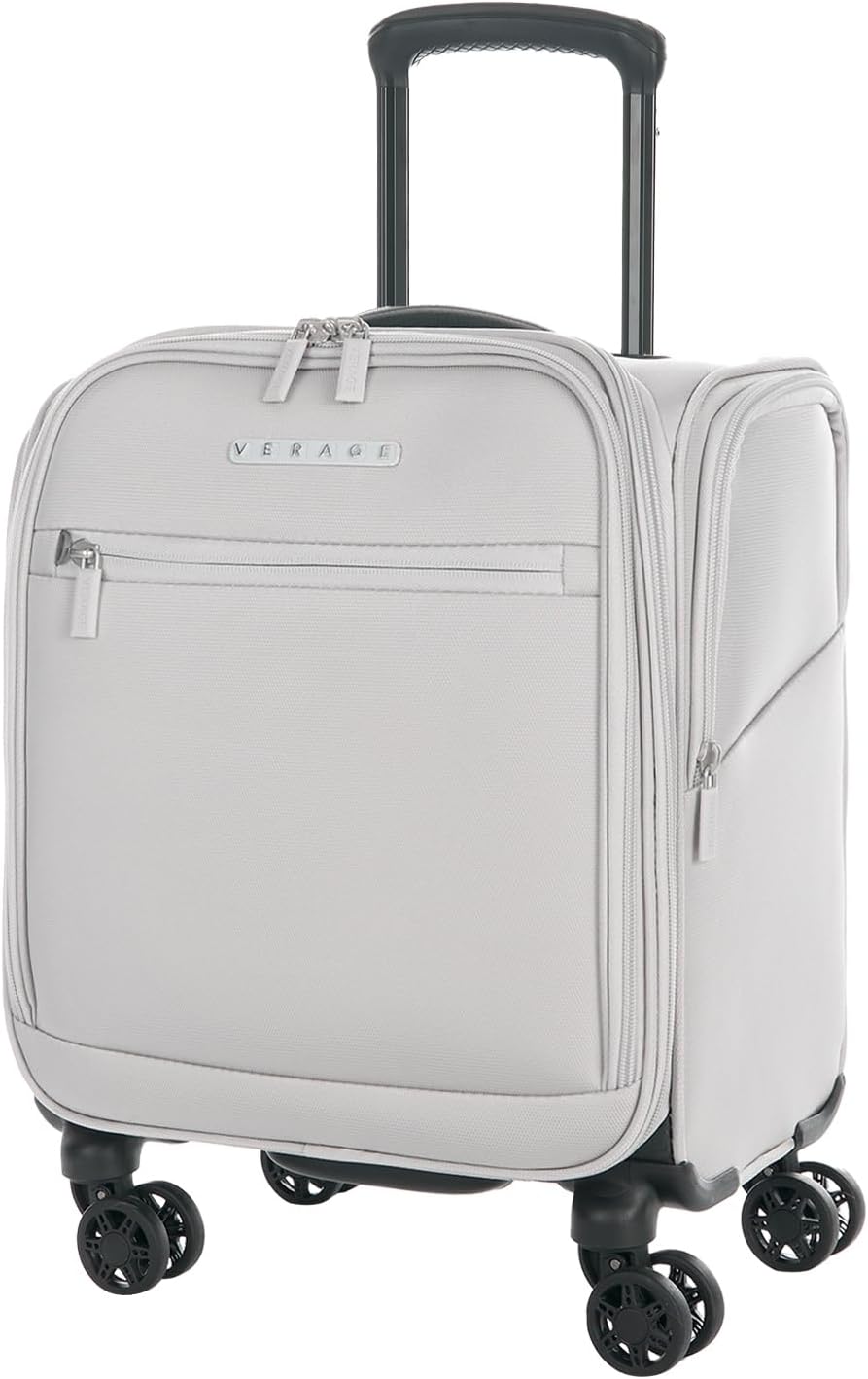
Verage Underseat Carry On Luggage with Wheels, 14.5-Inch, Cloud Gray
Personal-item footprint that fits the seat in front of you, wheels at this size, neutral gray hides scuffs
Smallest usable volume of the four, no spinner layout, highest list position of the wheeled bags here
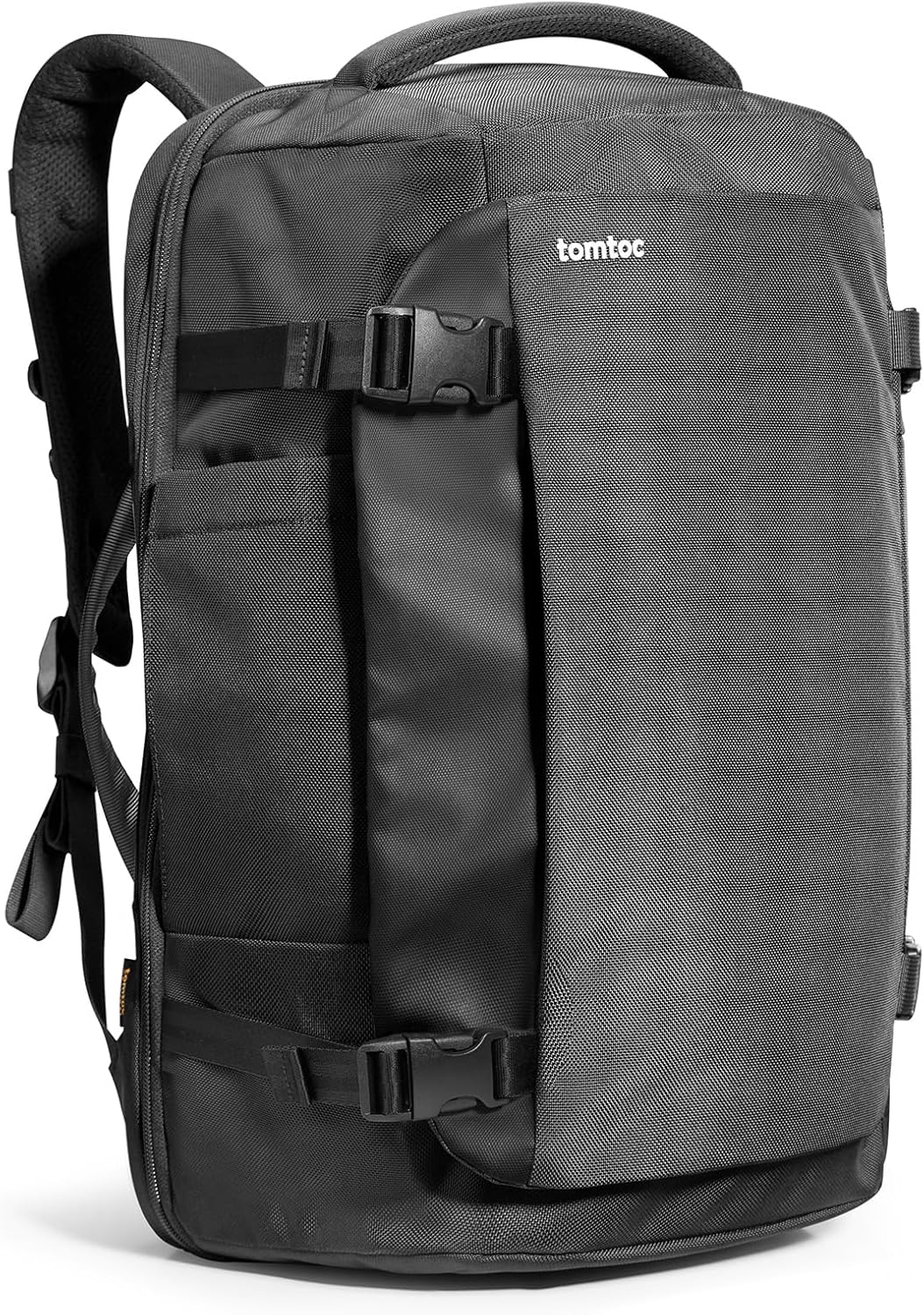
tomtoc Travel Backpack 40L, TSA Carry On Bag Flight Approved, PFAS Free
40 liters of volume on your back, listed as TSA carry-on approved, no wheels or handle to break
Everything rides on your shoulders, soft body compresses unevenly, no roll when you are tired
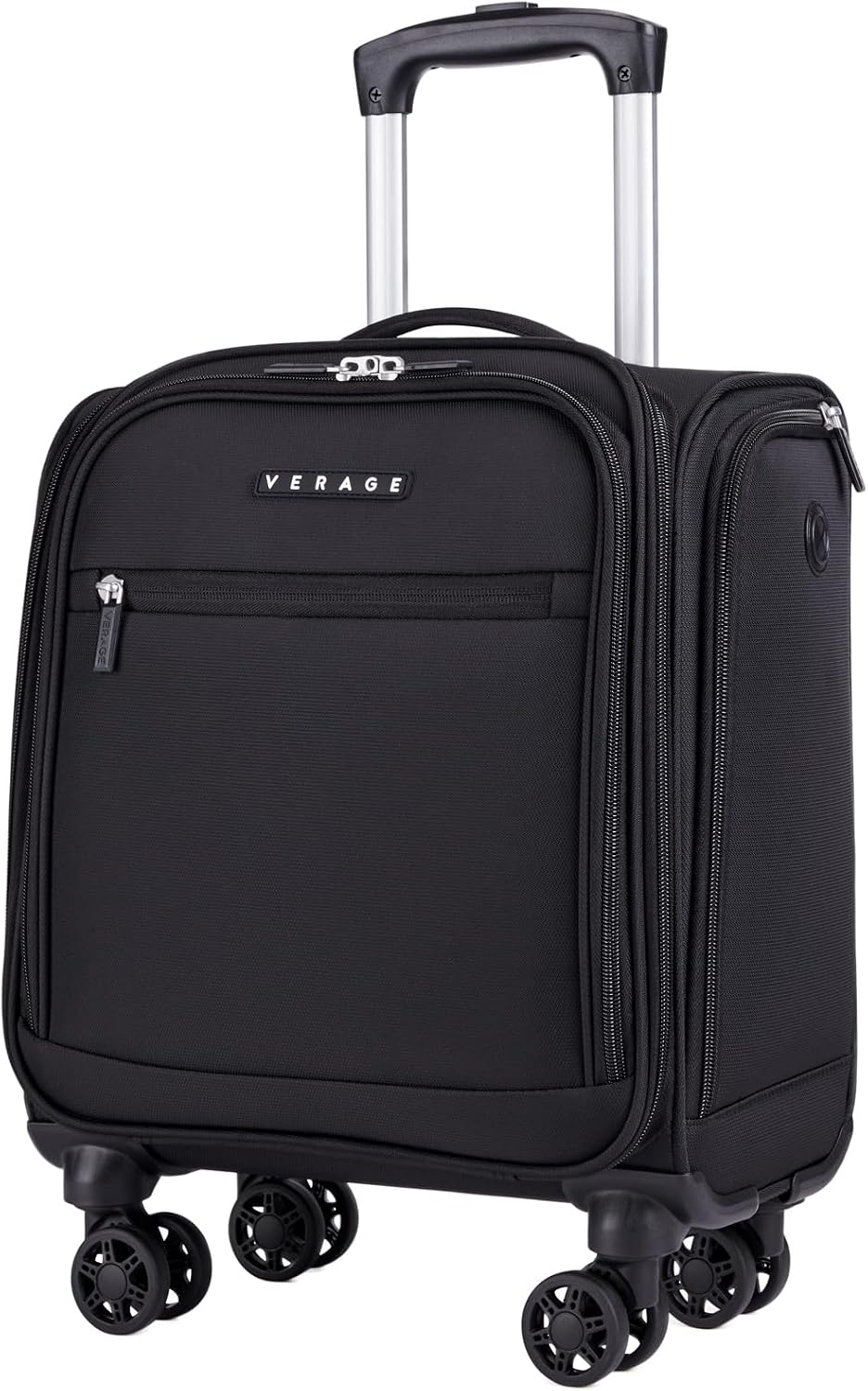
Verage Underseat Carry On Luggage with Wheels, 14.5-Inch Spinner Small Suitcase, Softside Lightweight Travel Bag for Men and Women, Airplane Carry On Bag, Black
Same underseat footprint as the gray version with spinner wheels and a softside body that flexes into tight slots
Soft fabric and zippers take the wear, black shows belt dirt, still a personal-item bag only
Prices and availability were captured from Amazon Creators API and may change.
How I judge a carry-on
The checklist below is the one I run on any bag before I write about it, and it is the same one you can run in a store in about five minutes.
First, bin fit. I carry a tape measure and I know the numbers. A US domestic overhead bin is built around a 22 by 14 by 9 inch class, and the gate sizer is less forgiving than the bin itself. If a bag's published dimensions sit inside that envelope, it flies. If the marketing copy rounds down, you are the one holding it at the door while an agent calls for volunteers.
Second, the wheelbase. Four spinner wheels set wide apart roll straight and keep the weight off your wrist. Two wheels and a lean-back design roll better on carpet and worse on tile. I test both surfaces, because an airport is half tile and half low-pile carpet, and a wheel that rattles like a shopping cart on tile will rattle for the entire trip.
Third, handle wobble. Grab the extended handle and try to twist it. If it moves before the first flight, it will be worse by the tenth. That is the failure I see most on budget bags, right after zippers.
Fourth, the zipper. Zippers are the first thing to die on any bag and the handle is the second. If a zipper catches the liner when the bag is empty, it will jam when the bag is full and you are late.
The hardside pick: Wrangler 22" Hardside Spinner
The Wrangler 22" Hardside Spinner Carry-On in Charcoal is the only bag in this group built for the overhead bin rather than the space under the seat, and it sits at the budget end of the wheeled options. That combination is why it takes the top row.
The case is a hard clamshell on four spinner wheels. What that buys you is weather resistance and a shell that does not absorb belt grime. What it costs you is flex. Hard shells transfer impact straight to the corners, and the corners are exactly where the belt drops them. I have watched more than a few hard cases come off a connecting flight with a hairline crack at the wheel housing, and budget shells are the ones I see it on most. That is not a reason to avoid this bag. It is a reason to pack it in cubes, keep it out of the checked system, and treat it as a carry-on that never leaves your sight.
The other trade-off is access. A clamshell gives you no exterior pocket, so anything you want at your seat, a charger, a book, a snack, comes out of the main compartment in the middle of the jet bridge. If you are a gate-check regular, the hard shell is the wrong shape for you. If you board early and never surrender the bag, it is the right one.
The underseat pair: Verage 14.5-inch in Cloud Gray and Black
Two of the four products here are the same idea in two colorways, and I am treating them as one decision with a color and price variable. Both are 14.5-inch underseat carry-ons with wheels, both are softside builds, and both are sized for the personal-item slot, meaning the space under the seat in front of you rather than the bin overhead.
The Black version is the one that lists spinner wheels and a lightweight softside body marketed for men and women travelers. The Cloud Gray version lists wheels and the same 14.5-inch footprint. Functionally, the differences come down to colorway, the wheel listing, and where each one sits on price. Both live or die on the same question: does the bag slide under the seat rail without a fight?
Softside wins that fight. A fabric body compresses a half inch when the rail is angled, and an underseat bag that gives a little is a bag that stays with you instead of getting gate-checked at the last second. The cost is durability. Fabric scuffs, and zippers on a soft bag carry the load of the whole shell, which is why I tell people to buy the smallest underseat bag that holds their laptop and one change of clothes, then stop.
Neither of these is a week-long bag. A 14.5-inch footprint is a two-day bag for one person, and it is at its best as the second bag on a longer trip, paired with something that goes in the bin.
Visit on Amazon → for the Cloud Gray version, or Visit on Amazon → for the Black one.
The backpack: tomtoc 40L
The tomtoc Travel Backpack 40L is the outlier here, and for one-bag travelers it is the most interesting product in the group. It is listed as TSA carry-on and flight approved, it holds 40 liters, and it is made without PFAS. It has no wheels and no telescoping handle, which means it has no wheels to break and no handle to wobble.
That is a real argument. Every failure I described in the checklist above is a mechanical part, and this bag has none of them. What it has instead is you. A full 40 liters rides high on your back, and by the second connection you feel it. Soft bodies also compress unevenly, so a packed-out backpack slumps when you set it down, which matters when you are trying to slide it into a bin one-handed.
The 40-liter figure is the number to focus on. That is more usable volume than the Wrangler's overhead-bin class and dramatically more than either underseat bag. If your priority is carrying the most stuff while staying out of the checked system, this is the pick, and you pay for it in shoulder straps rather than in wheel housings.
Bin fit, linear inches, and the personal-item slot
Linear inches are just length plus width plus height. That single number is what the gate sizer is checking, and it is why a bag advertised at 21 inches can measure 23 with the wheels and handle included. Manufacturers quote the case, the airline measures the bag.
This group splits cleanly into two classes. The Wrangler is a 22-inch overhead-bin bag, which is the largest class most US airlines will let you carry on. The two Verage bags are 14.5-inch personal items, which is a smaller allowance and, at most carriers, a separate one. You can bring a bin bag and a personal item together on most mainline tickets, and that combination beats a single oversized case every time, because an oversized case gets checked and checked bags get lost.
The backpack sits in a gray area by design. A 40-liter pack listed as TSA carry-on approved is meant to fit the bin, but a soft pack compresses, so it can squeeze into a tighter sizer than a rigid case of the same nominal volume. That flexibility is worth more at the gate than any printed dimension.
Weight is the spec nobody prints
The weight limit is a contract. On a 50-pound allowance, a 9-pound case eats 9 pounds of your packing, and the only thing you can control is how much bag you are carrying before you put anything in it. Wheels and handles cost weight. That is the hidden tax on every wheeled bag in this comparison, and it is the hidden advantage of the tomtoc pack.
At the 14.5-inch size, the math flips. A personal-item bag is rarely weighed, so the weight of the wheels matters less than whether the bag fits the slot. At the 22-inch size, the math matters a lot, because that is the bag an agent will put on a scale if the flight is full.
The trade-offs I will not pretend away
Hardside wins the visual argument. Softside wins the practical one. The Wrangler looks like the more serious bag and handles rain better, and the Verage bags flex into spaces the hard shell cannot. Neither is universally right.
Zippers are still the first thing to die, and they die faster on a soft bag because the fabric shell loads them. Handles are second, and they are the reason I twist every handle I pick up. A backpack removes both failure points and adds a new one: your back.
Finally, volume is not the same as usefulness. The cheapest mistake in this category is buying a bigger bag than your trip requires, because bigger bags get checked.
Which one for which trip
For a three to five day trip with a hotel at the other end, take the Wrangler 22" Hardside Spinner. It fits the bin class, it rolls on four wheels, and it keeps your clothes dry on a wet tarmac.
For a two-day trip, a laptop commute, or a second bag on a longer itinerary, take one of the Verage 14.5-inch underseat bags. Pick the Black version if you want the spinner wheel listing and the lower price position, the Cloud Gray if you prefer the colorway that hides scuffs.
For one-bag travel, long connections, and any itinerary where you refuse to gate check, take the tomtoc 40L. You will carry it, and you will not worry about it.
What I'm watching next
Softside is due for a comeback. As airlines tighten carry-on enforcement, the bags that survive the sizer are the ones that give a little, and that favors fabric. I am also watching the direct-to-consumer hard shells under $150, because that is where the corner-crack problem is actually being solved. The brand that fixes zipper reliability first wins the frequent flyers, and I will score that prediction in January like I do every year.