I spent six years working the gate at O'Hare, which means I have watched more bags than I can count get thrown onto a belt, stacked four deep in a bin, and dragged down a jet bridge by a handle that was never built for it. This carry-on luggage comparison comes out of that experience, not out of a showroom floor. Four bags are on the table: a softside two-wheel roller, two expandable travel backpacks at very different price points, and one large checked case that expects to be treated like furniture.
My bias, stated up front. I judge a bag the way the ramp treats it. Bin fit matters more than brand story. Linear inches matter more than marketing photos. Wheelbase and handle wobble tell you more in thirty seconds than a spec sheet tells you in thirty minutes. Zippers are the first thing to fail on any bag, and the handle is the second, so those two parts get more of my attention than shell material ever will.
The short answer for most people: if you fly carry-on only and you pack clothes, a softside roller on a two-wheel base is still the most predictable shape in an overhead bin. An expandable backpack wins if your trip involves trains, stairs, or a regional jet with a bin the size of a shoebox. The large checked case is a different category entirely, and it should be judged by a different standard.
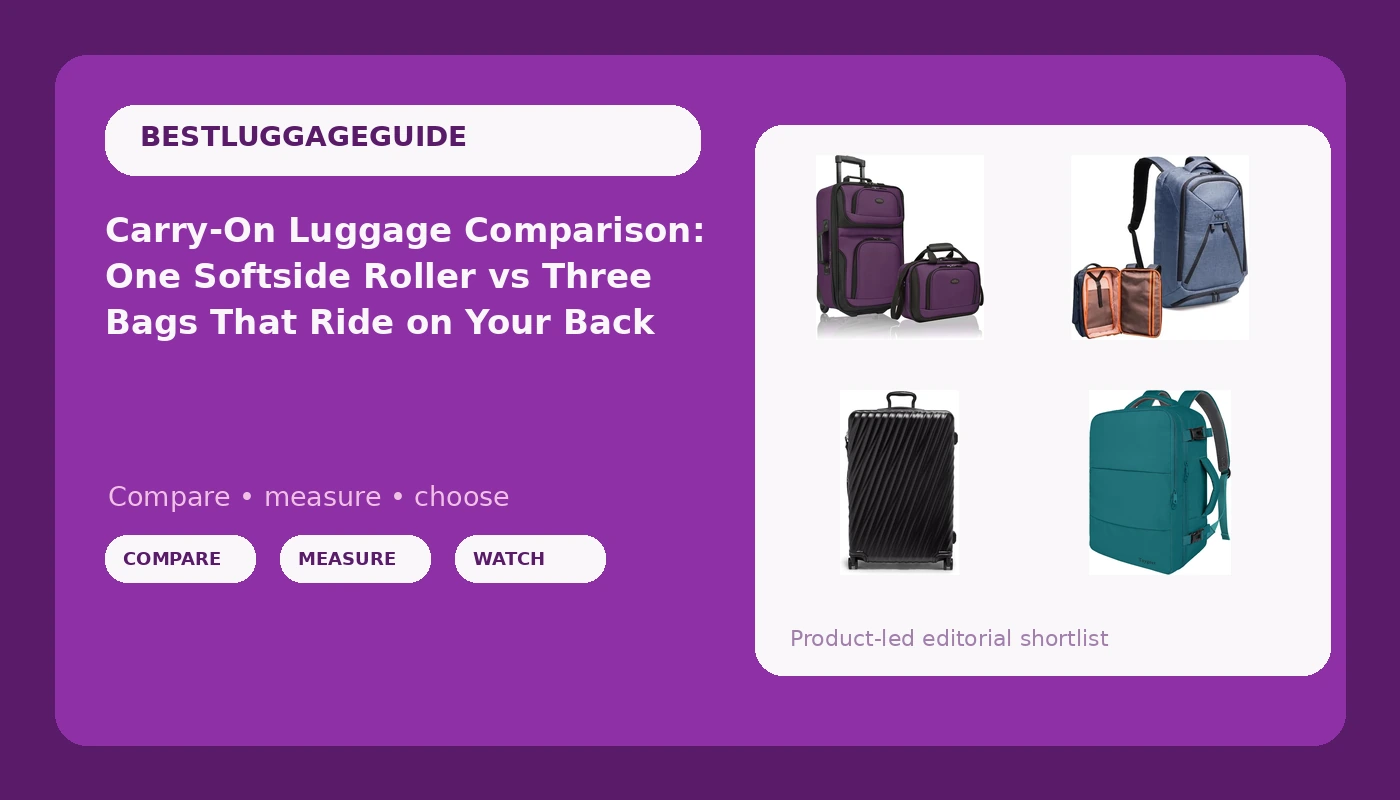
U.S. Traveler Rio Lightweight Softside Rolling Carry-on Suitcase, 2-Wheel Set, Purple
Softside fabric flexes into bins that a rigid shell will not, a two-wheel base is the most stable rolling design there is, and a bright purple bag is easy to spot on a crowded carousel
Small wheels and a tilt-and-pull stance mean your wrist carries part of the load, and fabric takes abuse a hard shell would shrug off
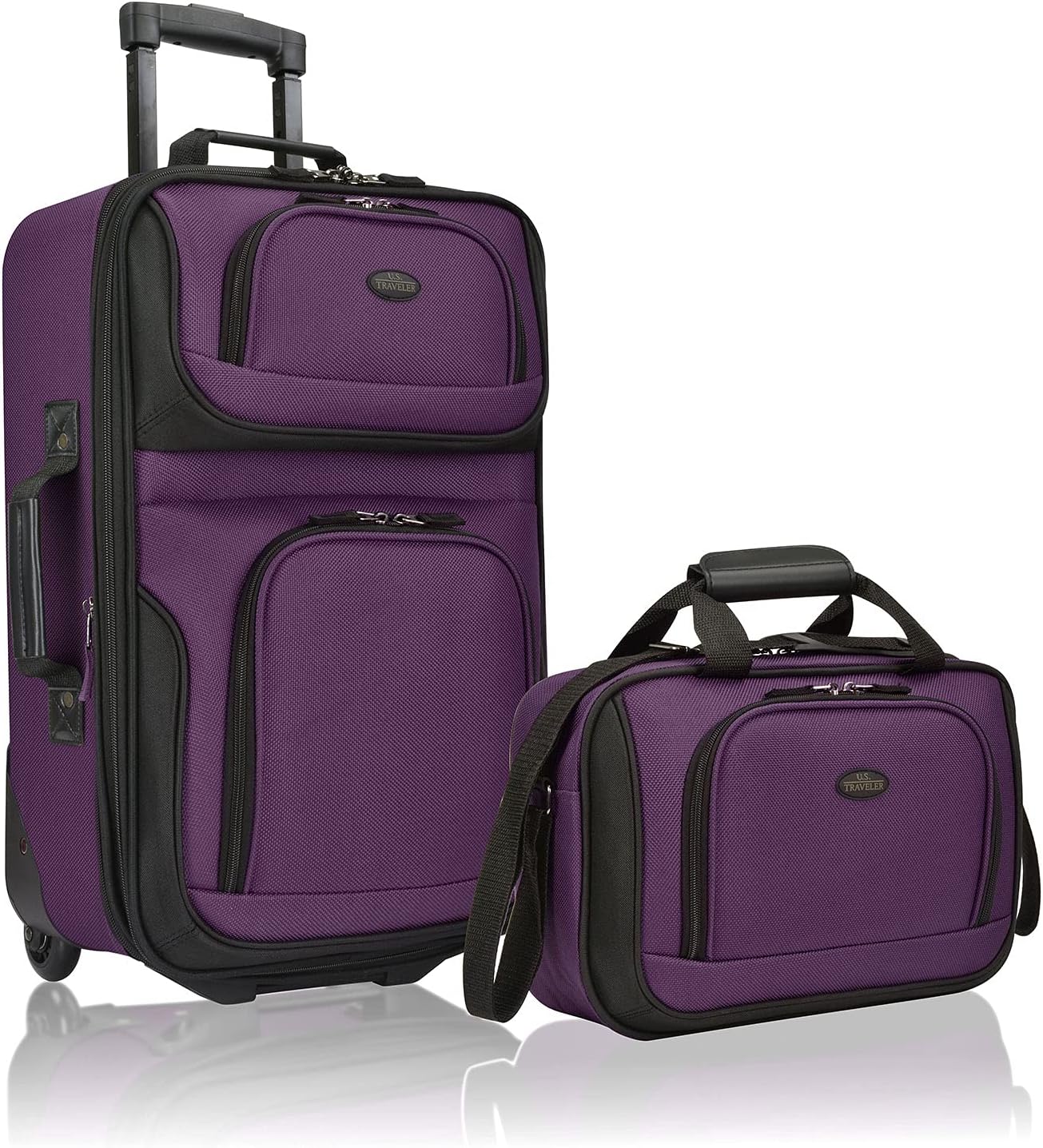
Knack Series 1 Medium Travel Backpack, 15.6-Inch Laptop, Expandable 27-39L
Expanding from 27 to 39 liters covers a weekend and a full week with the same bag, and the padded 15.6-inch laptop section keeps a computer out of your hands at security
Every ounce rides on your shoulders, and expansion only helps if you are willing to carry the volume you just created
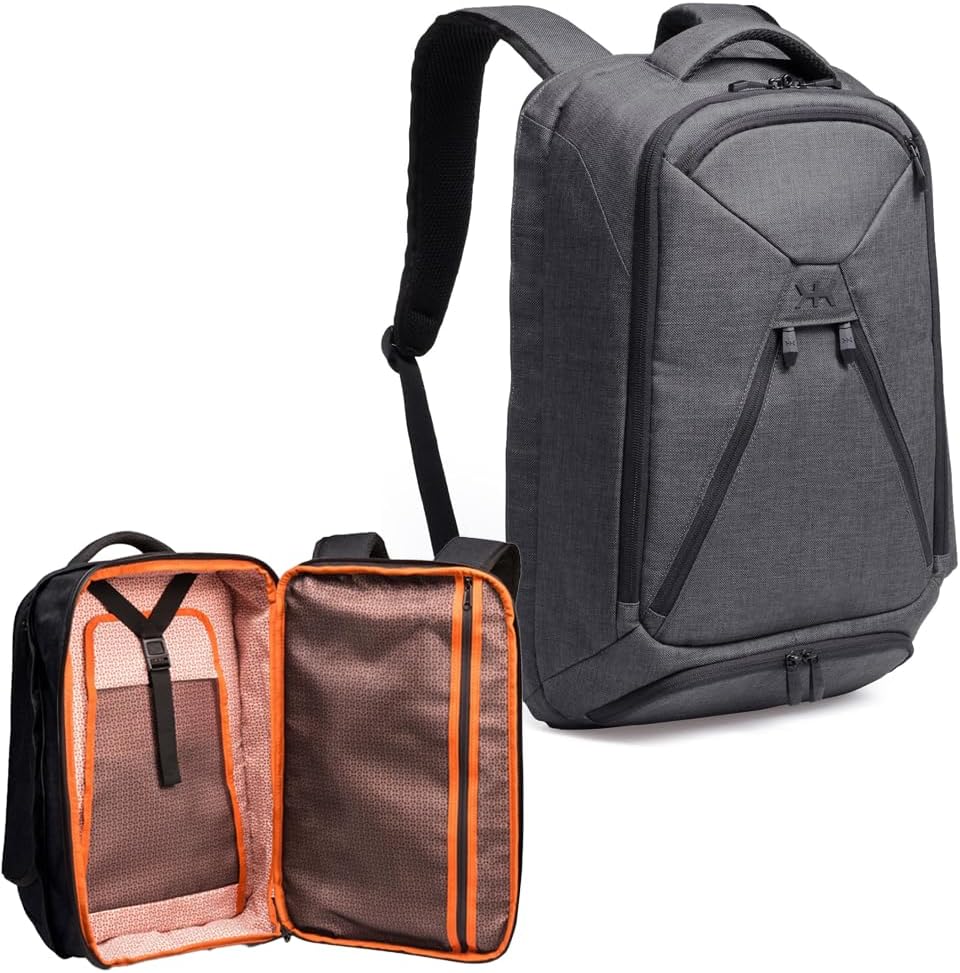
TUMI 19 Degree Large Expandable Checked Luggage, Matte Black
Large checked capacity in a matte black finish that hides belt scuffs, built for trips where you have already accepted that you are checking a bag
It is a checked bag, which means the airline owns it from the counter to the carousel, and expansion can push you past a published size limit
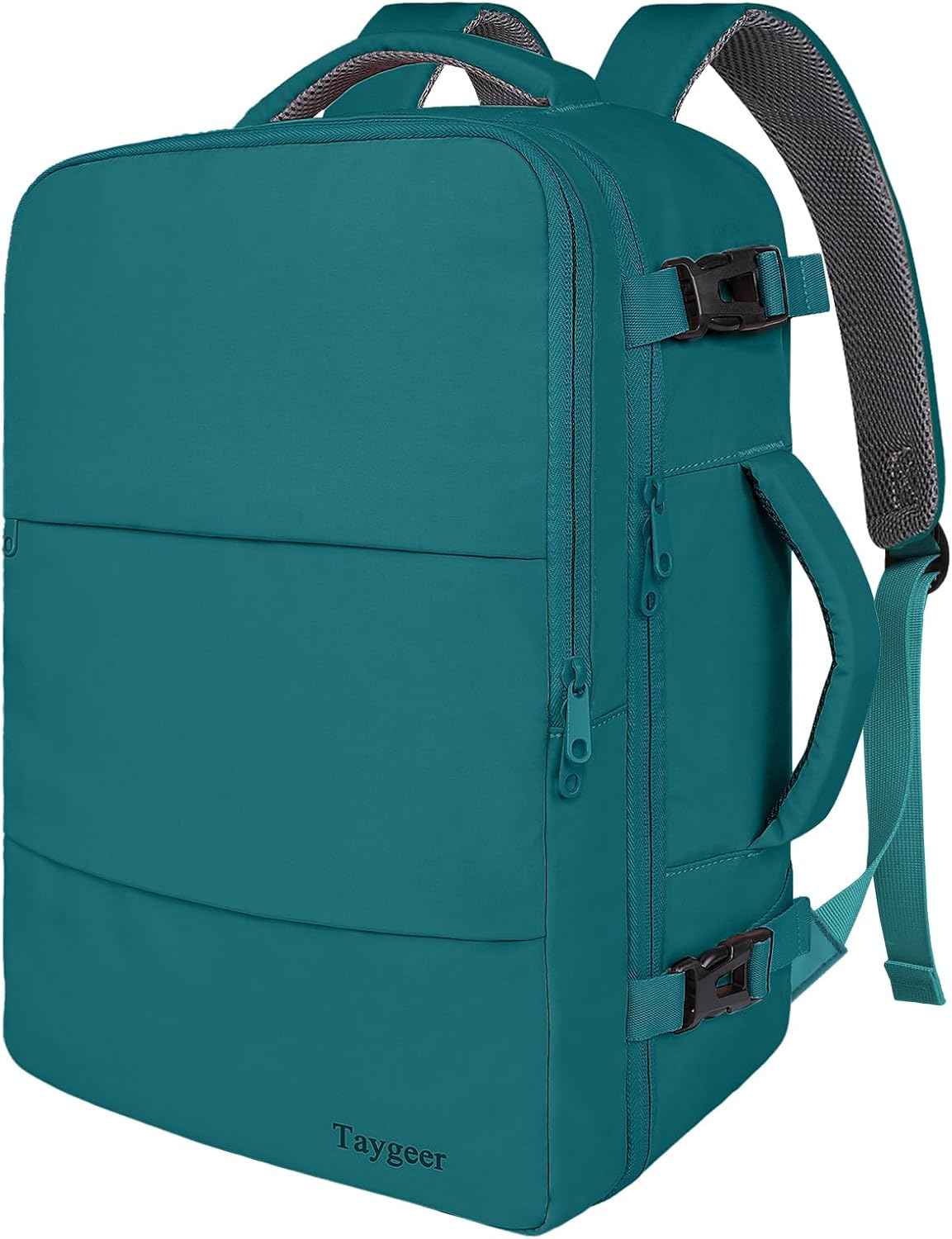
Taygeer Carry on Backpack for Men Women, Luggage Laptop Backpack
A carry-on backpack with a laptop compartment at the budget end of this list, which makes it the lowest-risk way to try one-bag travel
Soft-sided packs sag when they are half full, and a shoulder harness only stays comfortable up to a point
Prices and availability were captured from Amazon Creators API and may change.
How I judge these four bags
Every bag in this comparison gets judged on the same five things, in this order.
Bin fit. Not the advertised size, the actual size. A case advertised at 21 inches that measures 23 is a case that gets gate checked on a full flight, and gate checking is where bags get separated from their owners. Softside wins here because fabric gives. A rigid shell that is a quarter inch too tall is a rigid shell that does not go in.
Linear inches. Length plus width plus height. That number is the contract, and every US carrier publishes its own version of it. I check the number, not the label on the bag.
Wheelbase. A two-wheel base is the most stable rolling geometry there is, because the bag leans on the wheels and your hand only steers. Four-wheel spinners roll upright and turn on a dime, but they also drift on a sloped jet bridge and they put four wheels' worth of failure points on the ground. The roller in this comparison is a two-wheel design, and that is a feature, not a compromise.
Handle wobble. Grab the extended handle and shake it side to side. If it moves before the first flight, it will rattle like a shopping cart by flight ten. This is the single fastest tell on any bag.
Zippers. They are the first thing to die. A zipper that catches the liner on day one will split at the seam on day one hundred. Expansion zippers are the highest-stress zipper on any bag, because they are holding a loaded case open.
The softside roller: U.S. Traveler Rio
This is the bag in the group that behaves the way airline crews expect a carry-on to behave. It is a softside rolling carry-on with a two-wheel base and a purple colorway, and the color matters more than people admit. I have watched a hundred passengers stand at a carousel staring at a sea of black rectangles. Purple ends that argument.
Softside gets dismissed as the cheap option, and that reputation is unfair. Fabric flexes, which means it fits into an overhead bin that a hard shell cannot enter, and it fits into a sizer at the gate without a fight. External pockets let you keep a boarding pass and a charger where you can reach them without opening the whole bag on the floor of a terminal. When it is half full, it compresses instead of rattling around.
The honest downsides: two-wheel bags tilt, so some of the weight transfers to your wrist over a long walk through a big airport. The wheels are smaller than spinner wheels, which means tile is fine and a rough parking lot is not. And fabric shows wear that polycarbonate hides. If you fly twice a year and you want a carry-on that goes in the bin without drama, this is the shape I would point you toward. If you drag a bag through a city every week for a living, you will wear it out faster than you would wear out a hard shell.
The expandable travel backpacks
Two backpacks are in this comparison, and they are not competing for the same buyer.
The Knack Series 1 Medium Travel Backpack is the more serious of the two. It is expandable from 27 to 39 liters, which is the most useful feature on this entire list, and it has a padded 15.6-inch laptop section. Here is why expansion matters: 27 liters is a day bag that fits under the seat in front of you. Unzip it to 39 and you have a week of clothes. One bag, two trips, no second purchase. For anyone who moves through airports, trains, and stairs, a pack that grows is worth more than a pack that is simply large.
The trade-off is the same trade-off every backpack makes. Weight goes on your shoulders and hips instead of on the floor. A roller means you never carry anything except the handle. A backpack means you never look for an elevator. On a trip with cobblestones, a subway with no escalator, or a regional jet where every roller gets gate checked, the backpack wins outright. On a trip where you are standing in a customs line for an hour, it does not.
The Taygeer Carry on Backpack is the budget end of this list and the one I would hand to someone who wants to try one-bag travel without committing much. It is a carry-on backpack with a laptop compartment, sized for men and women, and it does the basic job: clothes in the main body, computer in its own sleeve, on your back through the terminal. Soft-sided packs of this type sag when they are half full, and a padded harness is only comfortable up to a certain load, so it rewards packing discipline. If you overstuff it, you will feel every ounce by the time you reach the gate.
The large checked case: TUMI 19 Degree
The TUMI 19 Degree Large Expandable Checked Luggage is a different animal, and I want to be straight about what it is. It is a large checked case in matte black with an expansion zipper. It is not a carry-on, and no amount of clever packing turns it into one.
Matte black is the correct color for a checked bag. Glossy shells come back from a trip covered in gray scuff marks that no amount of wiping removes. Matte hides the belt. That is a real, practical advantage and it is the kind of thing you only learn after your first brand new glossy case comes back looking five years old.
Expansion on a checked case is a genuine trade-off. Unzipped, you get more room, which is exactly what you want at the end of a trip when you have bought things. But an expanded case is a bigger case, and a bigger case can cross a published size limit. I have watched gate agents measure bags at the counter and charge for the difference. My advice is simple: pack it to the size you paid for, and treat expansion as a return-trip luxury, not a planning assumption.
And then the part nobody wants to hear. A checked bag is a bag you have handed to a stranger. It goes on a belt, into a bin, and onto a carousel that is not always the one in your city. Everything about a checked case should be judged on whether it survives that and whether you can identify it when it comes back. The matte black shell is the right call for the first part. Put a bright tag on the handle for the second.
The trade-offs worth naming out loud
Carry-on purism versus reality. I fly carry-on only whenever I can, but I am not religious about it. If your trip is longer than a week, if you are traveling with a kid, or if you are bringing gear you cannot replace, checking a bag is the correct decision and a large expandable case is the right tool. Pretending otherwise just means you pay a gate check fee at the worst possible moment.
Softside versus hardside. Hardside wins the visual argument and the water resistance argument. Softside wins the bin fit argument, the compression argument, and the external pocket argument. I have seen both types come down the belt. The failures I remember are cracked corners on rigid shells and blown zippers on soft bags. Neither material saves you from a bad zipper.
Rolled versus worn. A roller means zero weight on your body and a permanent hand occupied. A backpack means free hands and a permanent load on your shoulders. Pick the one that matches the worst ten minutes of your trip, not the best ten.
Advertised size versus actual size. This is the most common trap in the category. Measure the bag yourself against the linear inch limit of the airline you actually fly, because that limit is not the same carrier to carrier and it is not the same year to year.
Who should buy which
If you want a carry-on that goes in the bin with no argument, keeps your hands mostly free, and stands out on a carousel, the softside two-wheel roller is the pick. It is the simplest thing on this list to live with.
If you want one bag that covers a weekend and a week, moves through cities and train stations, and keeps a 15.6-inch laptop protected, the expandable Knack pack is the one that earns its keep. The 27 to 39 liter range is the feature you will actually use.
If you want to test one-bag travel without spending much, the Taygeer carry-on backpack is the low-risk entry point. Pack it light and it will do the job.
If your trip is long, your luggage is heavy, and you have already accepted a checked bag, the TUMI 19 Degree large expandable case is built for exactly that job. Just remember that the airline takes custody of it the moment it leaves your hand.
One last thing, from someone who spent six years watching bags move: the bag matters less than the tag on it and the photo you take of it before you hand it over. Do both, whatever you buy.