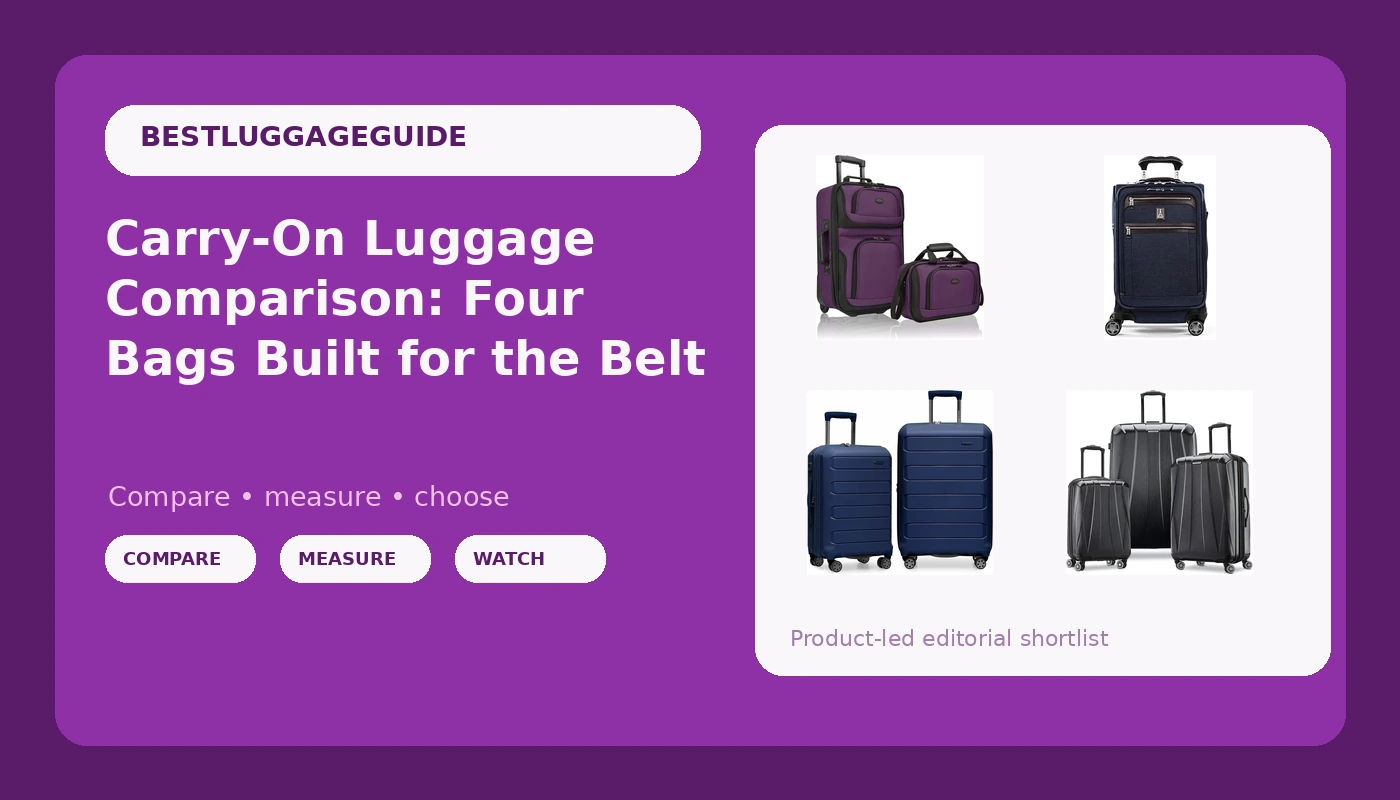
Six years working the gate at O'Hare rewires how you see a bag. I have watched a belt drop a fully packed case four feet onto a steel lip, watched a ramp crew stack hard shells three high, and watched a traveler argue with an agent about a bag that measured two inches over the sizer. That is the classroom. Everything in this carry-on luggage comparison comes out of it.
I will be honest about the limits of that. I have not flown a hundred segments with every case below. What I have done is handle thousands of bags at the gate and then spend four years flying more than 120 segments a year with eleven cases of my own in rotation. So treat this as a design and spec comparison judged the way I judged bags on the ramp: what survives the belt, what fits the bin, and what the airline will not fight you about.
The four cases here split cleanly. Two are hardside multi-piece sets, one is a softside two-wheel carry-on, and one is a single premium spinner. That split matters more than any brand name, because the right pick depends on whether you fly carry-on only or check a bag twice a year.
For most people flying US airlines, the Travelpro Platinum Elite is the case to buy. It is the only single carry-on in this group, the design language is the one I see crew members pulling, and the spinner wheelbase is built for a jet bridge, not a photo shoot. The U.S. Traveler Rio is the cheapest way onto the plane. The Samsonite Centric 2 three-piece is the volume play for a household. The Traveler's Choice Pagosa sits in the middle.
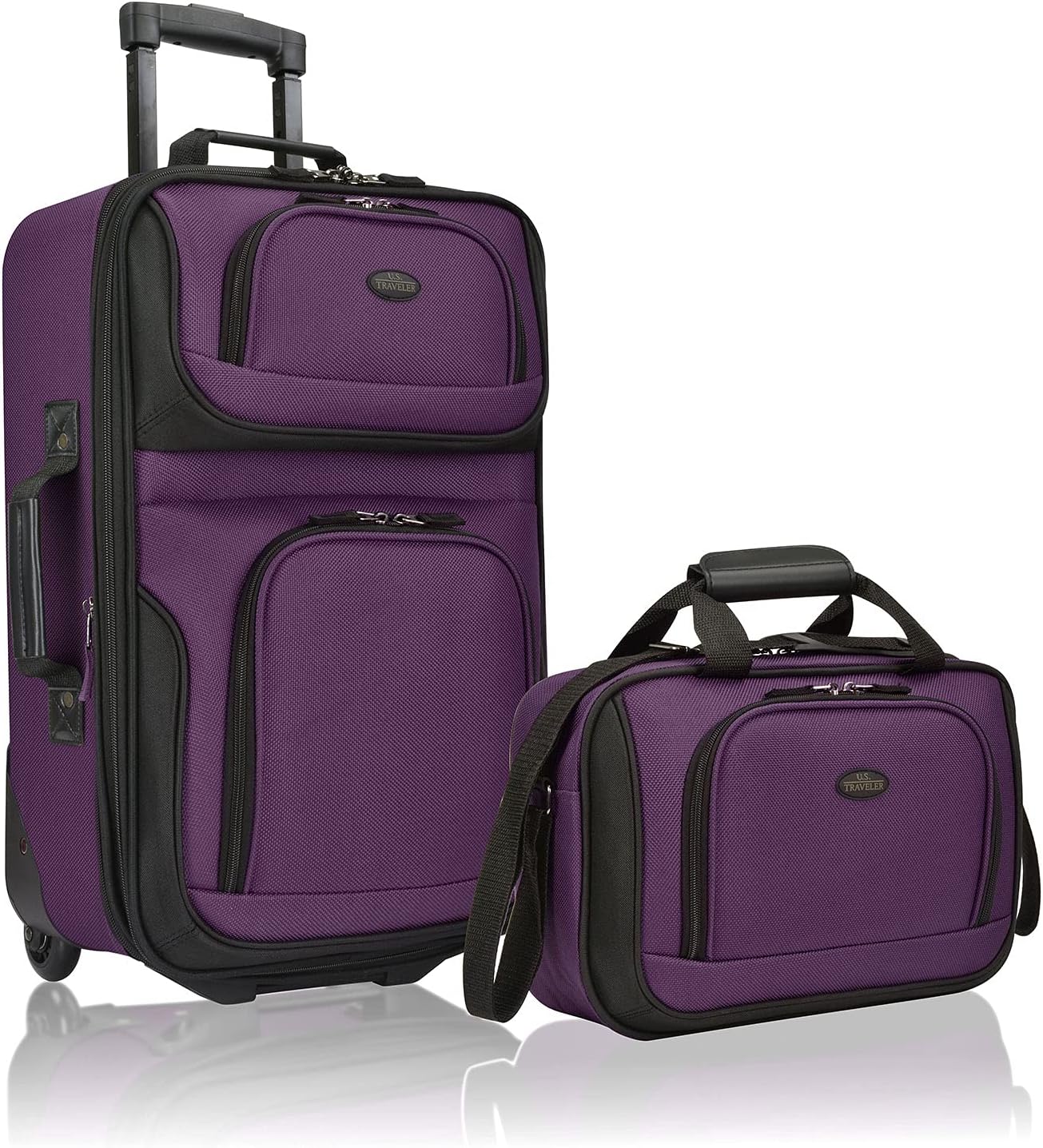
U.S. Traveler Rio Lightweight Softside Rolling Carry-on Suitcase, 2-Wheel Set, Purple
Lowest entry price here, softside flexes into tight bins, two wheels mean fewer parts to fail
Tips forward the moment you let go, no crush protection
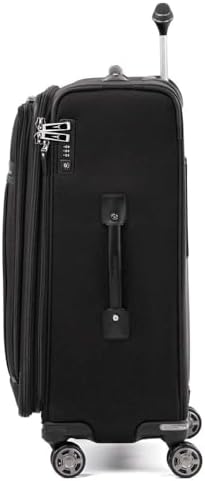
Travelpro Platinum Elite Carry-On Luggage Spinner, True Navy, 21-Inch
Crew-grade handle and wheelbase, 21-inch class that fits the most bins, one bag and no filler
You pay premium money for a single case, nothing for longer checked trips
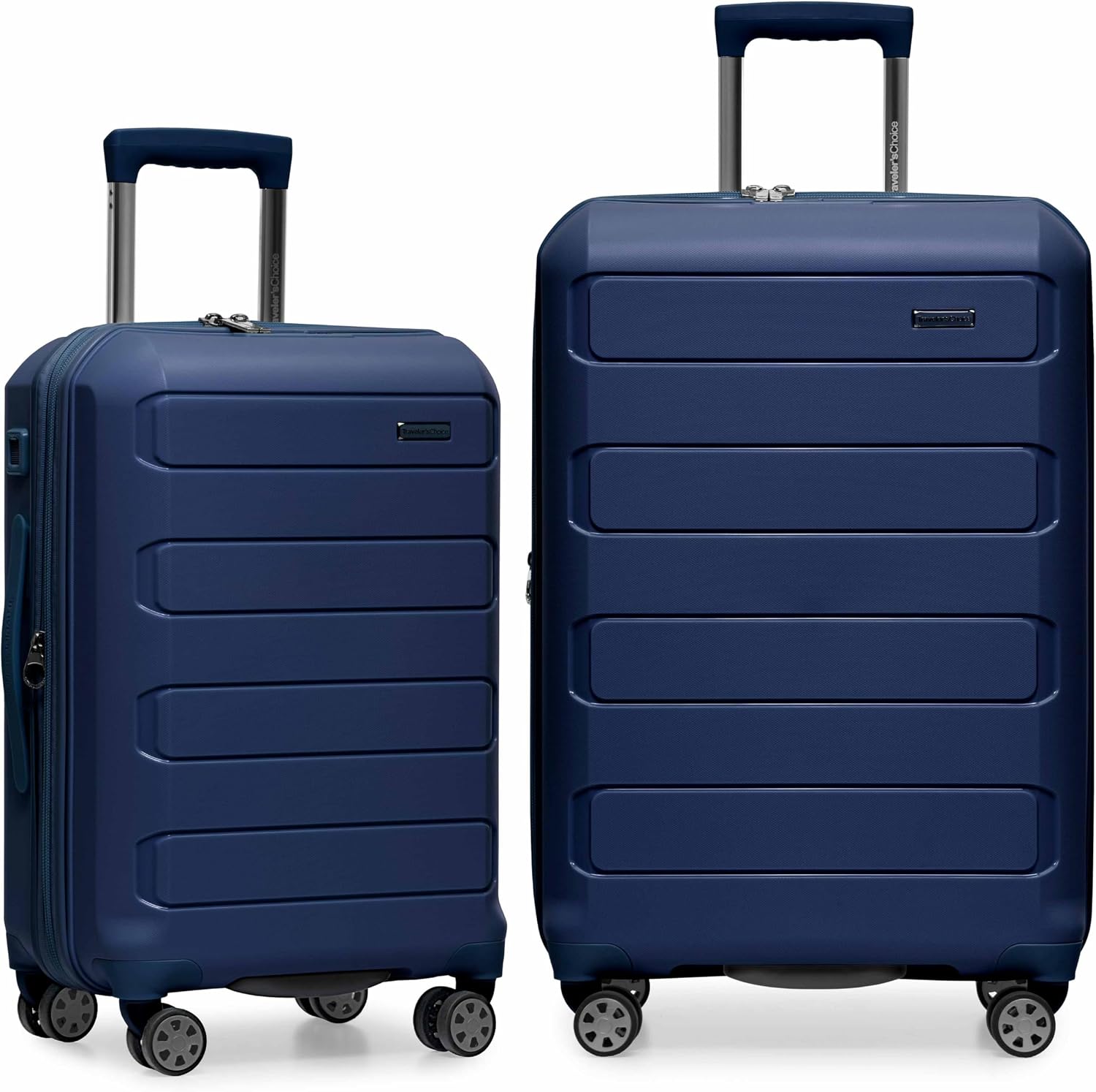
Traveler's Choice Pagosa Hardshell Expandable Luggage with Spinner Wheels, Navy, 2-Piece Set (22/27)
Two expandable hardside spinners, sizes cover a weekend and a long trip, spinner wheels on both
The 22 is the one you will carry on, the 27 lives in the closet or gets checked
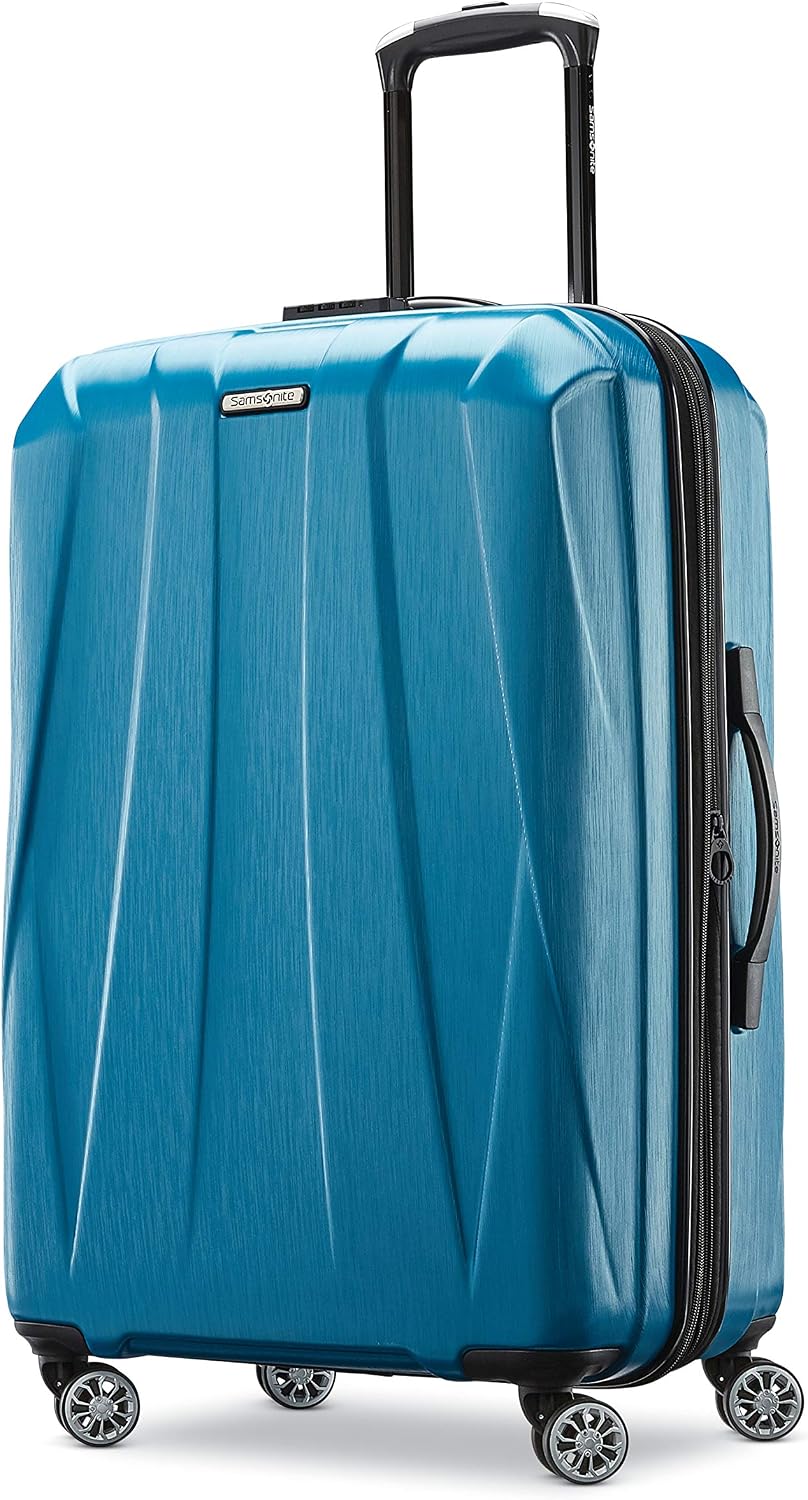
Samsonite Centric 2 Hardside Expandable Luggage with Spinner Wheels, Black, 3-Piece Set (20/24/28)
Three hardside spinners, the 20 is the most bin-friendly carry-on here, real repair network behind it
You are paying for two bags you may never use, and the 28 is checked-bag territory
Prices and availability were captured from Amazon Creators API and may change.
What I check before I trust a case
Four things decide whether a case is worth your money: wheelbase, handle, zipper, and whether it actually fits the sizer.
Wheelbase first. A spinner should roll straight when you push it one-handed through a jet bridge, and it should not wobble when you walk fast. Wheels mounted close to the center of the case are more stable. Wheels pushed out to the corners turn better but catch on grout lines and carpet seams. A two-wheel case like the U.S. Traveler Rio tips forward the second you let go of the handle. That is not a defect, it is geometry, and you will notice it every time you stop to read a gate sign.
Handle second. Extend it, grab it, and rock it side to side. Noticeable movement on a new case becomes a rattle by the tenth flight. Handle wobble is the most common failure I saw on bags that were otherwise perfectly healthy, and it is the one thing you can screen for in a store or in the first ten minutes after a delivery shows up.
Zipper third. Run the zipper the full length with the case empty, then run it again with the case packed tight. If the pull catches the liner, it will separate at a corner eventually. Softside cases live and die on this, and it is the reason I still keep a softside in rotation.
Last, the sizer. Every US airline publishes a carry-on limit, and the gate sizer is the version that actually matters. A case advertised at 21 inches that measures 23 is a gate check waiting to happen. Check the current rules before you fly, because they change, and compare them against the published dimensions of the case rather than the marketing copy.
Softside versus hardside, decided by what you pack
Hardside wins the visual argument. Softside wins most of the practical ones, and I say that as someone who has watched polycarbonate corners crack.
The case for hardside is real. Nothing crushes your clothes, rain rolls off the shell, and the surface does not snag on a belt edge. The Traveler's Choice Pagosa and the Samsonite Centric 2 are both hardside, both expandable, and both spinner designs. If you pack structured items, if you fly in weather, or if your bag rides in a trunk between airports, a hard shell earns its place.
The case against hardside is what happens at the corner. Polycarbonate flexes and then cracks when a belt drops it wrong or a crew stacks a heavier case on top. I have seen it on premium shells and budget ones. The crack starts small and the shell is compromised from that point on.
Softside gives you two things hardside cannot. It flexes into a tight bin, which matters on regional jets with the smallest overheads, and it has exterior pockets, which matters if you travel with a laptop and a paperback. The U.S. Traveler Rio is the softside option here, and it also has the fewest moving parts in the group: two wheels, one handle, no spinner hardware to fail.
My rule is boring and it works. Pack structured, fly in bad weather, or check the bag regularly, and buy hardside. Pack soft, fly regional jets, or need a pocket for a charger, and buy softside. Neither is a compromise if you match it to the trip.
Bin fit and linear inches: the numbers that matter
Linear inches are the sum of height, width, and depth, and they are how most airlines set limits. A 22-inch case with generous depth can exceed the limit even when the height looks fine. This is where shoppers get burned, and it is where the difference between a 20-inch and a 22-inch carry-on becomes a real decision instead of a rounding error.
The Samsonite Centric 2 set includes a 20-inch, which is the size most likely to clear a domestic sizer without a conversation at the gate. The Traveler's Choice Pagosa set starts at 22 inches, a size that clears some airlines and not others. The Travelpro Platinum Elite is a 21-inch spinner, the middle of the road, and 21 is the number I would choose if I could only own one carry-on.
The practical test takes two minutes. Measure your case, add the three numbers, and compare that total to the published limit for the airline you fly most. Then measure the bin. On a regional jet, a 22-inch case that fits a mainline bin can still be a gate check. That is not the airline being difficult. That is physics, and it is the reason I keep a softside around.
One more note on expansion zippers, which both hardside options here have. Expansion is useful on the way home and useless on the way out, because an expanded case is a checked case on most airlines. Pack to the unexpanded size and treat the extra inch as a gift.
The sets: what you actually pay for
Two of these products are multi-piece sets, and I have a bias here that I will state plainly. I do not like being forced to buy a bag I do not need, and sets are built on exactly that.
Look at what you get. The Traveler's Choice Pagosa pairs a 22-inch carry-on with a 27-inch checked case. The Samsonite Centric 2 gives you a 20, a 24, and a 28. The 27 and the 28 are checked bags by any measure. The 24 sits in the awkward zone where it is too big for most domestic bins and too small to replace a real checked bag.
That is not a knock on the cases themselves. Both sets are expandable hardside with spinner wheels, and if you are outfitting a household, a set can be the most efficient way to get three functional bags in one order. The Samsonite name also comes with a service network that matters when a wheel needs replacing, and that is worth something real.
The math only works if you will use the sizes. If you fly twice a year and carry on both times, the 28-inch case will live in a closet while you paid for it. That is the trade-off, and it is the reason the Travelpro Platinum Elite is a single case at a premium instead of three cases at a discount.
Buy the size you need. Oversized bags get checked, and checked bags get lost. I have watched that sentence come true hundreds of times.
Who each case is for
U.S. Traveler Rio Lightweight Softside Rolling Carry-on Suitcase, 2-Wheel Set, Purple. This is the budget entry and the one I would hand a first-time flyer. Softside flexes into tight bins, the two-wheel design has fewer parts to break, and the purple is easy to spot on a crowded belt. The trade-off is the tip-forward geometry and the lack of crush protection. Visit on Amazon →
Travelpro Platinum Elite Carry-On Luggage Spinner, True Navy, 21-Inch. The single-case answer. 21 inches is the size that fits the most bins without a fight, and Travelpro is the brand I see most often on crew members, which tells you something about what survives daily use. You pay for one bag instead of three, and what you get back is a case built for the walk from the curb to the jet bridge. Visit on Amazon →
Traveler's Choice Pagosa Hardshell Expandable Luggage with Spinner Wheels, Navy, 2-Piece Set (22/27). The middle ground. Two hardside spinners, both expandable, in a size pairing that covers a weekend and a long trip. The 22 is the bag you will actually carry on, and the 27 is the one that pays for itself on the two trips a year where you check. Visit on Amazon →
Samsonite Centric 2 Hardside Expandable Luggage with Spinner Wheels, Black, 3-Piece Set (20/24/28). The household pick. Three hardside spinners, the smallest of which is the most bin-friendly carry-on in this comparison, plus a brand with a repair network behind it. Buy it if three people travel together or if you check a bag often enough that the 24 and the 28 will not sit idle. Visit on Amazon →
What I'm watching next
Two things. First, carry-on enforcement. Airlines have been tightening sizer checks at the gate, and when that happens softside comes back into fashion because it squeezes into a bin that a hard shell will not. If you fly a carrier that weighs and measures bags at the door, the softside option in this comparison gets more attractive, not less.
Second, wheel design. Spinner wheels are convenient and they are also four failure points instead of two. Replacement wheels and the service network behind a case matter more than the shell, because a shell rarely fails before a wheel does. I keep a dated prediction list and score it every January. My current note says the next round of value will come from cases that fix the zipper and the wheel first and spend nothing extra on the finish.
Until then, the advice does not change. Measure the case, check the sizer, match the shell to what you pack, and buy the size you actually need.