Most travelers shop this decision backwards. They pick a color, then a brand, then a size, and only after the first trip do they discover the bag does not fit the bin on the aircraft they actually fly. Working out carry-on vs checked luggage first, before you look at shells and zippers, changes everything that follows: how much you pack, what you pay at the gate, and how long the bag lasts. The rule I use is simple. A case is a rental you buy, and the airline will treat it like it is disposable. So the question is not which one looks best in a product photo. It is which one survives the belt, fits the bin, and does not eat your weight allowance before you have packed a single shirt.
Related: Carry-On Size Chart: What Fits in the Bin on Major US Airlines →
Quick answer
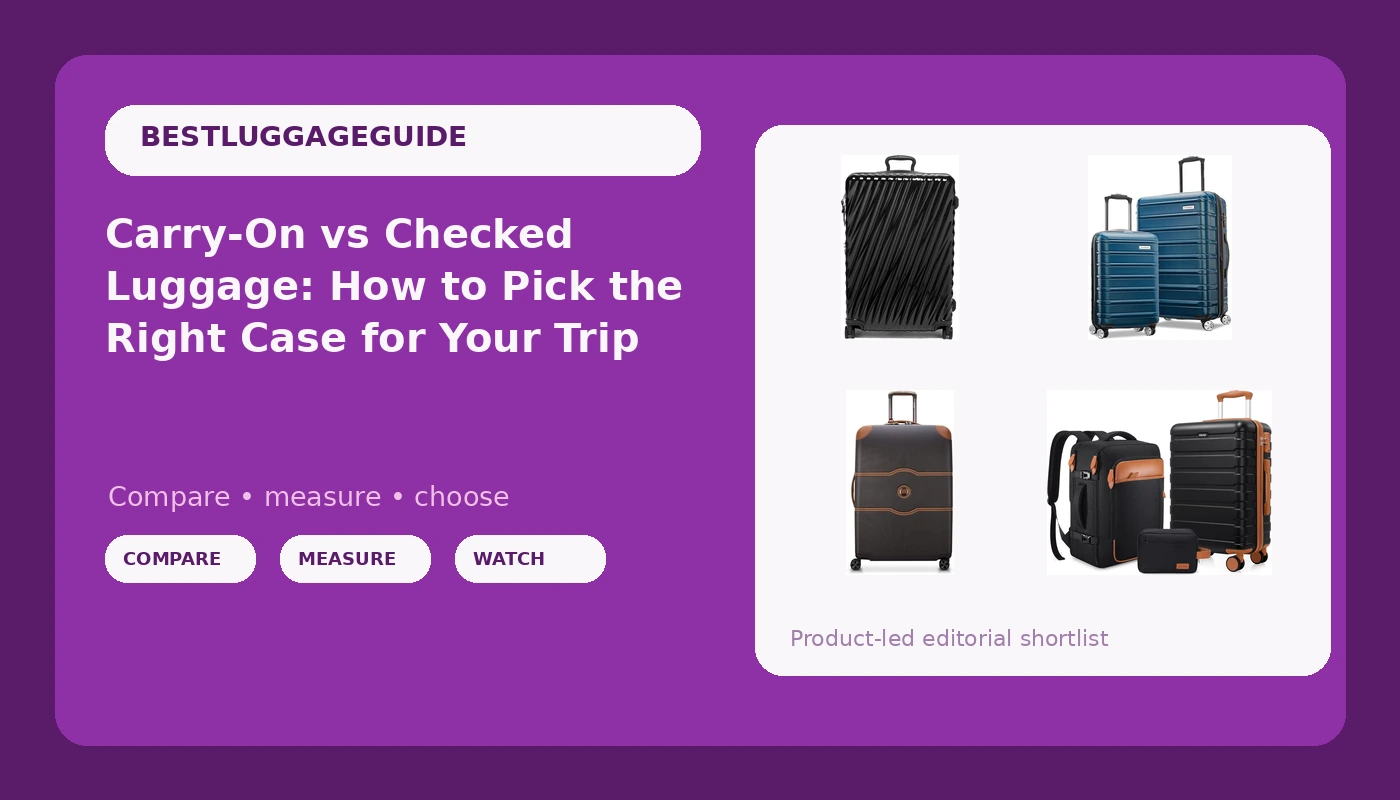
Decide by trip length and fare rules, not by preference. If everything you need fits inside your airline's published carry-on dimensions and you can lift it into the bin yourself, travel carry-on only: you skip checked bag fees on most fares, you skip the carousel, and the bag never leaves your sight. If your trip runs longer than a week, involves cold-weather layers, or includes gear that cannot fly in the cabin, buy a checked case in the smallest size that holds the load. Oversized cases invite overweight fees and are the ones most likely to be gate checked. The four options below cover a budget three-piece set, a two-piece hardside set, a 28-inch checked case, and a large expandable checked case.
Four useful options
| Model | Best fit | What stands out |
|---|---|---|
| Carry on Luggage, Suitcase Set 3Piece with Backpack YKK zippers | Short trips and one-bag travel on a tight budget | Three pieces including a backpack, with YKK zippers named in the listing |
| Samsonite Omni 2 Hardside Expandable Luggage with Spinner Wheels, 2-Piece Set (19/24), Lagoon Blue | Travelers who want a carry-on and a mid-size checked case from one purchase | Hardside shells, spinner wheels, expandable compartments, two sizes |
| DELSEY PARIS Chatelet Air 2.0, 28 Inch Checked Luggage, Chocolate Brown | Long trips where one large checked case does all the work | A 28-inch checked size in a distinctive Chocolate Brown finish |
| TUMI 19 Degree Large Expandable Checked Luggage, Black | Frequent flyers who want a large checked case with expansion | Large checked dimensions, expandable construction, black finish |
The budget set: Carry on Luggage, Suitcase Set 3Piece with Backpack YKK zippers
The argument for a matched set is arithmetic: three pieces for less than many single cases cost. The argument against it is that sets sell you a bag you did not plan to use, and the extra piece lives in a closet. If you already know you want a rolling carry-on for short trips plus a backpack for the underseat slot, that overlap is real and the value holds. The zipper callout matters more than it sounds. Zippers are usually the first component to fail on any case, and a named hardware brand is something you can inspect yourself when the bag arrives: run the track end to end, check the pulls, and look for liner fabric catching in the teeth. That is a two-minute test that tells you more than any marketing copy.
The two-piece hardside: Samsonite Omni 2 Hardside Expandable Luggage with Spinner Wheels, 2-Piece Set (19/24), Lagoon Blue
Hardside shells have a genuine advantage in rain and when bags are stacked on top of each other, and a genuine weakness at the corners when a belt drops them wrong. Spinner wheels make a loaded case easy to push through a terminal, but they also add width at the base, which matters in narrow aircraft aisles and on regional jets where even compliant bags get gate checked. Expansion zips buy a couple of inches when you need them and cost you rigidity when the case is full, so pack to the unexpanded size and treat the extra room as overflow for the return leg. The 19-inch piece is the one to measure against your airline's current carry-on limit, since that limit is what decides whether you board with it or hand it over at the gate.
The 28-inch checked case: DELSEY PARIS Chatelet Air 2.0, 28 Inch Checked Luggage, Chocolate Brown
A 28-inch case is the largest size most travelers should consider, and it holds enough that the weight limit becomes the real constraint. It is easy to pack past the checked weight limit and pay an overweight fee that costs more than the case did. The Chocolate Brown finish is also a trade-off worth naming: any checked bag collects scuffs and belt grime, and how a finish shows those marks is a personal call. If you are anywhere near a weight limit, weigh the empty case before you commit, then subtract that number from the limit to see what you actually get to pack. A lighter case always wins that math.
The premium checked case: TUMI 19 Degree Large Expandable Checked Luggage, Black
Expandable checked cases are genuinely useful for trips where you bring things home, and they are heavier and less rigid when unzipped, which is the trade you accept. Premium pricing buys materials, hardware, and warranty terms, not immunity from the belt. Every airline employee has a story about an expensive case that came back dented, and a large case is the one most likely to take a hit because of its size and weight. Buy at this level because you want the build and the brand, not because you expect the bag to stay pristine. If you are spending this much, check the current warranty terms directly with the manufacturer before you order, because those terms change.
Prices and availability may change. Product images, names, and retailer links are matched to verified listings. No current price, rating, stock status, or measured result is stated here without current evidence.
Linear inches and bin fit: the numbers that decide
Linear inches are just the exterior length plus width plus height, and they are the number airlines use when they publish a carry-on limit. Measure the case yourself with a tape, including the wheels and the handle in the down position. This is where product listings mislead most often: a case sold as a 21-inch carry-on can measure considerably larger once the wheel housings and the telescoping handle are counted. If your measured number is over your airline's published limit, assume the gate agent will notice.
Bin fit is separate from linear inches. Overhead bins differ by aircraft type, and the same compliant bag that slides into a widebody bin may not fit a regional jet's smaller compartment. That is why a compliant bag can still end up gate checked, and why softside cases sometimes squeeze into spaces a rigid shell cannot. Check the airline's current published limits on the airline's own page before you buy, not a third-party summary, since these rules change and vary by fare class.
Weight is the other half of the math. A case that weighs a lot empty eats your allowance before you pack anything: on a 50-pound checked limit, a heavy case leaves you far less than 50 pounds of actual contents. Carry-on weight limits exist too, and some carriers enforce them at the gate. Weigh the empty case, write the number down, and subtract it from the limit you are working with.
A five-step way to decide before you buy
- Write down the longest trip you take in a typical year and list what you pack for it, including shoes and layers.
- Look up the carry-on and checked limits for the airline you fly most, from that airline's current page, today.
- Measure the exterior of any case you are considering, wheels and handles included, and compare it to the carry-on limit.
- Weigh the empty case and subtract that figure from the checked weight limit to see your real packing budget.
- Inspect the two components that fail first, the zipper track and the handle assembly, plus the wheelbase, and check whether the wheels roll straight and quietly.
Practical guidance
- Buy the size you need for your most common trip, not the largest size available, because oversized bags are the ones that get gate checked and mishandled.
- Test the zipper by running it the full length of the track in both directions and checking that the liner does not catch in the teeth.
- Push the handle in and out several times and check for wobble at the mounting points before you trust it with a full load.
- Roll the case across tile and carpet if you can, since wheel noise and tracking problems show up on hard floors first.
- Confirm the current warranty terms and the airline's current baggage rules before you order, because both change without notice.
Which option should you choose?
Choose the Carry on Luggage, Suitcase Set 3Piece with Backpack YKK zippers when your budget is the deciding factor and you want a rolling carry-on plus a backpack for the personal item slot in one purchase. Choose the Samsonite Omni 2 Hardside Expandable Luggage with Spinner Wheels, 2-Piece Set (19/24), Lagoon Blue when you want a carry-on class case and a mid-size checked case, and you prefer a hardside shell. Choose the DELSEY PARIS Chatelet Air 2.0, 28 Inch Checked Luggage, Chocolate Brown when your trips are long enough that one large checked case does all the work and you want a finish that stands out on the carousel. Choose the TUMI 19 Degree Large Expandable Checked Luggage, Black when you want a large checked case with expansion and you are willing to pay for premium build and brand.
One caveat on all four: the details that matter most, shell material, hardware grade, warranty coverage, and exact exterior measurements, are not fully established by a product name alone. Verify them on the current listing and with the manufacturer before you buy, and confirm your airline's limits separately, since those rules are the ones that decide whether your bag flies in the cabin or rides the belt.
The bottom line
The carry-on vs checked luggage question is really a question about your trips. Match the case to the length of travel you actually do, measure it against your airline's current published limits, and weigh it empty before you commit. The budget three-piece set covers the basics cheaply, the two-piece hardside set covers two trip lengths at once, the 28-inch case handles long itineraries, and the large expandable premium case is for frequent flyers who want the build and the expansion. Check current Amazon price on each listing and confirm the measurements yourself, because the bag that fits the bin and survives the belt is the one worth owning.