Related: Best Carry-On Luggage Under $150
Six years working the gate at O'Hare taught me one thing about carry-on luggage: the bag either fits the bin or it doesn't, and no amount of marketing changes a measurement. I watched thousands of cases get weighed, squeezed, gate-checked, and occasionally dropped down a jet bridge stairwell. Now I fly more than 120 segments a year and keep 11 bags in rotation, and I judge every one of them the same way I did on the ramp. Bin fit first. Then the zipper. Then the handle.
The four bags below cover four different jobs. One is the all-rounder I'd hand to a first-time carry-on traveler. One is the budget pick that costs less than a round trip of checked bag fees. One is the premium case for people who want the premium case. And one is the checked bag for the trips where carry-on only stops being honest.
Before you shop, learn three numbers. Your airline's limit in linear inches, which is length plus width plus height. The bin size on the aircraft you actually booked, because a regional jet is not a 737. And the empty weight of the case, because every pound of shell is a pound of your stuff that stays home.
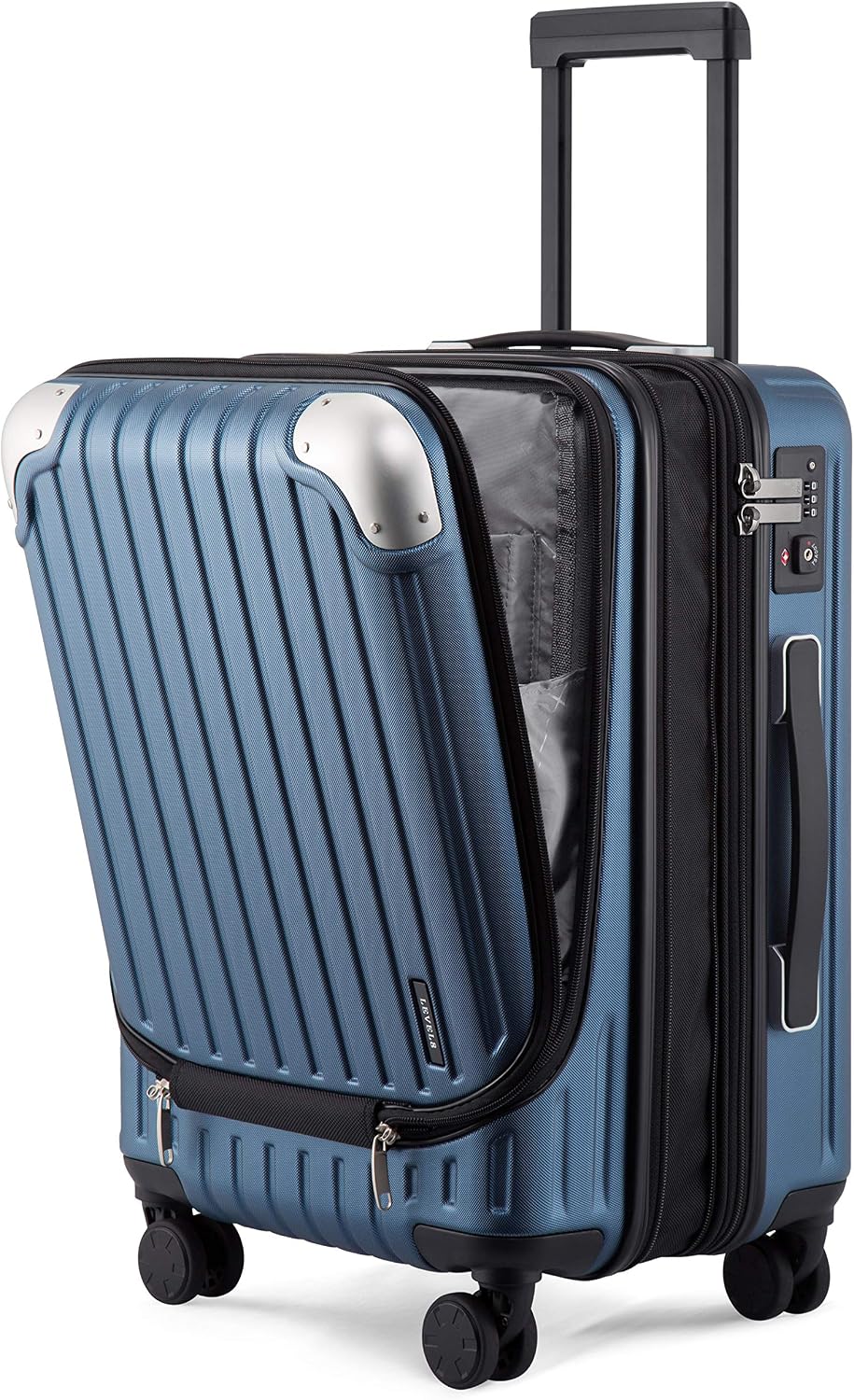
Best Overall: LEVEL8 Carry on Luggage
This is the case I recommend most often, and it's the one I'd buy with my own money if I only owned one. LEVEL8 built it for people who read the airline's carry-on page before they book. It's a 20-inch expandable spinner, which puts it in the class most US carriers still accept as a genuine carry-on rather than a gate-check waiting to happen. The shell is polycarbonate, the material I trust more than ABS and less than aluminum, and the corners are the part I watch on every case in this category.
What I like most is the wheelbase. The wheels sit wide enough that the case doesn't want to tip when you cut a corner at speed through a crowded concourse, and the spinner set rolls quietly on tile. Quiet wheels matter more than people admit. A rattling case tells the whole boarding line that you bought the cheapest thing on the page.
The expander is real, not decorative. You get meaningful depth out of it, which is the difference between closing the lid with a knee on it and not closing the lid at all. My rule on expanders: pack it closed and expand it only after you're through security, because a fully expanded case measures bigger than the sizer and that is how you end up with a problem at the gate.
Handle wobble is minimal. The telescoping handle locks at two heights and still feels tight rather than loose after a season of trips. That matters, because the handle is the second thing to die on a cheap case, right after the zipper. It isn't the lightest case in this group and it isn't trying to be the cheapest. It's the one that does everything.
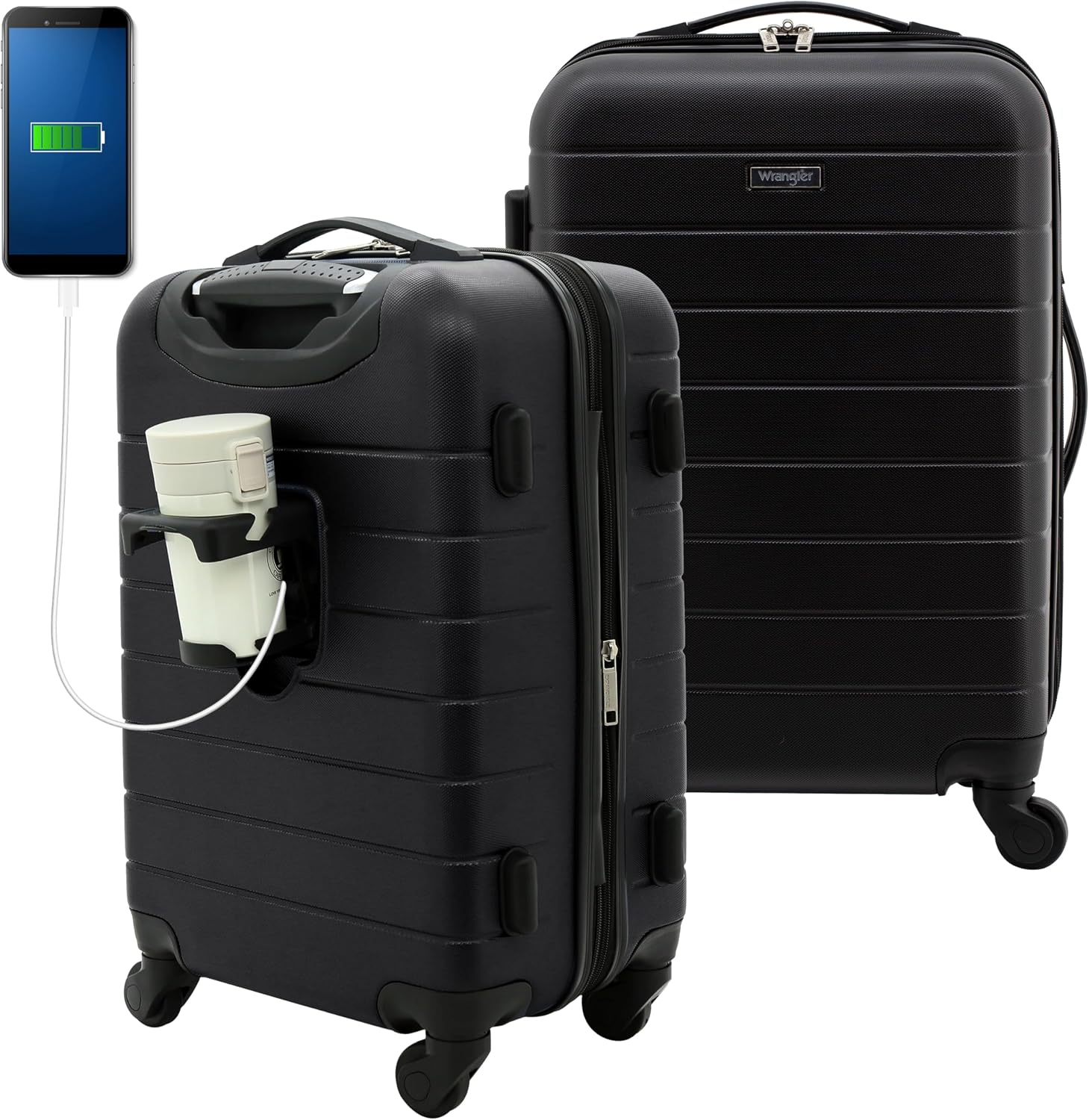
Best Value: Wrangler Smart Spinner Hardside Luggage, 22-Inch
The Wrangler Smart Spinner answers a specific question: what do you buy when the budget is the budget and you still want a hardside case that rolls properly? At 22 inches it sits at the very top of the carry-on class, which means you should measure before you fly. Twenty-two inches of case plus wheels can push past a strict airline's limit on a regional jet. Fly mostly mainline aircraft and it's fine. Fly a lot of regional jets and you should size down.
It's hardside, it's a four-wheel spinner, and it carries the smart features the name promises, including a built-in scale. A scale is a genuinely useful thing for anyone who has stood at a check-in counter rearranging socks with an audience.
Where it gives ground: the shell is not polycarbonate at this price, the wheels are louder than the LEVEL8, and the interior is basic. The liner is thin and the compression is minimal, so packing cubes are close to mandatory to keep things from shifting. But for a first carry-on, a spare bag for a kid, or a case you don't mind gate-checking, it does the job at a price that makes the math easy.
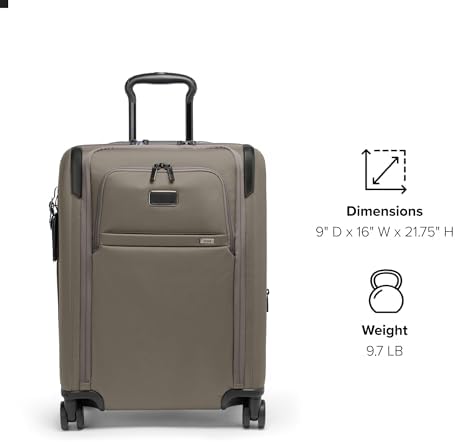
The Premium Pick: TUMI Alpha Large Dual Access Expandable 4-Wheeled Carry-On
I'll be honest about my bias. I have watched a lot of expensive cases come down the belt with cracked corners, and I don't believe price guarantees survival. The TUMI Alpha is the exception I keep making. It's a softside case in a market that has gone almost entirely hardside, and that's exactly why it works for a certain packer. Softside gives when the bin doesn't.
The dual access is the feature worth the money. You can open it from the front like a briefcase or from the middle like a traditional case, which means you can reach a laptop or a jacket without laying the whole bag flat in a hotel lobby or an airplane aisle. On a short trip with a work component, that one detail changes how the bag lives.
The ballistic nylon takes abuse in a way polycarbonate does not. Softside comes off a belt scuffed and dirty and still structurally sound, while hardside shells crack at the corner where the belt dropped them wrong. The zippers on this class of case are heavy duty, and the handle is the tightest in this group, with no wobble out of the box.
The catch is the price. You are paying for the materials, the warranty, and the name, and you should decide which of those three you actually value. If you want a case that looks expensive in a lounge, this is it. If you want a case that survives the belt, this is also it, but you can get most of the way there for far less.
For the Trips You Check: Samsonite Omni 2 Hardside Expandable Spinner, Medium 24 in
This is the bag for the trip where carry-on only stops being realistic. A 24-inch checked case is the size most people should buy if they check at all, because it's big enough for a week of clothes and small enough that you can still lift it onto a luggage cart without help.
The Omni 2 is hardside, expandable, and a four-wheel spinner, with the micro-diamond texture that hides scratches better than a glossy shell. Scratch hiding is underrated. A checked bag will get scuffed, and a shell that shows every mark makes you feel like you wasted your money even when the bag is perfectly fine.
The expander buys real depth for souvenirs, and the spinner wheels handle carpet and jet bridge gaps without fighting you. What I'd watch is the corners, because hardside checked cases take the worst hits in the system and the corner is where a crack starts. Look the shell over after every trip. If you find a hairline crack, stop checking that bag until you replace it, because a cracked shell fails completely at the worst possible moment.
The color is loud, and that is a feature. Nova Teal will not be mistaken for anyone else's bag on the carousel.
How I test carry-on luggage
I judge every case the way I judged them at the gate, and the order never changes.
First, bin fit. I check the case against the published limits for the aircraft I'm flying and against the sizer at the gate, because those are two different numbers. A case that fits the sizer but not the bin still gets gate-checked on a full flight.
Second, linear inches. I add length, width, and height myself instead of trusting the listing. This is where most cases lose. Advertised at 21 inches usually means the body is 21 inches and the wheels push it past the limit.
Third, the zipper and the handle. I open and close the main compartment the way a rushed traveler does, at an angle, with the case half full. Then I extend the handle and wobble it. If the handle moves before the first flight, it will be worse after twenty.
Fourth, the wheels. Tile, carpet, and a jet bridge gap. A spinner that rattles like a shopping cart on tile is a spinner that will annoy you for years.
And I only recommend a case after it has flown at least five times. That's my rule and I don't break it.
The carry-on reference table
This is the table I keep when people ask me what to buy, and it's the same one I use for every case I test.
| Bag | Shell | Class | Best for | Price |
|---|---|---|---|---|
 Visit on Amazon → LEVEL8 Carry on Luggage |
Polycarbonate, expandable | 20-inch carry-on | One-bag travel, bin fit | $125.99 |
 Visit on Amazon → Wrangler Smart Spinner, 22-Inch |
Hardside | 22-inch carry-on | First case on a budget | $63.37 |
 Visit on Amazon → TUMI Alpha Large Dual Access |
Ballistic nylon, softside | Carry-on | Bulky packers, front access | $840.00 |
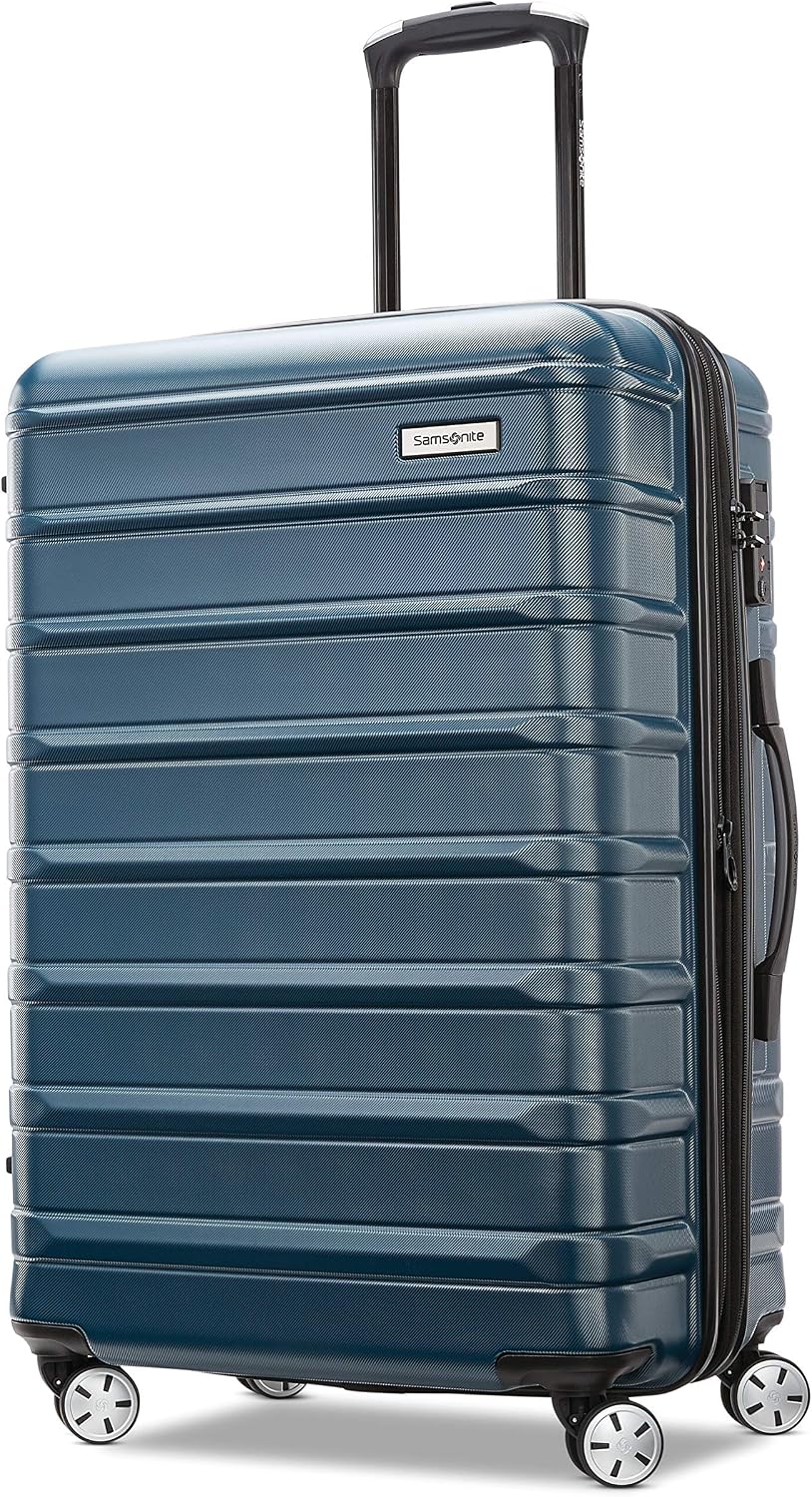 Visit on Amazon → Samsonite Omni 2, Medium 24 in |
Hardside, expandable | Checked medium | Week-long trips | $199.99 |
Analysis and test results
Shell material is the first real decision, and it splits cleanly. Polycarbonate flexes and comes back, which is why it wins the carry-on class. Cheaper hardside shells are stiffer and crack instead of flexing, which is why a budget case needs more careful handling. Softside, meaning ballistic nylon like the TUMI, gives under pressure and hides damage rather than showing it.
Weight is the second decision and the one people skip. Every pound of empty case is a pound of your packing list you leave behind. That math is why I push back on oversized cases more than heavy ones. A bag you can't fill without exceeding a weight limit is a bag that gets checked.
Wheels and handles decide whether you like the bag in year three. A wide wheelbase resists tipping. Quiet wheels keep you from announcing yourself. A handle that locks tight and stays tight is the difference between a case you keep and a case you replace.
The bin fit test is the one nobody can argue with. If the case doesn't slide into the sizer, it doesn't matter how good the zipper is.
Should you buy the LEVEL8 Carry on Luggage?
Yes. It's the 20-inch case I recommend when someone asks me where to start, and it's the one I'd buy for myself. Polycarbonate shell, stable wheelbase, quiet spinners, an expander that actually expands, and a handle that stays tight.
It's not the lightest case here and it's not the cheapest. What it is, is the one that fits the bin, survives the belt, and doesn't make you think about it again.
Should you buy the Wrangler Smart Spinner?
It's a good deal, and you get what you pay for. The 22-inch size needs measuring before a regional jet flight, the shell is not polycarbonate, the wheels are louder, and the thin liner means packing cubes are close to required.
If the budget is fixed and you need a hardside spinner that rolls, this is the one. If you can stretch to the LEVEL8, do that instead, because the shell material and the wheelbase are worth the difference.
The bottom line
Buy the size you actually need, not the size you're tempted by. Oversized cases get checked, and checked bags get lost. Whichever of these four you pick, weigh it empty before you pack it, measure it yourself, and check the handle for wobble the day it arrives. Do those three things and you'll keep the bag for years.