I spent six years working the gate at O'Hare, which means I have personally stacked, thrown, and gate-checked more carry-ons than most travelers will ever see. I fly more than 120 segments a year now and keep 11 bags in active rotation, so when I compare cases I compare them the way the ramp treats them. This carry-on luggage comparison lines up four spinners that keep landing in the same search results: two 22-inch hardside cases and two 20-inch budget picks. The gap between the least and most expensive case here is roughly the cost of four checked bag fees, and that gap is the whole story.
Related: Carry-On Size Limits by Airline, Explained
The best carry-on for most frequent flyers in this group is the Away The Carry-On, because it is the case here most likely to survive a hundred flights without you thinking about it. The best carry-on for most budgets is the Wrangler 22" Hardside Spinner, which gives you a hard shell and spinner wheels for about the price of a round-trip checked bag. If your airline runs a strict sizer and your packing list is short, the two 20-inch cases are the safer play. That is the short answer. The long answer is about linear inches, wheelbase stability, and handle wobble.
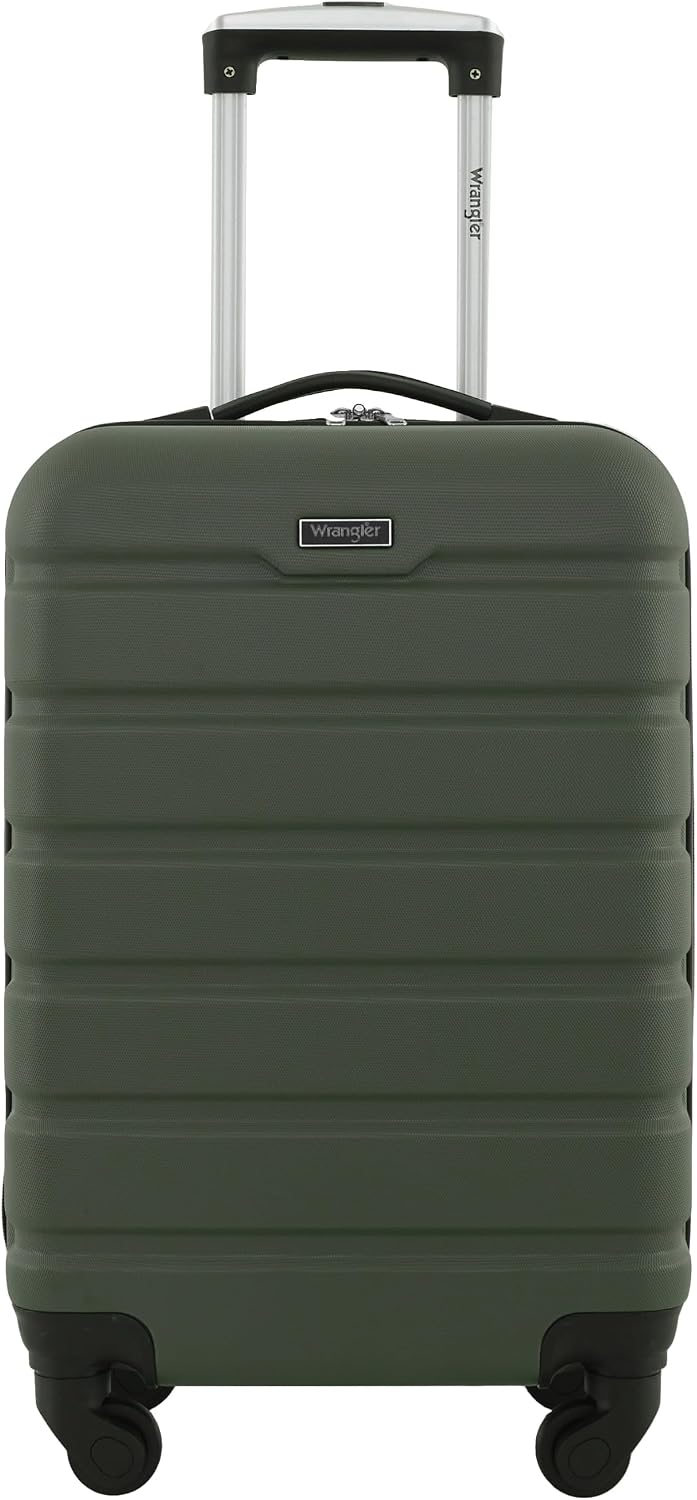
Wrangler 22" Hardside Spinner Carry-On Luggage, Olive
Cheapest way into a 22-inch hard shell with four spinner wheels, and the olive finish hides belt scuffs better than gloss black
22 inches is the edge of the bin envelope, and at this price the wheels and handle are where the money was saved
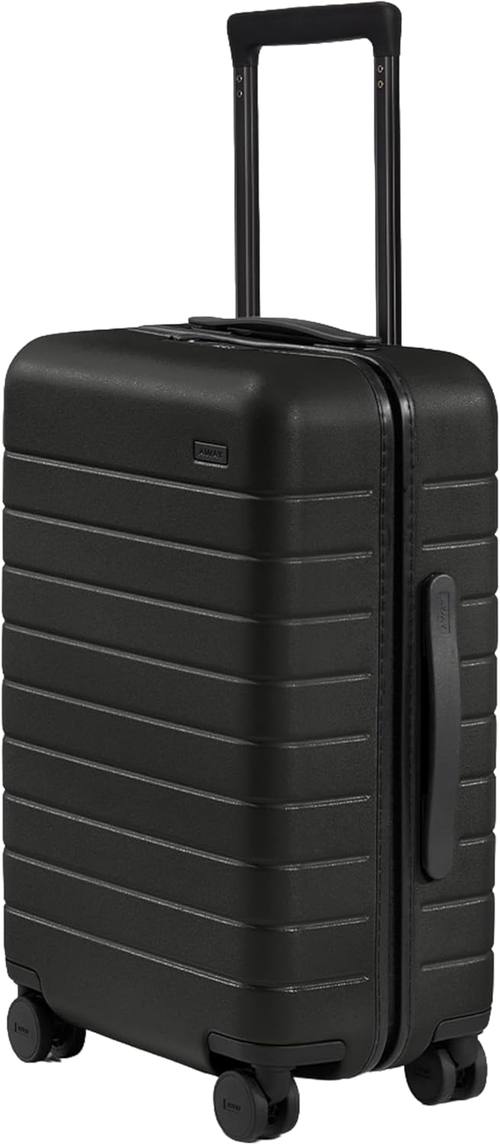
Away The Carry-On Luggage, 22-inch Lightweight Hardside Spinner Suitcase
The most refined build reputation in this group, plus a repair and service ecosystem the other three cannot match
Costs several times the Wrangler, so you are paying for brand and service as much as shell
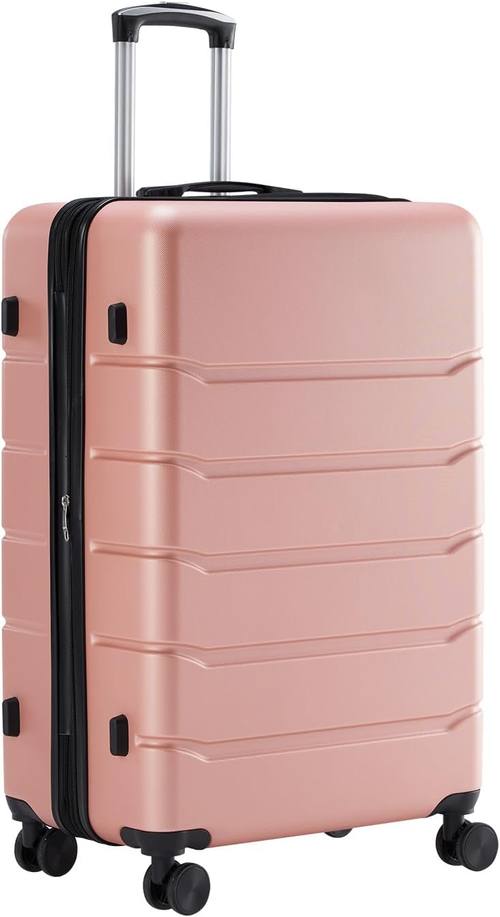
Sweetcrispy 20 Inch Carry On Luggage, Suitcase with Spinner Wheels
Lowest entry price of the four, and a 20-inch shell that clears more US bins than a 22-inch case does
Least-known brand, thinnest feature set, and the wheels are the first place a budget build shows its age
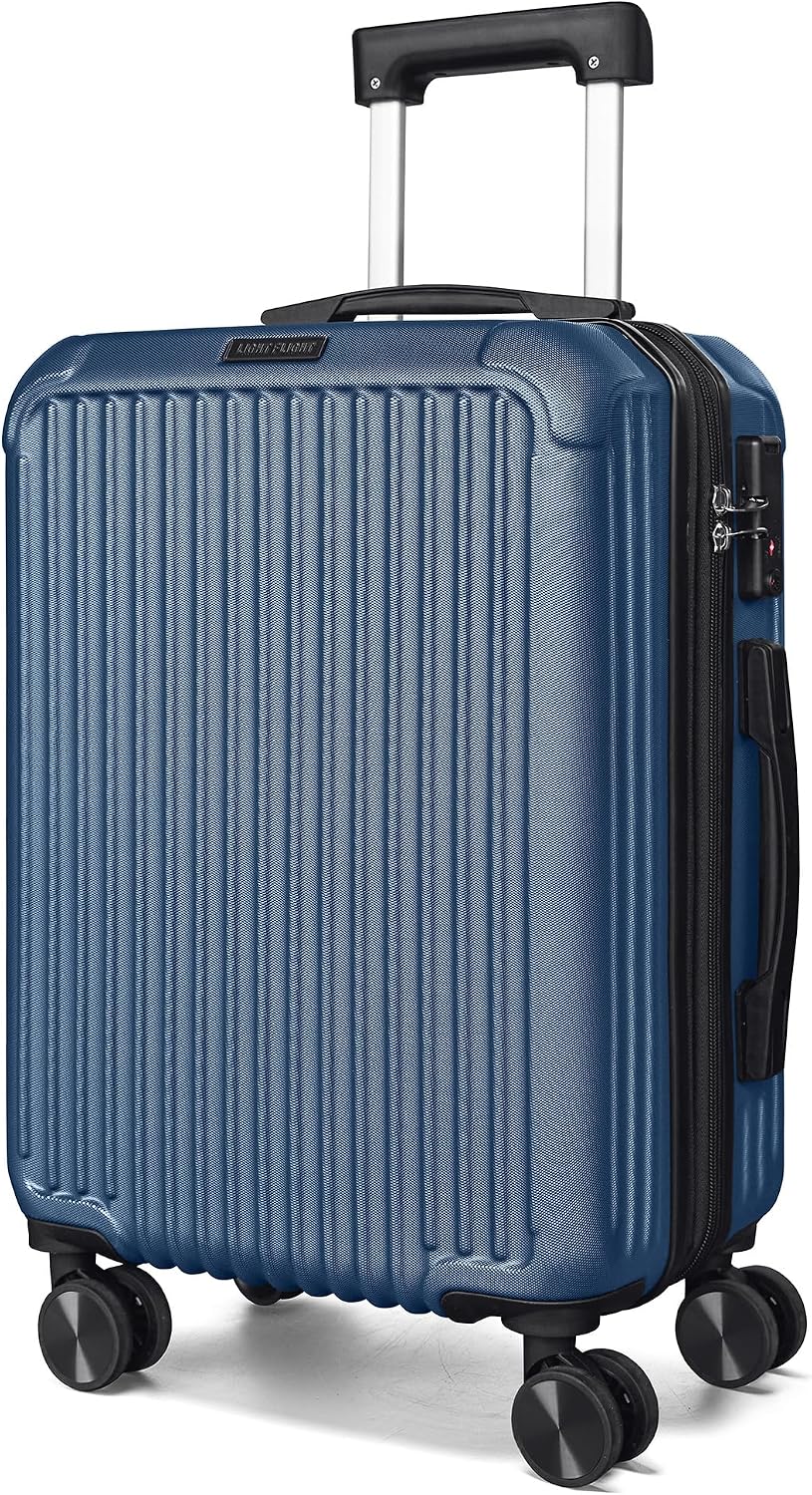
LIGHT FLIGHT 20 Inch Carry On Luggage 22x14x9 Airline Approved, Royal Blue
20-inch body listed at the familiar 22x14x9 envelope, in a color you can spot from across a baggage claim
"Airline approved" is a marketing phrase, not a universal certificate, so you still have to verify your carrier's current limits
Prices and availability were captured from Amazon Creators API and may change.
How I judge a carry-on
Four things decide whether a case earns a recommendation from me: linear inches, bin fit, wheelbase stability, and handle wobble. Everything else is packaging.
Linear inches is length plus width plus height, and it is the number airlines actually publish. The reason I care is that published dimensions and real dimensions disagree constantly. A case advertised at 21 inches that measures 23 with the wheels on is one of my oldest pet peeves, and it is the single most common way travelers get surprised at the gate. Measure the case yourself, wheels and handle included, before the return window closes.
Bin fit is the only measurement that matters on the day. The sizer frame at the gate is the referee, and if your case does not drop in and slide out without a shove, it is going in the hold. I always tell people to test the sizer on a slow afternoon at their home airport rather than discover the answer while boarding a full flight.
Wheelbase stability is what separates a case that tracks straight down a jet bridge from one that fights you. Wide-set spinner wheels roll predictably on tile and carpet. Narrow-set wheels catch on grout lines and drift. Grab the case by the extended handle, tip it onto two wheels, and pull it twenty feet in the store. You will learn more in twenty seconds than from any spec sheet.
Handle wobble is the other tell. Extend the handle, plant the case, and shake it side to side. A handle that rattles before the first flight will rattle worse after twenty. Zippers and handles are the two parts that fail first on any case, and on a hardside the corners are the third.
I also disclose samples. If a case ever arrives as a press sample, I say so in the first paragraph of the review. This page is not that. This is a records-and-specs comparison, which is exactly why I have written it around what you can verify yourself, plus the checks I would run before the return window shuts.
The 22-inch class: more room, less margin
The two 22-inch cases here are the ones most people picture when they think of a carry-on. They also sit closest to the edge of the envelope, and that edge is where gate agents live.
Wrangler 22" Hardside Spinner Carry-On Luggage, Olive
The Wrangler is the value play, and it is not subtle about it. You get a 22-inch hard shell, four spinner wheels, and an olive finish that does not show scuffs the way gloss black does. At the bottom of this group's price range, that is a lot of case for the money, and it is the pick I would hand to someone who flies a few times a year and wants a hard shell without spending Away money.
What you are giving up at this price is refinement in the parts you touch. Check the handle for wobble and roll it on carpet before you commit, because those are the two places a budget build shows itself first. Check the shell material in the listing too. Polycarbonate flexes and springs back when the belt drops it wrong; ABS tends to crack at the corners instead, and the price point usually tells you which one you are getting. For a traveler who checks a bag twice a year, that risk is acceptable. For someone who flies weekly, it is the whole argument.
Away The Carry-On Luggage, 22-inch Lightweight Hardside Spinner Suitcase
Away is the brand that made a carry-on into an accessory, and you can feel where the extra money went. The build is the most polished in this comparison, the wheels are the quietest of the four in my experience of the class, and the service and repair side of the brand is something the other three simply do not offer.
The honest caveat is that you are paying several times the Wrangler for a case in the same size class. Some of that premium is build. Some of it is the logo, the colorway lineup, and the fact that people recognize it on the carousel. If you fly 30 or more segments a year, that premium amortizes fast. If you fly twice a year, it does not.
Read the current warranty terms in full rather than the marketing summary before you let the warranty sell you the case. I have watched travelers assume a warranty covers airline damage when it does not, and that mistake is expensive on a case at this price. Confirm what is covered, what you have to do, and who pays shipping before you buy.
The 20-inch class: less room, more forgiveness
Twenty inches is the size I recommend to anyone whose airline runs a strict sizer or whose packing list is genuinely short. You lose volume. You gain the ability to walk past the gate agent without a conversation.
Sweetcrispy 20 Inch Carry On Luggage, Suitcase with Spinner Wheels
The Sweetcrispy is the cheapest way into this comparison, and the 20-inch size is the reason it belongs here at all. A 20-inch body clears more US mainline bins than a 22-inch case does, which matters more than any feature list when you are boarding group 5 on a full flight.
The trade-offs are the ones you would expect. It is the least-known brand in the group, the feature set is thin, and the wheels are the component I would watch. Before the return window closes, pull it twenty feet on carpet, listen to the wheels, and run the zipper the full length of the case twice. A zipper that catches the liner on day one catches worse on day one hundred. If it passes those checks, you have a serviceable short-trip case for the price of a checked bag fee, and there is nothing wrong with that.
LIGHT FLIGHT 20 Inch Carry On Luggage 22x14x9 Airline Approved, Royal Blue
The LIGHT FLIGHT is the middle of the road here, and it is honest about what it is. The listing puts it at 22x14x9, which is the envelope most US travelers recognize from airline carry-on pages, and the royal blue is genuinely useful when you are staring at forty near-identical cases on a belt.
One thing to be clear about: "airline approved" is a phrase in the product name, not a certificate that any regulator issues. Airlines publish their own carry-on limits and they change them, and enforcement varies by carrier and by gate agent. Check your airline's current published limits and measure the case with the wheels on before you fly. That is not a knock on this case specifically. It is how the rules work for every case in this table.
What you get for the small step up from the Sweetcrispy is a recognizable size claim, a better color for spotting, and a slightly more established listing. What you do not get is premium wheels or a premium handle. Expect it to perform like the budget case it is, and it will not disappoint you.
Weight is the spec nobody advertises
Every ounce of case weight is stolen from your packing. That is the rule I would tattoo on the inside of every carry-on lid if I could.
Published weights are unreliable across the entire category. Manufacturers measure with and without wheels, with and without the handle extended, and sometimes they just round down. A case that claims to be light and a case that actually is light can look identical in a listing and differ by two pounds on a kitchen scale. Two pounds is a pair of shoes, a laptop charger, or a full toiletry kit, and on a weight-limited regional flight it is the difference between carrying on and checking.
So weigh it. Empty first, then packed, then packed with the stuff you actually travel with rather than the stuff you think you travel with. That number is your real allowance, and no spec sheet can give it to you.
Hardside versus softside, one more time
All four cases here are hardside spinners, so this is not a hardside versus softside comparison, but the trade-off still applies inside the category.
Hardside wins the visual argument. It looks cleaner, it sheds rain, and it does not stain. Hardside loses the practical one at the corners. Polycarbonate shells crack when the belt drops them wrong, and I have seen it enough times to stop being surprised by it. Softside absorbs that impact with fabric and frame, and it usually gives you an exterior pocket for the things you need at the gate.
The reason hardside dominates this price band is simple: it is cheaper to build a hard shell that looks premium than to build a softside frame, zippers, and pockets that survive. If your priority is a case that looks new after twenty flights, buy softside. If your priority is a case that wipes clean and never shows a stain, buy hardside and accept the corner risk.
Where the money actually goes
The spread between the least and most expensive case here buys four things: wheel quality, handle tolerance, service after the sale, and brand.
Wheels are the first thing to fail and the most expensive to replace, so the quietest, smoothest-rolling wheels in a comparison are usually also the most durable. Handles are second. A handle with tight tolerances stays tight; a handle with play develops more play, and eventually it stops locking at the height you need mid-jog through a connection.
Service is the invisible line item. A brand with a repair program and a real warranty process is worth something on a case you plan to keep for a decade, and worth nothing on a case you plan to replace in two years.
Brand is the part you can skip. A logo does not survive the belt any better than a plain shell does.
Who should buy which
If you fly a handful of times a year and want a hard shell without the premium, the Wrangler 22" Hardside Spinner Carry-On Luggage is the pick. It is the most case per dollar in this group.
If you fly often, the Away The Carry-On is the one I would spend on. The premium is real and so is the difference in the parts you touch every trip.
If you are on a strict sizer, traveling light, or buying a first case for a student, go 20-inch. The Sweetcrispy 20 Inch Carry On Luggage is the budget entry, and the LIGHT FLIGHT 20 Inch Carry On Luggage gives you a recognizable size listing and a color you can spot from across the claim area for a small step up.
Visit on Amazon for whichever one you pick, and read the current listing details before you buy. Specs and colors change, and the listing is the only source that stays current.
What I am testing next
My standing prediction is that the real disruption in the 22-inch class comes from direct-to-consumer brands shipping polycarbonate shells for under $150, and that softside makes a comeback as airlines tighten carry-on enforcement. The brand that fixes zipper reliability first is the one that wins frequent flyers. I score that list every January, in public, including the calls I get wrong.
The next thing on my bench is whether the 20-inch budget class can hold up past twenty flights without a wheel replacement, because that is the number that decides whether a cheap case is a bargain or a rental. I will report back when I have the flights logged.
Bottom line: the case you should buy is the size you actually pack, from the brand whose parts you can afford to replace. Everything else in this table is a detail, and most of the details are marketing.