Most travelers do not have a luggage problem. They have a size problem. The case that looked reasonable in the store is the one the gate agent tags at the jet bridge, and the personal item that seemed like a free bonus is the one that ends up jammed under a seat two rows behind you. Getting carry-on and underseat luggage right comes down to three numbers: linear inches, packed weight, and how many days you are willing to go between laundry runs. Everything else, color, brand, spinner versus two wheels, is a detail you settle after those three are decided.
This is an explainer, not a ranking. The four items below cover the three sizes a normal trip actually uses, plus one small accessory that fixes the messiest part of packing. Every claim here comes from the product listing or from how airline baggage rules generally work, not from a test that was not run.
Related: How to Measure a Carry-On Against the Bin Gauge →
Quick answer
Match the bag to the trip, not to the product photo. A 22.75-inch softside spinner covers most one-week trips when you are willing to do laundry. A 14-inch underseat rolling bag covers the overnight trip and the personal-item slot on longer ones. A checked-large softside spinner is the honest answer for long trips and gear-heavy travel, because a case that will not close gets checked anyway. A refillable silicone bottle set handles the liquids your quart bag has to hold. Buy in that order, and only move down the list when a specific trip demands it.
Four useful options
| Model | Best fit | What stands out |
|---|---|---|
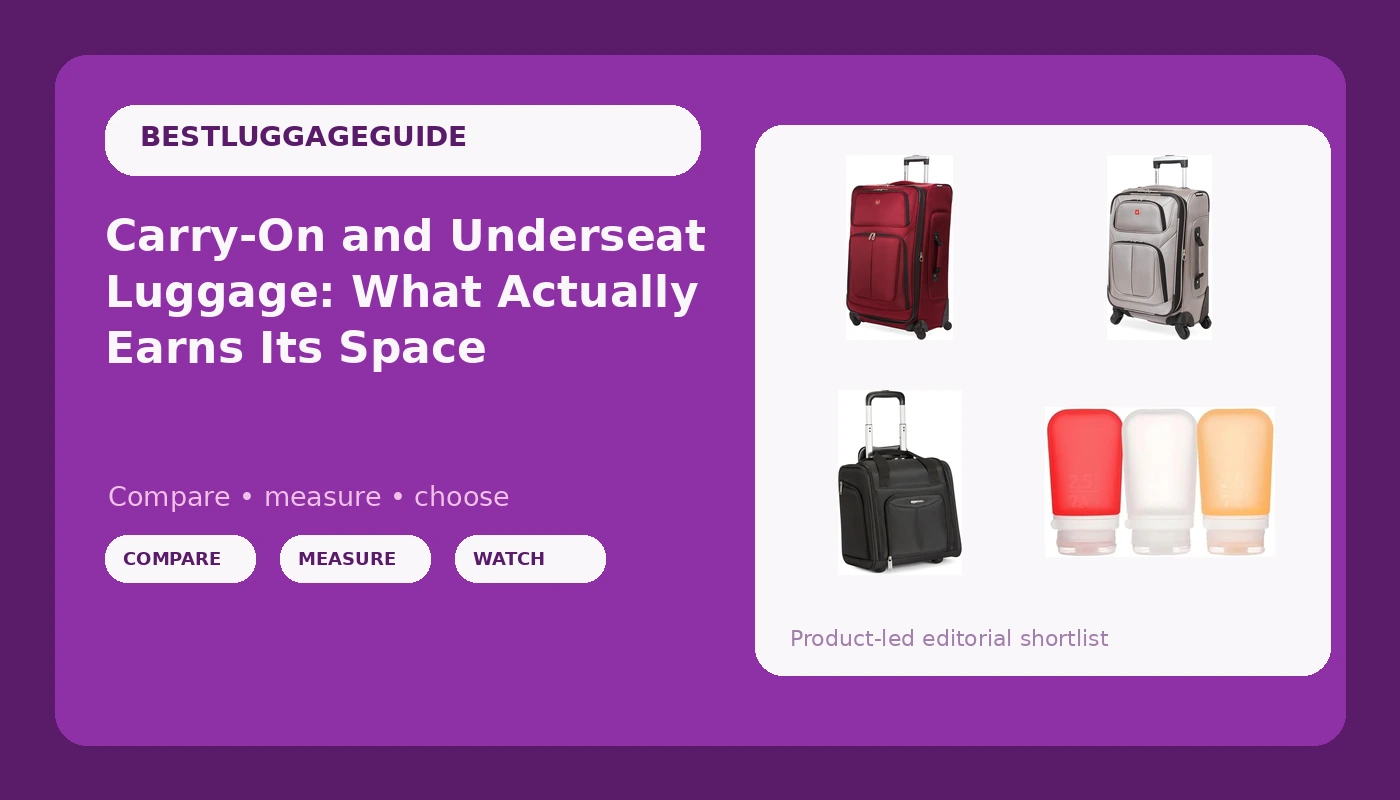
| SwissGear Sion Carry-On Spinner Luggage, Softside Expandable, Lightweight Suitcase, Pewter, 22.75-Inch | One-week trips with laundry access | Softside expandable shell, spinner wheels, listed at 22.75 inches |
| Amazon Basics Underseat Carry-On Luggage with Wheels and Handle, 14" Rolling Travel Bag, Fits Under the Seat, Black | Overnights and the personal-item slot | 14-inch rolling bag sized for under-seat stowage, with a pull handle |
| SWISSGEAR Sion Softside Expandable Spinner Luggage Durable Lightweight Travel Suitcase, Burgundy, Checked-Large | Long trips and gear-heavy travel | Checked-large capacity, softside and expandable, spinner wheels |
| humangear GoToob+ 3-Pack, Medium (2.5 fl oz), Clear/Red/Orange | Liquids and toiletries | Three refillable silicone bottles at 2.5 fl oz, color coded |
The carry-on: SwissGear Sion Carry-On Spinner Luggage, Softside Expandable, Lightweight Suitcase, Pewter, 22.75-Inch
The trade-off with any softside carry-on is structure. A fabric shell with an expansion zipper is forgiving when you overpack by one sweatshirt, and it compresses into a tight bin, but it also transfers impact to whatever is inside. If you carry bottles or electronics, pack them in the middle of the case rather than against the frame, and use the interior compression straps before you touch the expansion zipper. Expansion is margin, not a plan.
The personal item: Amazon Basics Underseat Carry-On Luggage with Wheels and Handle, 14" Rolling Travel Bag, Fits Under the Seat, Black
The underseat bag has one job and one limitation. It fits under the seat, which means it is small, and under-seat space on a regional jet is tighter than on a mainline narrowbody. Measure that space once on a flight you take often and treat the measurement as the real spec. The upside is that a personal item is rarely the bag that gets gate-checked, so medication, documents, and a laptop stay with you even on a full flight.
The checked bag: SWISSGEAR Sion Softside Expandable Spinner Luggage Durable Lightweight Travel Suitcase, Burgundy, Checked-Large
Checked-large is where weight stops being theoretical. Many airlines publish a maximum weight for checked bags, and a large softside case can absorb a lot of weight before it even looks full. Weigh the packed bag at home on a bathroom scale, before you leave for the airport, not at the counter with a line behind you. If the case has a top handle and a side handle, use both when you lift it off the belt; that is what the second handle is for.
The liquids kit: humangear GoToob+ 3-Pack, Medium (2.5 fl oz), Clear/Red/Orange
A refillable set is the cheapest way to reduce security-line stress, and also the easiest thing to get wrong. Fill each bottle to about three-quarters rather than to the brim, because cabin pressure changes can push liquid out of a full bottle and into your bag. Keep the whole set inside a clear quart bag, store that bag in an outside pocket where you can reach it without unpacking, and refill at home instead of buying single-use travel sizes every trip.
Prices and availability may change. Product images, names, and retailer links are matched to verified listings. No current price, rating, stock status, or measured result is stated here without current evidence.
Linear inches, bin fit, and the numbers that decide
Linear inches are simple arithmetic: add length, width, and height. Most US carriers publish a carry-on limit in the range of 22 by 14 by 9 inches, which works out to 45 linear inches, but each airline publishes its own figure and those figures change, so check your carrier's current page before you buy anything. A case advertised as a 21-inch carry-on can measure closer to 23 once the wheels and the handle are included, and that difference is what gets a bag tagged at the jet bridge.
Bin fit is a separate question from the published limit. A case can meet an airline's number on paper and still not slide into an overhead bin on a regional jet, because those bins are shallower and the door is narrower. Softside helps here, since a fabric shell compresses when you push it into a tight space, while a rigid shell has to fit or not fit. If you fly a mix of aircraft, size for the smallest bin you are likely to see, not the largest.
Softside, hardside, and what fails first
Two parts of any case fail before the shell does: the zipper and the handle. Zippers die when they catch the interior liner, when they are overstuffed, or when the coil is undersized for the load. A handle dies slowly, starting with wobble at the mounting points and ending with a bar that will not lock. When you look at a case, open and close every zipper, including the expansion zipper, and pull the handle all the way up and push it all the way down more than once.
Wheels are the third wear point. Spinner wheels roll in any direction and let you push a case alongside you, which is easier on your wrist but exposes the wheels to more side impact. Inline two-wheel designs drag behind you and take fewer lateral hits. Hard shells resist water and stains but crack at the corners when they land wrong, and a cracked shell cannot be repaired the way a fabric one can. Softside scuffs, flexes, and can be patched. Neither answer is universally right; the right one depends on what you pack and how often you fly.
How to choose a size in five steps
- Count the nights, not the outfits. Under three nights, an underseat bag plus a personal item is usually enough.
- Check the carry-on limit your airline publishes right now, in inches and in linear inches, before you shop.
- Decide whether you will do laundry on the trip. If yes, a 22-inch class carry-on covers a week. If no, add a checked bag.
- Weigh your packed bag at home. Case weight comes out of your allowance, so a heavier case means less to pack.
- Test the bin gauge at the gate if it is available, and if your case does not fit, check it before the jet bridge rather than at it.
Packing and airport habits that save a trip
- Pack heavy items low and near the wheelbase, so the case rolls instead of tipping.
- Leave the expansion zipper closed on the outbound leg and use it only for the return.
- Keep the quart bag of liquids in an outside pocket, never buried in the middle of a packed case.
- Put a card with your name and a phone number inside the bag, not only on the outside tag.
- Photograph your packed bag before you check it, so you have a record for a claim if it goes missing.
Which option should you choose?
Choose the SwissGear Sion Carry-On Spinner Luggage, Softside Expandable, Lightweight Suitcase, Pewter, 22.75-Inch when your trips run about a week and you can do laundry along the way. Choose the Amazon Basics Underseat Carry-On Luggage with Wheels and Handle, 14" Rolling Travel Bag, Fits Under the Seat, Black when you fly overnight or want a personal item that never leaves your side. Choose the SWISSGEAR Sion Softside Expandable Spinner Luggage Durable Lightweight Travel Suitcase, Burgundy, Checked-Large when the trip is long or gear-heavy enough that a carry-on will not close. Choose the humangear GoToob+ 3-Pack, Medium (2.5 fl oz), Clear/Red/Orange when you want to stop buying travel-size toiletries.
One caveat: the sizes and dimensions above come from the product listings, and listings describe the case, not the bin. Airline limits, checked-bag weight rules, and liquid screening procedures are set by carriers and regulators and do change, so confirm the current rules with the airline you are actually flying before you commit to a bag.
The bottom line
The right luggage order is personal item, then carry-on, then checked bag, and you only move down that list when a trip forces you to. A softside spinner in the 22-inch class handles most travel, an underseat rolling bag protects the things you cannot lose, and a checked-large case is the honest answer when the packing list wins. Add a refillable bottle set and you have solved the two problems that cause the most airport friction: bin fit and the security line. Buy the size you actually need, check your carrier's current limits, and weigh the bag before you leave the house.